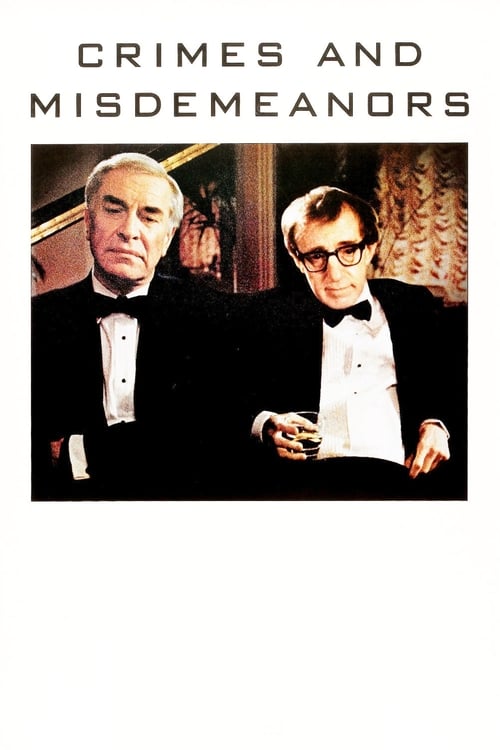
Crimes and Misdemeanors
A renowned ophthalmologist is desperate to cut off an adulterous relationship…which ends up in murder; and a frustrated documentary filmmaker woos an attractive television producer while making a film about her insufferably self-centered boss.
The film struggled financially against its respectable budget of $19.0M, earning $18.3M globally (-4% loss).
Nominated for 3 Oscars. 16 wins & 26 nominations

Plot Structure
Story beats plotted across runtime


Narrative Arc
Emotional journey through the story's key moments
Story Circle
Blueprint 15-beat structure
Arcplot Score Breakdown
Weighted: Precision (70%) + Arc (15%) + Theme (15%)
Crimes and Misdemeanors (1989) demonstrates strategically placed story structure, characteristic of Woody Allen's storytelling approach. This structural analysis examines how the film's 15-point plot structure maps to proven narrative frameworks across 1 hour and 44 minutes. With an Arcplot score of 6.8, the film balances conventional beats with creative variation.
Characters
Cast & narrative archetypes

Judah Rosenthal
Clifford Stern
Dolores Paley
Halley Reed
Lester
Miriam Rosenthal
Ben
Wendy Stern
Main Cast & Characters
Judah Rosenthal
Played by Martin Landau
A successful ophthalmologist whose affair threatens to destroy his perfect life and marriage.
Clifford Stern
Played by Woody Allen
A struggling documentary filmmaker working on a film about his insufferable brother-in-law.
Dolores Paley
Played by Anjelica Huston
Judah's mistress who threatens to expose their affair to his wife.
Halley Reed
Played by Mia Farrow
A documentary producer who becomes romantically involved with both Clifford and Lester.
Lester
Played by Alan Alda
A successful but shallow TV producer and Clifford's brother-in-law.
Miriam Rosenthal
Played by Claire Bloom
Judah's devoted wife who remains unaware of his affair.
Ben
Played by Sam Waterston
Clifford's brother-in-law, a rabbi who is going blind but maintains his faith.
Wendy Stern
Played by Joanna Gleason
Clifford's wife and Ben's sister, frustrated with her husband's lack of success.
Structural Analysis
The Status Quo at 1 minutes (1% through the runtime) establishes Judah Rosenthal is honored at a lavish celebration for his philanthropic work as a successful ophthalmologist, surrounded by family and admiring colleagues. He appears to have achieved the American dream.. Notably, this early placement immediately immerses viewers in the story world.
The inciting incident occurs at 12 minutes when Dolores threatens to expose Judah's affair and financial improprieties to his wife, destroying his carefully constructed life. She becomes increasingly desperate and unstable, refusing to be dismissed.. At 12% through the film, this Disruption aligns precisely with traditional story structure. This beat shifts the emotional landscape, launching the protagonist into the central conflict.
The First Threshold at 25 minutes marks the transition into Act II, occurring at 25% of the runtime. This reveals the protagonist's commitment to Judah makes the fateful decision to contact his brother Jack, a man with connections to criminals. He crosses the moral threshold by asking Jack to "take care of" Dolores, knowing what this means., moving from reaction to action.
At 51 minutes, the Midpoint arrives at 49% of the runtime—precisely centered, creating perfect narrative symmetry. Structural examination shows that this crucial beat Dolores is murdered. Judah visits her apartment to retrieve incriminating evidence and confronts the physical reality of what he's done. The body lies before him - a false defeat that is actually his "victory" in preserving his life., fundamentally raising what's at risk. The emotional intensity shifts, dividing the narrative into clear before-and-after phases.
The Collapse moment at 76 minutes (74% through) represents the emotional nadir. Here, Professor Levy commits suicide, leaving Cliff devastated - a literal "whiff of death" that destroys his philosophical anchor. Simultaneously, Halley leaves for London, and Judah learns the police have closed Dolores's case. The universe appears indifferent to both virtue and vice., illustrates the protagonist at their lowest point. This beat's placement in the final quarter sets up the climactic reversal.
The Second Threshold at 83 minutes initiates the final act resolution at 79% of the runtime. Time passes. Months later, both storylines converge at Ben's daughter's wedding. Cliff arrives hoping to reconnect with Halley, while Judah attends with his intact family. The synthesis approaches., demonstrating the transformation achieved throughout the journey.
Emotional Journey
Crimes and Misdemeanors's emotional architecture traces a deliberate progression across 15 carefully calibrated beats.
Narrative Framework
This structural analysis employs structural analysis methodology used to understand storytelling architecture. By mapping Crimes and Misdemeanors against these established plot points, we can identify how Woody Allen utilizes or subverts traditional narrative conventions. The plot point approach reveals not only adherence to structural principles but also creative choices that distinguish Crimes and Misdemeanors within the comedy genre.
Woody Allen's Structural Approach
Among the 42 Woody Allen films analyzed on Arcplot, the average structural score is 7.0, demonstrating varied approaches to story architecture. Crimes and Misdemeanors takes a more unconventional approach compared to the director's typical style. For comparative analysis, explore the complete Woody Allen filmography.
Comparative Analysis
Additional comedy films include The Bad Guys, Ella Enchanted and The Evening Star. For more Woody Allen analyses, see Everyone Says I Love You, Celebrity and Interiors.
Plot Points by Act
Act I
SetupStatus Quo
Judah Rosenthal is honored at a lavish celebration for his philanthropic work as a successful ophthalmologist, surrounded by family and admiring colleagues. He appears to have achieved the American dream.
Theme
Judah's father (in flashback) debates with his aunts about morality and whether "the eyes of God see all." The question is posed: if you can get away with a crime, is there real justice?
Worldbuilding
Dual worlds established: Judah's affluent medical practice and marriage to Miriam, complicated by his affair with Dolores. Cliff's struggling documentary career and unhappy marriage to Wendy, contrasted with his assignment filming her brother Lester, a successful TV producer he despises.
Disruption
Dolores threatens to expose Judah's affair and financial improprieties to his wife, destroying his carefully constructed life. She becomes increasingly desperate and unstable, refusing to be dismissed.
Resistance
Judah debates his options, consulting his patient Ben (a rabbi going blind) about moral dilemmas. Cliff begins filming Lester while becoming infatuated with Halley, a producer on the project. Both men struggle between what they want and what's right.
Act II
ConfrontationFirst Threshold
Judah makes the fateful decision to contact his brother Jack, a man with connections to criminals. He crosses the moral threshold by asking Jack to "take care of" Dolores, knowing what this means.
Mirror World
Cliff's documentary subject Professor Levy becomes his philosophical guide, articulating humanistic values and the importance of love and meaning-making. Cliff pursues Halley as a romantic ideal, representing hope and authenticity.
Premise
Judah waits in anguish for Jack's plan to unfold while maintaining his facade. Cliff navigates between his contempt for Lester's shallow success and his growing feelings for Halley. The film explores the parallel moral universes of its dual protagonists.
Midpoint
Dolores is murdered. Judah visits her apartment to retrieve incriminating evidence and confronts the physical reality of what he's done. The body lies before him - a false defeat that is actually his "victory" in preserving his life.
Opposition
Judah is consumed by guilt, paranoia, and fear of discovery. He returns obsessively to childhood memories and religious teachings. Meanwhile, Cliff completes his documentary and grows closer to Halley, but his inability to compromise threatens both his career and romance.
Collapse
Professor Levy commits suicide, leaving Cliff devastated - a literal "whiff of death" that destroys his philosophical anchor. Simultaneously, Halley leaves for London, and Judah learns the police have closed Dolores's case. The universe appears indifferent to both virtue and vice.
Crisis
Cliff processes his loss and disillusionment. Judah discovers that time has dulled his guilt - he sleeps well now, his anxiety fading. Both men face the dark truth that the moral universe may not bend toward justice.
Act III
ResolutionSecond Threshold
Time passes. Months later, both storylines converge at Ben's daughter's wedding. Cliff arrives hoping to reconnect with Halley, while Judah attends with his intact family. The synthesis approaches.
Synthesis
At the wedding reception, Judah and Cliff have a devastating conversation. Judah, unrecognized by Cliff, describes a "movie plot" that is actually his real story - a man who commits murder and gets away with it, eventually feeling no guilt. Halley announces her engagement to Lester. Both men's illusions are shattered.
Transformation
Judah rejoins his family, fully integrated back into his respectable life with no consequences. Cliff sits alone while Lester and Halley celebrate. The film ends on Ben, now completely blind, dancing at his daughter's wedding - the only moral character, literally unable to see the injustice. The moral universe offers no consolation.