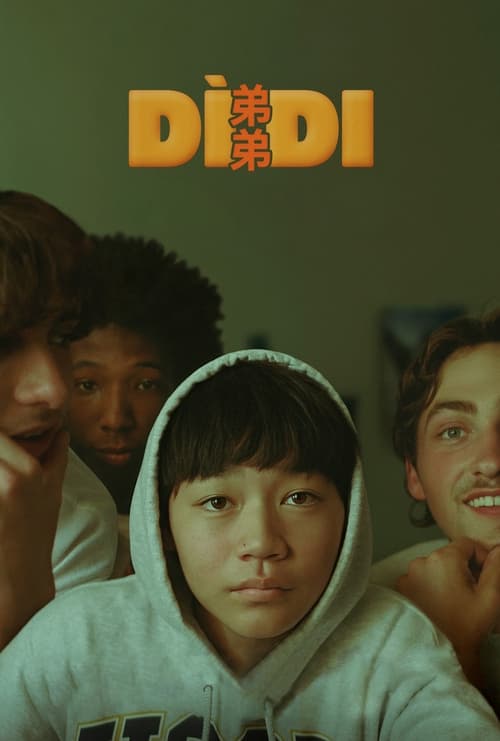
Dìdi (弟弟)
In 2008, during the last month of summer before high school begins, an impressionable 13-year-old Taiwanese American boy learns what his family can't teach him: how to skate, how to flirt, and how to love your mom.
The film earned $5.1M at the global box office.


Plot Structure
Story beats plotted across runtime


Narrative Arc
Emotional journey through the story's key moments
Story Circle
Blueprint 15-beat structure
Arcplot Score Breakdown
Weighted: Precision (70%) + Arc (15%) + Theme (15%)
Dìdi (弟弟) (2024) reveals precise narrative design, characteristic of Sean Wang's storytelling approach. This structural analysis examines how the film's 15-point plot structure maps to proven narrative frameworks across 1 hour and 34 minutes. With an Arcplot score of 7.3, the film balances conventional beats with creative variation.
Characters
Cast & narrative archetypes

Chris Wang
Chungsing Wang
Vivian
Madi
Fahad
Soup
Main Cast & Characters
Chris Wang
Played by Izaac Wang
A 13-year-old Taiwanese-American boy navigating identity, friendship, and first love during the summer before high school in 2008 Fremont.
Chungsing Wang
Played by Joan Chen
Chris's mother, a Taiwanese immigrant struggling to connect with her Americanized son while managing the family.
Vivian
Played by Shirley Chen
Chris's older sister, an artistic teenager dealing with her own identity and family dynamics.
Madi
Played by Mahaela Park
Chris's crush and a popular girl who represents his desire for acceptance and romance.
Fahad
Played by Raul Dial
Chris's loyal best friend who skateboarding crew member, providing grounded friendship.
Soup
Played by Aaron Chang
A member of Chris's skateboarding friend group, adding energy and comic relief.
Structural Analysis
The Status Quo at 1 minutes (1% through the runtime) establishes Chris Wang films himself awkwardly on a webcam in his bedroom, trying different personas and recording videos for the internet. He's caught between childhood and adolescence, uncomfortable in his own skin, living in his immigrant family's home in Fremont, California in summer 2008.. Notably, this early placement immediately immerses viewers in the story world.
The inciting incident occurs at 11 minutes when Chris encounters the skateboarding crowd and develops a crush on an older girl named Madi. This interaction opens up a new social world of cool kids that he desperately wants to join, disrupting his acceptance of his current friend group and identity.. At 11% through the film, this Disruption aligns precisely with traditional story structure. This beat shifts the emotional landscape, launching the protagonist into the central conflict.
The First Threshold at 22 minutes marks the transition into Act II, occurring at 24% of the runtime. This shows the protagonist's commitment to Chris actively chooses to reinvent himself. He commits to the skateboarding scene, lies about his interests and background to seem cooler, and begins the process of shedding his old identity. He crosses into the world of pretending to be someone he's not., moving from reaction to action.
At 46 minutes, the Midpoint arrives at 49% of the runtime—precisely centered, creating perfect narrative symmetry. Structural examination shows that this crucial beat False victory: Chris appears to achieve social acceptance. He's invited to parties, Madi seems interested in him, and he feels like he's finally part of the cool crowd. But the stakes are raised—his lies are getting bigger, and he's pushed away his real friends. The mask is becoming harder to maintain., fundamentally raising what's at risk. The emotional intensity shifts, dividing the narrative into clear before-and-after phases.
The Collapse moment at 69 minutes (74% through) represents the emotional nadir. Here, Chris's social fabrication completely falls apart. He's exposed or rejected by the cool crowd, loses his chance with Madi, and realizes he's hurt the people who actually cared about him. There's a metaphorical death of his false self and the painful recognition of his loneliness and the damage he's caused., reveals the protagonist at their lowest point. This beat's placement in the final quarter sets up the climactic reversal.
The Second Threshold at 75 minutes initiates the final act resolution at 80% of the runtime. A moment of clarity and reconciliation with his mother. Chris sees her not just as his parent but as a full person with her own struggles, dreams, and sacrifices. This breakthrough allows him to understand what authenticity really means. He synthesizes his desire for acceptance with his true self., demonstrating the transformation achieved throughout the journey.
Emotional Journey
Dìdi (弟弟)'s emotional architecture traces a deliberate progression across 15 carefully calibrated beats.
Narrative Framework
This structural analysis employs proven narrative structure principles that track dramatic progression. By mapping Dìdi (弟弟) against these established plot points, we can identify how Sean Wang utilizes or subverts traditional narrative conventions. The plot point approach reveals not only adherence to structural principles but also creative choices that distinguish Dìdi (弟弟) within the comedy genre.
Comparative Analysis
Additional comedy films include The Bad Guys, Ella Enchanted and The Evening Star.
Plot Points by Act
Act I
SetupStatus Quo
Chris Wang films himself awkwardly on a webcam in his bedroom, trying different personas and recording videos for the internet. He's caught between childhood and adolescence, uncomfortable in his own skin, living in his immigrant family's home in Fremont, California in summer 2008.
Theme
Chris's mother Chungsing comments on identity and belonging, touching on what it means to be true to yourself versus trying to be someone you're not. The theme of authenticity versus performance is introduced through a casual family conversation about Chris's behavior.
Worldbuilding
Establishing Chris's world: his relationship with his mother and older sister Vivian, his childhood friends, his use of AIM and early social media, and his position as the youngest (dìdi) in his Taiwanese-American family. His father works in Taiwan, leaving his mother to raise the kids alone. Chris is desperate to fit in before high school starts.
Disruption
Chris encounters the skateboarding crowd and develops a crush on an older girl named Madi. This interaction opens up a new social world of cool kids that he desperately wants to join, disrupting his acceptance of his current friend group and identity.
Resistance
Chris debates whether to pursue this new identity and social group. He experiments with skateboarding, changes his online persona, and starts to distance himself from his childhood friends. He hesitates, knowing it means betraying who he really is, but the pull of acceptance is strong.
Act II
ConfrontationFirst Threshold
Chris actively chooses to reinvent himself. He commits to the skateboarding scene, lies about his interests and background to seem cooler, and begins the process of shedding his old identity. He crosses into the world of pretending to be someone he's not.
Mirror World
Chris develops a deeper connection with Madi, the girl he has a crush on. She represents the thematic counterpoint—someone who seems authentic and comfortable in her own skin, contrasting with Chris's performance. Their developing friendship/romance carries the film's emotional throughline about authenticity.
Premise
The fun of Chris's new identity. He hangs with the skater kids, gets attention from girls online, feels accepted by the cool crowd. He experiences what he came for: the promise of belonging and being seen as cool. He navigates AIM chats, parties, and skateboarding sessions, living out his fantasy of being someone else.
Midpoint
False victory: Chris appears to achieve social acceptance. He's invited to parties, Madi seems interested in him, and he feels like he's finally part of the cool crowd. But the stakes are raised—his lies are getting bigger, and he's pushed away his real friends. The mask is becoming harder to maintain.
Opposition
The pressure intensifies. Chris's lies catch up with him—his fake persona is questioned, his old friends feel betrayed, and his relationship with his mother deteriorates as he becomes more distant and disrespectful. The cool kids start to see through his act. His sister prepares to leave for college, adding to family tension.
Collapse
Chris's social fabrication completely falls apart. He's exposed or rejected by the cool crowd, loses his chance with Madi, and realizes he's hurt the people who actually cared about him. There's a metaphorical death of his false self and the painful recognition of his loneliness and the damage he's caused.
Crisis
Chris sits with the consequences of his choices. He's alone, having alienated everyone. He confronts the pain of trying to be someone he's not and the realization that he's hurt his mother, who has sacrificed everything for him. This is his dark night of the soul—processing loss and shame.
Act III
ResolutionSecond Threshold
A moment of clarity and reconciliation with his mother. Chris sees her not just as his parent but as a full person with her own struggles, dreams, and sacrifices. This breakthrough allows him to understand what authenticity really means. He synthesizes his desire for acceptance with his true self.
Synthesis
Chris takes steps to make amends and be his authentic self. He apologizes to those he hurt, stops performing for others, and embraces his identity as Chris Wang—the younger brother in a Taiwanese-American family, imperfect and real. He faces the upcoming transition to high school with a new understanding of who he is.
Transformation
Final image mirrors the opening: Chris on camera again, but this time he's genuine, comfortable with himself, no longer performing. He's still awkward, still the younger brother, but he's accepted who he is. The transformation is visible in his demeanor—more mature, more vulnerable, more real.