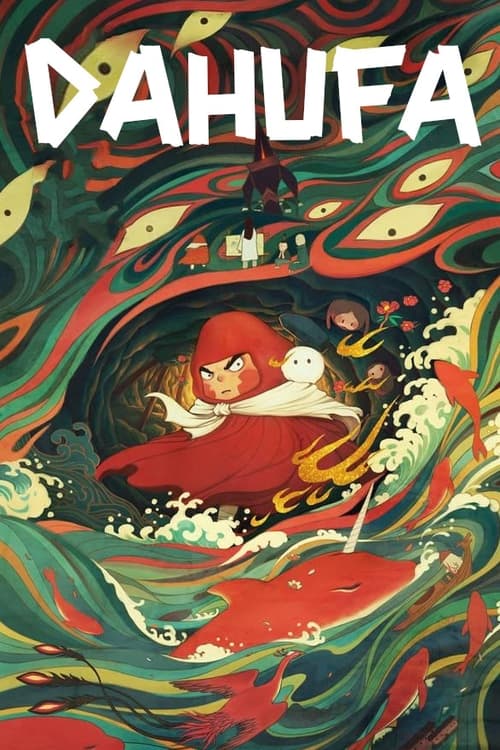
Dahufa
A warrior named Dahufa goes to save his prince from a dystopian village. He finds the dystopian village ruled by a fake god and his guards. In order to save the prince, Dahufa has to defeat the god and his men, and disclose the whole conspiracy.
The film earned $13.0M at the global box office.
3 wins & 2 nominations
Plot Structure
Story beats plotted across runtime


Narrative Arc
Emotional journey through the story's key moments
Story Circle
Blueprint 15-beat structure
Arcplot Score Breakdown
Weighted: Precision (70%) + Arc (15%) + Theme (15%)
Dahufa (2017) exhibits meticulously timed plot construction, characteristic of Busifan's storytelling approach. This structural analysis examines how the film's 15-point plot structure maps to proven narrative frameworks across 1 hour and 35 minutes. With an Arcplot score of 6.7, the film balances conventional beats with creative variation.
Characters
Cast & narrative archetypes

Dahufa
Xiao Jiang
Yiwei Taizi
Da Hei
Xiao Hong
Ji Gong
Yin Xiao
Main Cast & Characters
Dahufa
Played by Li Lan
The titular guardian warrior searching for a missing prince in a mysterious village. A skilled fighter who uncovers dark secrets.
Xiao Jiang
Played by Yang Ming
A curious young peanut person who questions the oppressive system of his village and aids Dahufa.
Yiwei Taizi
Played by Shi Banyu
The missing prince that Dahufa has been sent to find, held captive in the strange village.
Da Hei
Played by Yao Xiangqun
The tyrannical false leader of the peanut people who maintains control through deception and violence.
Xiao Hong
Played by Xiong Shuai
A young female peanut person who becomes aware of the truth and joins the resistance.
Ji Gong
Played by Feng Sheng
An assassin working for the oppressive regime, skilled in combat but conflicted about his role.
Yin Xiao
Played by Wu Di
A hidden manipulator who pulls strings from behind the scenes in the village's dark operations.
Structural Analysis
The Status Quo at 1 minutes (1% through the runtime) establishes Dahufa, the protector, exists in his role as guardian of the prince, established in his world of duty and martial prowess before his quest begins.. Notably, this early placement immediately immerses viewers in the story world.
The inciting incident occurs at 11 minutes when Dahufa discovers the prince is missing and must venture into unknown territory to find him, encountering the bizarre and sinister village of Yiwei Town.. At 12% through the film, this Disruption aligns precisely with traditional story structure. This beat shifts the emotional landscape, launching the protagonist into the central conflict.
The First Threshold at 24 minutes marks the transition into Act II, occurring at 25% of the runtime. This demonstrates the protagonist's commitment to Dahufa actively chooses to intervene and confront the hidden powers controlling Yiwei Town, committing himself to uncovering the truth and fighting the oppressive system., moving from reaction to action.
At 47 minutes, the Midpoint arrives at 50% of the runtime—precisely centered, creating perfect narrative symmetry. Significantly, this crucial beat The true horror of Yiwei Town is fully revealed - the Peanut People are artificial beings harvested for their valuable "Jiangzi" pods, marking a false defeat as the scale of the conspiracy becomes clear., fundamentally raising what's at risk. The emotional intensity shifts, dividing the narrative into clear before-and-after phases.
The Collapse moment at 71 minutes (75% through) represents the emotional nadir. Here, Major casualties occur among the Peanut People and allies. The weight of death and the seeming impossibility of overthrowing the established order brings Dahufa to his lowest point., indicates the protagonist at their lowest point. This beat's placement in the final quarter sets up the climactic reversal.
The Second Threshold at 76 minutes initiates the final act resolution at 80% of the runtime. Dahufa synthesizes his warrior skills with newfound understanding of the Peanut People's right to consciousness and choice, deciding to make a final stand for their liberation despite the cost., demonstrating the transformation achieved throughout the journey.
Emotional Journey
Dahufa's emotional architecture traces a deliberate progression across 15 carefully calibrated beats.
Narrative Framework
This structural analysis employs systematic plot point analysis that identifies crucial turning points. By mapping Dahufa against these established plot points, we can identify how Busifan utilizes or subverts traditional narrative conventions. The plot point approach reveals not only adherence to structural principles but also creative choices that distinguish Dahufa within the animation genre.
Comparative Analysis
Additional animation films include The Bad Guys, Puss in Boots and Violet Evergarden: Eternity and the Auto Memory Doll.
Plot Points by Act
Act I
SetupStatus Quo
Dahufa, the protector, exists in his role as guardian of the prince, established in his world of duty and martial prowess before his quest begins.
Theme
A character mentions the nature of control and ignorance, foreshadowing the film's exploration of oppression, manipulation, and awakening to truth.
Worldbuilding
Introduction to Dahufa's world, his relationship with the prince he protects, and the establishment of the strange Peanut People village of Yiwei - a society living under mysterious control and deception.
Disruption
Dahufa discovers the prince is missing and must venture into unknown territory to find him, encountering the bizarre and sinister village of Yiwei Town.
Resistance
Dahufa explores Yiwei Town, observing the peculiar Peanut People and their inexplicable behaviors, gathering information about the village's dark secrets and the conspiracy controlling its inhabitants.
Act II
ConfrontationFirst Threshold
Dahufa actively chooses to intervene and confront the hidden powers controlling Yiwei Town, committing himself to uncovering the truth and fighting the oppressive system.
Mirror World
Dahufa encounters Xiao Jiang and other conscious Peanut People who question their existence, representing the thematic exploration of awakening consciousness versus enforced ignorance.
Premise
Dahufa battles against the Grand Adviser's forces, witnesses the systematic execution of "sick" Peanut People, and experiences the dark premise: a protector fighting against a system built on lies and mass manipulation.
Midpoint
The true horror of Yiwei Town is fully revealed - the Peanut People are artificial beings harvested for their valuable "Jiangzi" pods, marking a false defeat as the scale of the conspiracy becomes clear.
Opposition
The Grand Adviser and his assassins intensify their pursuit of Dahufa and the awakened Peanut People. The conflict escalates as more Peanut People gain consciousness and resistance grows, but oppression tightens.
Collapse
Major casualties occur among the Peanut People and allies. The weight of death and the seeming impossibility of overthrowing the established order brings Dahufa to his lowest point.
Crisis
Dahufa processes the losses and confronts the moral complexity of his mission - the cost of truth and freedom, and whether awakening the Peanut People to their grim reality was mercy or cruelty.
Act III
ResolutionSecond Threshold
Dahufa synthesizes his warrior skills with newfound understanding of the Peanut People's right to consciousness and choice, deciding to make a final stand for their liberation despite the cost.
Synthesis
The final confrontation with the Grand Adviser and the powers controlling Yiwei Town. Dahufa leads the awakened Peanut People in rebellion, combining combat prowess with the collective will for freedom.
Transformation
The village transformed, Dahufa is no longer just a protector following orders but a guardian who understands that true protection means enabling others to awaken and choose their own destiny.