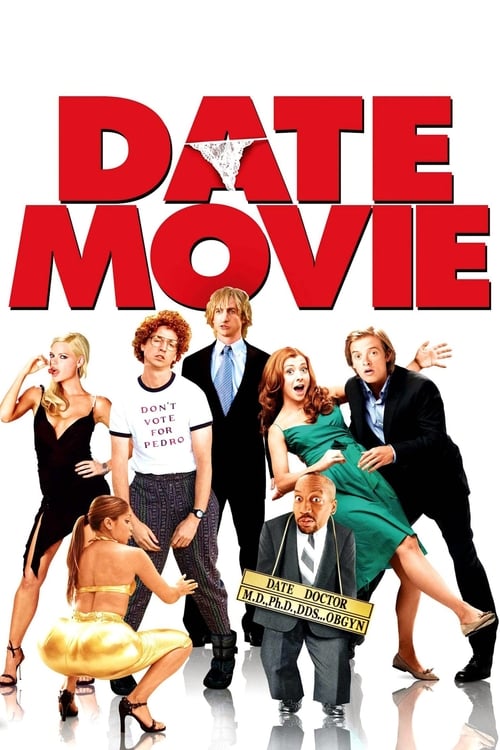
Date Movie
Spoof of romantic comedies which focuses on a man, his crush, his parents, and her father.
Despite a respectable budget of $20.0M, Date Movie became a box office success, earning $85.7M worldwide—a 329% return.
4 wins & 1 nomination


Plot Structure
Story beats plotted across runtime


Narrative Arc
Emotional journey through the story's key moments
Story Circle
Blueprint 15-beat structure
Arcplot Score Breakdown
Weighted: Precision (70%) + Arc (15%) + Theme (15%)
Date Movie (2006) exemplifies meticulously timed narrative design, characteristic of Aaron Seltzer's storytelling approach. This structural analysis examines how the film's 15-point plot structure maps to proven narrative frameworks across 1 hour and 23 minutes. With an Arcplot score of 7.3, the film balances conventional beats with creative variation.
Characters
Cast & narrative archetypes

Julia Jones
Grant Funkyerdoder
Andy
Hitch
Jinxed Cat
Roz Funkyerdoder
Main Cast & Characters
Julia Jones
Played by Alyson Hannigan
An insecure hopeless romantic seeking true love while dealing with family and body image issues
Grant Funkyerdoder
Played by Adam Campbell
Julia's quirky British love interest who sweeps her off her feet
Andy
Played by Sophie Monk
Julia's gay best friend who provides support and comic relief
Hitch
Played by Tony Cox
A smooth-talking dating coach who helps Julia prepare for romance
Jinxed Cat
Played by Eddie Griffin
Julia's father, a Greek immigrant restaurant owner with strong opinions
Roz Funkyerdoder
Played by Jennifer Coolidge
Grant's wealthy and disapproving mother who objects to Julia
Structural Analysis
The Status Quo at 1 minutes (1% through the runtime) establishes Julia Jones is severely overweight and unsuccessful in love, establishing her lonely "before" state and need for transformation.. Structural examination shows that this early placement immediately immerses viewers in the story world.
The inciting incident occurs at 9 minutes when Julia meets Grant Fockyerdoder, the man of her dreams, disrupting her lonely existence and introducing the possibility of romance.. At 11% through the film, this Disruption aligns precisely with traditional story structure. This beat shifts the emotional landscape, launching the protagonist into the central conflict.
The First Threshold at 21 minutes marks the transition into Act II, occurring at 25% of the runtime. This demonstrates the protagonist's commitment to Julia actively commits to the relationship with Grant, moving from casual dating into a serious romantic commitment and entering the world of coupled life., moving from reaction to action.
At 42 minutes, the Midpoint arrives at 50% of the runtime—precisely centered, creating perfect narrative symmetry. Of particular interest, this crucial beat Grant proposes to Julia or they reach a major relationship milestone that seems like a false victory - everything appears perfect but complications are brewing., fundamentally raising what's at risk. The emotional intensity shifts, dividing the narrative into clear before-and-after phases.
The Collapse moment at 61 minutes (74% through) represents the emotional nadir. Here, Julia and Grant break up or the wedding is called off. The dream of perfect love appears dead, representing Julia's darkest moment., demonstrates the protagonist at their lowest point. This beat's placement in the final quarter sets up the climactic reversal.
The Second Threshold at 66 minutes initiates the final act resolution at 80% of the runtime. Julia realizes she must be authentic and fight for true love, or discovers the truth about who truly loves her, synthesizing the theme with new understanding., demonstrating the transformation achieved throughout the journey.
Emotional Journey
Date Movie's emotional architecture traces a deliberate progression across 15 carefully calibrated beats.
Narrative Framework
This structural analysis employs structural analysis methodology used to understand storytelling architecture. By mapping Date Movie against these established plot points, we can identify how Aaron Seltzer utilizes or subverts traditional narrative conventions. The plot point approach reveals not only adherence to structural principles but also creative choices that distinguish Date Movie within the comedy genre.
Aaron Seltzer's Structural Approach
Among the 2 Aaron Seltzer films analyzed on Arcplot, the average structural score is 7.3, reflecting strong command of classical structure. Date Movie exemplifies the director's characteristic narrative technique. For comparative analysis, explore the complete Aaron Seltzer filmography.
Comparative Analysis
Additional comedy films include The Bad Guys, Ella Enchanted and The Evening Star. For more Aaron Seltzer analyses, see Vampires Suck.
Plot Points by Act
Act I
SetupStatus Quo
Julia Jones is severely overweight and unsuccessful in love, establishing her lonely "before" state and need for transformation.
Theme
Julia's father or family member suggests that finding true love requires being yourself, stating the film's romantic comedy theme about authenticity in relationships.
Worldbuilding
Julia's unhappy life, her desire for romance, her relationship with her family, and her makeover transformation are established, setting up her ordinary world.
Disruption
Julia meets Grant Fockyerdoder, the man of her dreams, disrupting her lonely existence and introducing the possibility of romance.
Resistance
Julia debates whether she can win Grant's heart, receives advice from friends and family, and navigates early dating mishaps while building confidence.
Act II
ConfrontationFirst Threshold
Julia actively commits to the relationship with Grant, moving from casual dating into a serious romantic commitment and entering the world of coupled life.
Mirror World
Introduction of Grant's world and family, or a subplot character who represents what true love should look like, carrying the thematic question.
Premise
The fun of the romantic relationship: dates, comic mishaps, parodies of romantic comedy tropes, wedding planning begins. The promise of the romantic comedy premise.
Midpoint
Grant proposes to Julia or they reach a major relationship milestone that seems like a false victory - everything appears perfect but complications are brewing.
Opposition
Wedding planning chaos intensifies, Andy (the best friend) may reveal feelings, Grant's ex-girlfriend appears, family conflicts arise, and Julia's insecurities emerge.
Collapse
Julia and Grant break up or the wedding is called off. The dream of perfect love appears dead, representing Julia's darkest moment.
Crisis
Julia processes the loss, reflects on what went wrong, and experiences her dark night of the soul before finding clarity about what true love means.
Act III
ResolutionSecond Threshold
Julia realizes she must be authentic and fight for true love, or discovers the truth about who truly loves her, synthesizing the theme with new understanding.
Synthesis
Julia executes her plan to win back Grant or declare her true feelings, culminating in the romantic finale with grand gestures and final confrontations.
Transformation
Julia and her true love unite, mirroring the opening image but showing her transformation from lonely and insecure to confident and loved.