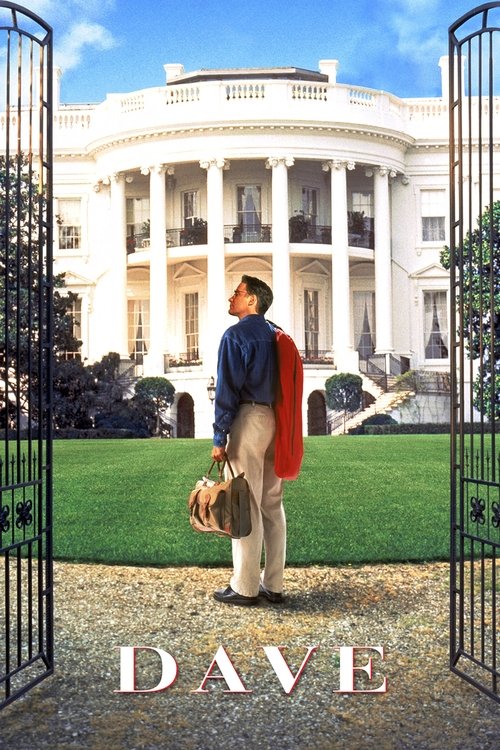
Dave
A sweet-natured Temp Agency operator and amateur Presidential look-alike is recruited by the Secret Service to become a temporary stand-in for the President of the United States.
Despite a mid-range budget of $28.0M, Dave became a box office success, earning $92.0M worldwide—a 229% return.
Nominated for 1 Oscar. 2 wins & 6 nominations


Plot Structure
Story beats plotted across runtime


Narrative Arc
Emotional journey through the story's key moments
Story Circle
Blueprint 15-beat structure
Arcplot Score Breakdown
Weighted: Precision (70%) + Arc (15%) + Theme (15%)
Dave (1993) exhibits strategically placed story structure, characteristic of Ivan Reitman's storytelling approach. This structural analysis examines how the film's 15-point plot structure maps to proven narrative frameworks across 1 hour and 50 minutes. With an Arcplot score of 7.0, the film balances conventional beats with creative variation.
Characters
Cast & narrative archetypes

Dave Kovic
Ellen Mitchell
Bob Alexander
Alan Reed
Duane Stevenson
President Bill Mitchell
Vice President Nance
Main Cast & Characters
Dave Kovic
Played by Kevin Kline
An ordinary temp agency owner who impersonates the President and becomes a better leader than the real one.
Ellen Mitchell
Played by Sigourney Weaver
The First Lady who discovers her humanity through the imposter President and falls for his genuine kindness.
Bob Alexander
Played by Frank Langella
The ruthless Chief of Staff who orchestrates the President switch to seize power for himself.
Alan Reed
Played by Kevin Dunn
The loyal Communications Director who supports Dave and helps him navigate the White House.
Duane Stevenson
Played by Charles Grodin
Dave's accountant friend who helps balance the federal budget like a family checkbook.
President Bill Mitchell
Played by Kevin Kline
The actual President who suffers a stroke during an affair, cold and politically calculating.
Vice President Nance
Played by Ben Kingsley
The well-meaning but sidelined Vice President whom Bob Alexander tries to implicate in scandal.
Structural Analysis
The Status Quo at 1 minutes (1% through the runtime) establishes Dave Kovich runs hisTemp Agency with genuine care, helping people find jobs. He's an ordinary guy who looks exactly like President Bill Mitchell, living a simple, honest life.. Structural examination shows that this early placement immediately immerses viewers in the story world.
The inciting incident occurs at 12 minutes when Secret Service recruits Dave to stand in for the President at a public event. What seems like a fun one-time gig disrupts his ordinary life and pulls him into the world of power.. At 11% through the film, this Disruption aligns precisely with traditional story structure. This beat shifts the emotional landscape, launching the protagonist into the central conflict.
The First Threshold at 27 minutes marks the transition into Act II, occurring at 24% of the runtime. This demonstrates the protagonist's commitment to Dave actively chooses to continue the impersonation, believing he can do good and help people. He commits to living in the White House and maintaining the deception, crossing into a world of power and responsibility., moving from reaction to action.
At 56 minutes, the Midpoint arrives at 50% of the runtime—precisely centered, creating perfect narrative symmetry. Structural examination shows that this crucial beat False victory: Dave successfully saves the homeless shelter by finding budget cuts (with Murray's help), delivers a triumphant speech, and shares an intimate moment with Ellen. He's winning as President, but the stakes raise as Bob Alexander discovers the truth and begins plotting against him., fundamentally raising what's at risk. The emotional intensity shifts, dividing the narrative into clear before-and-after phases.
The Collapse moment at 82 minutes (75% through) represents the emotional nadir. Here, Dave publicly names Vice President Nance as responsible for the scandal, betraying an innocent man to save himself. His dream of being a good leader dies. Ellen discovers the truth about the impersonation and leaves him, disgusted. Dave has become everything he stood against., reveals the protagonist at their lowest point. This beat's placement in the final quarter sets up the climactic reversal.
The Second Threshold at 87 minutes initiates the final act resolution at 79% of the runtime. Dave realizes he has the power to make one final authentic choice: he can expose the truth, clear Nance, and restore integrity to the office, even if it costs him everything. He synthesizes his ordinary-guy decency with presidential authority., demonstrating the transformation achieved throughout the journey.
Emotional Journey
Dave's emotional architecture traces a deliberate progression across 15 carefully calibrated beats.
Narrative Framework
This structural analysis employs a 15-point narrative structure framework that maps key story moments. By mapping Dave against these established plot points, we can identify how Ivan Reitman utilizes or subverts traditional narrative conventions. The plot point approach reveals not only adherence to structural principles but also creative choices that distinguish Dave within the comedy genre.
Ivan Reitman's Structural Approach
Among the 15 Ivan Reitman films analyzed on Arcplot, the average structural score is 7.1, reflecting strong command of classical structure. Dave takes a more unconventional approach compared to the director's typical style. For comparative analysis, explore the complete Ivan Reitman filmography.
Comparative Analysis
Additional comedy films include The Bad Guys, Ella Enchanted and The Evening Star. For more Ivan Reitman analyses, see Twins, Kindergarten Cop and No Strings Attached.
Plot Points by Act
Act I
SetupStatus Quo
Dave Kovich runs hisTemp Agency with genuine care, helping people find jobs. He's an ordinary guy who looks exactly like President Bill Mitchell, living a simple, honest life.
Theme
A citizen tells Dave (thinking he's the President): "If you were really President, you'd do something." This plants the seed about authentic leadership versus political theater.
Worldbuilding
Setup of two parallel worlds: Dave's humble temp agency life and President Mitchell's corrupt administration. We meet Chief of Staff Bob Alexander, the real power behind the throne, and First Lady Ellen Mitchell, isolated and disillusioned with her marriage.
Disruption
Secret Service recruits Dave to stand in for the President at a public event. What seems like a fun one-time gig disrupts his ordinary life and pulls him into the world of power.
Resistance
Dave debates whether to continue the impersonation after President Mitchell has a stroke during an affair. Secret Service agent Duane Stevensen and Communications Director Alan Reed guide Dave through the mechanics of being President, while Bob Alexander manipulates the situation for his own ambition.
Act II
ConfrontationFirst Threshold
Dave actively chooses to continue the impersonation, believing he can do good and help people. He commits to living in the White House and maintaining the deception, crossing into a world of power and responsibility.
Mirror World
Dave begins developing a genuine connection with First Lady Ellen Mitchell. She represents authenticity and idealism, challenging Dave to be more than just an impersonator. Their relationship carries the film's theme of genuine human connection versus political cynicism.
Premise
The fun and games of being President: Dave uses his position to actually help people, reinstates a homeless shelter program, brings his accountant friend Murray to find budget cuts, and starts governing with genuine empathy. He wins over Ellen and the public while Bob Alexander grows suspicious and threatened.
Midpoint
False victory: Dave successfully saves the homeless shelter by finding budget cuts (with Murray's help), delivers a triumphant speech, and shares an intimate moment with Ellen. He's winning as President, but the stakes raise as Bob Alexander discovers the truth and begins plotting against him.
Opposition
Bob Alexander weaponizes his knowledge, threatening to expose Dave unless he frames Vice President Nance for a scandal. The bad guys close in: Alexander manufactures evidence, manipulates the media, and forces Dave into increasingly compromising positions. Dave's integrity conflicts with his powerlessness.
Collapse
Dave publicly names Vice President Nance as responsible for the scandal, betraying an innocent man to save himself. His dream of being a good leader dies. Ellen discovers the truth about the impersonation and leaves him, disgusted. Dave has become everything he stood against.
Crisis
Dave's dark night: alone in the Oval Office, he confronts what he's become and processes the cost of his choices. He must decide who he really is—a puppet following orders or someone willing to sacrifice everything for what's right.
Act III
ResolutionSecond Threshold
Dave realizes he has the power to make one final authentic choice: he can expose the truth, clear Nance, and restore integrity to the office, even if it costs him everything. He synthesizes his ordinary-guy decency with presidential authority.
Synthesis
The finale: Dave confesses the impersonation before Congress, exonerates Vice President Nance, exposes Bob Alexander's corruption, and transfers power legitimately. He fakes a stroke to explain the transition and "dies" as President, while the real President Mitchell is revealed to have died weeks earlier.
Transformation
Closing image mirrors opening: Dave is back running his temp agency, but now he's running for City Council with Ellen at his side. He didn't stay President, but he found his authentic voice and purpose. The ordinary man who briefly had power chose integrity over position.