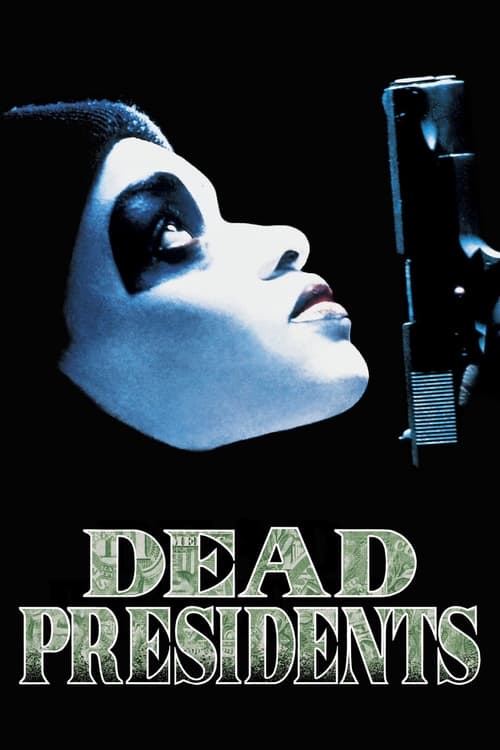
Dead Presidents
On the streets they call cash dead presidents. And that's just what a Vietnam veteran is after when he returns home from the war only to find himself drawn into a life of crime. With the aid of his fellow vets he plans the ultimate heist -- a daring robbery of an armored car filled with unmarked U.S. currency!
Despite its small-scale budget of $10.0M, Dead Presidents became a commercial success, earning $24.1M worldwide—a 141% return.


Plot Structure
Story beats plotted across runtime


Narrative Arc
Emotional journey through the story's key moments
Story Circle
Blueprint 15-beat structure
Arcplot Score Breakdown
Weighted: Precision (70%) + Arc (15%) + Theme (15%)
Dead Presidents (1995) demonstrates carefully calibrated plot construction, characteristic of Albert Hughes's storytelling approach. This structural analysis examines how the film's 15-point plot structure maps to proven narrative frameworks across 1 hour and 59 minutes. With an Arcplot score of 6.3, the film takes an unconventional approach to traditional narrative frameworks.
Characters
Cast & narrative archetypes

Anthony Curtis
Juanita Benson
Kirby
Skip
Jose
Delilah
Cleon
Mr. Warren
Main Cast & Characters
Anthony Curtis
Played by Larenz Tate
A young Bronx man who enlists in the Marines during Vietnam, returns traumatized, and struggles to survive in a crumbling economy before turning to crime.
Juanita Benson
Played by Rose Jackson
Anthony's loyal girlfriend and later wife who stands by him through deployment and his difficult return, struggling to keep their family together.
Kirby
Played by Keith David
Anthony's childhood friend and fellow Vietnam veteran who becomes increasingly unhinged after the war and helps plan the armored car heist.
Skip
Played by Chris Tucker
Anthony's best friend and partner in crime, a smooth-talking Vietnam veteran who masterminds the heist and struggles with PTSD and addiction.
Jose
Played by Freddy Rodriguez
Anthony's Latino friend and fellow soldier who serves with him in Vietnam and later joins the heist crew.
Delilah
Played by N'Bushe Wright
A revolutionary and militant woman who becomes involved with the crew and provides ideology and weapons for their criminal plans.
Cleon
Played by Bokeem Woodbine
Anthony's mentor figure and pool hall regular who tries to guide the young men but is limited by his own circumstances.
Mr. Warren
Played by Martin Sheen
A pimp and local criminal figure who represents the corrupting influence of the streets and tempts Anthony toward crime.
Structural Analysis
The Status Quo at 2 minutes (2% through the runtime) establishes Anthony Curtis in the Bronx, 1968. A young Black teenager working at a butcher shop, dreaming of better things, surrounded by family and community. His world is intact, full of youthful optimism and possibility.. Significantly, this early placement immediately immerses viewers in the story world.
The inciting incident occurs at 15 minutes when Anthony receives his draft notice for Vietnam. The carefree world of his youth is shattered. Juanita is pregnant, but Anthony must go to war. The system demands his service.. At 13% through the film, this Disruption is delayed, allowing extended setup of the story world. This beat shifts the emotional landscape, launching the protagonist into the central conflict.
The First Threshold at 31 minutes marks the transition into Act II, occurring at 26% of the runtime. This illustrates the protagonist's commitment to Anthony boards the plane to Vietnam. He actively chooses to serve, crossing into a world that will fundamentally transform him. There is no turning back from this decision., moving from reaction to action.
At 60 minutes, the Midpoint arrives at 50% of the runtime—precisely centered, creating perfect narrative symmetry. Notably, this crucial beat Cleon is killed in combat, dying in Anthony's arms. The false victory of survival is shattered. Anthony realizes this war is unwinnable and survival is arbitrary. The stakes are raised - this isn't about heroism, it's about getting home alive., fundamentally raising what's at risk. The emotional intensity shifts, dividing the narrative into clear before-and-after phases.
The Collapse moment at 76 minutes (64% through) represents the emotional nadir. Here, Anthony loses his job and dignity, unable to provide for his family. His father dies. The whiff of death: Anthony's hope and faith in the system dies. He sees clearly now - he was used and discarded. America has no use for him now., shows the protagonist at their lowest point. This beat's placement in the final quarter sets up the climactic reversal.
The Second Threshold at 92 minutes initiates the final act resolution at 77% of the runtime. Kirby proposes the armored car heist - stealing "dead presidents" (money) from the Federal Reserve. Anthony synthesizes his military training with his desperation. He commits fully to the plan, recruiting Skip, Jose, and others. The soldier becomes the criminal., demonstrating the transformation achieved throughout the journey.
Emotional Journey
Dead Presidents's emotional architecture traces a deliberate progression across 15 carefully calibrated beats.
Narrative Framework
This structural analysis employs a 15-point narrative structure framework that maps key story moments. By mapping Dead Presidents against these established plot points, we can identify how Albert Hughes utilizes or subverts traditional narrative conventions. The plot point approach reveals not only adherence to structural principles but also creative choices that distinguish Dead Presidents within the action genre.
Albert Hughes's Structural Approach
Among the 4 Albert Hughes films analyzed on Arcplot, the average structural score is 6.8, demonstrating varied approaches to story architecture. Dead Presidents takes a more unconventional approach compared to the director's typical style. For comparative analysis, explore the complete Albert Hughes filmography.
Comparative Analysis
Additional action films include The Bad Guys, Puss in Boots and Venom: The Last Dance. For more Albert Hughes analyses, see Alpha, Menace II Society and From Hell.
Plot Points by Act
Act I
SetupStatus Quo
Anthony Curtis in the Bronx, 1968. A young Black teenager working at a butcher shop, dreaming of better things, surrounded by family and community. His world is intact, full of youthful optimism and possibility.
Theme
Anthony's mentor Kirby warns him: "This country don't care about you." The thematic question is stated - what happens when the system betrays those who serve it? Can Anthony maintain his integrity in a country that sees him as expendable?
Worldbuilding
Anthony's life in the Bronx: his relationship with girlfriend Juanita, his friendship with Skip and Jose, street pool games, family dynamics with his hardworking mother and alcoholic father, and the ever-present specter of the Vietnam War draft.
Disruption
Anthony receives his draft notice for Vietnam. The carefree world of his youth is shattered. Juanita is pregnant, but Anthony must go to war. The system demands his service.
Resistance
Anthony grapples with leaving. He proposes to Juanita, debates his future with friends Skip and Jose who also enlist, says goodbye to his family. The men prepare for war, caught between patriotic duty and survival instinct.
Act II
ConfrontationFirst Threshold
Anthony boards the plane to Vietnam. He actively chooses to serve, crossing into a world that will fundamentally transform him. There is no turning back from this decision.
Mirror World
Anthony bonds with his platoon, particularly Cleon, a battle-hardened soldier who becomes both mentor and cautionary tale. This military brotherhood mirrors the theme of loyalty versus survival, sacrifice versus self-preservation.
Premise
The Vietnam War experience. Anthony and his friends fight in brutal jungle combat, witness atrocities, participate in morally compromising missions. The film delivers the visceral, horrifying reality of war - the promise of this premise is the destruction of innocence.
Midpoint
Cleon is killed in combat, dying in Anthony's arms. The false victory of survival is shattered. Anthony realizes this war is unwinnable and survival is arbitrary. The stakes are raised - this isn't about heroism, it's about getting home alive.
Opposition
Anthony completes his tour and returns to the Bronx in 1973, but the world has moved on without him. He has PTSD, can't find work, struggles to connect with Juanita and his daughter. Skip is in a wheelchair, Jose is using heroin. The promised American Dream is a lie.
Collapse
Anthony loses his job and dignity, unable to provide for his family. His father dies. The whiff of death: Anthony's hope and faith in the system dies. He sees clearly now - he was used and discarded. America has no use for him now.
Crisis
Anthony descends into desperation and rage. He watches his community suffer, his friends broken by the same system. In his dark night, he realizes conventional paths are closed to him. He processes the betrayal and begins to plan revenge.
Act III
ResolutionSecond Threshold
Kirby proposes the armored car heist - stealing "dead presidents" (money) from the Federal Reserve. Anthony synthesizes his military training with his desperation. He commits fully to the plan, recruiting Skip, Jose, and others. The soldier becomes the criminal.
Synthesis
The heist finale. The crew, disguised in whiteface makeup, executes a military-precision robbery that turns into a bloodbath. Police ambush them. Jose dies. The plan falls apart. Anthony is hunted through the streets, cornered, and arrested.
Transformation
Anthony in prison, looking directly at the camera. His transformation is complete but tragic - from innocent youth to decorated veteran to convicted criminal. The closing image mirrors the opening: Anthony behind bars, still trapped, still discarded by the country he served. A corruption arc fulfilled.