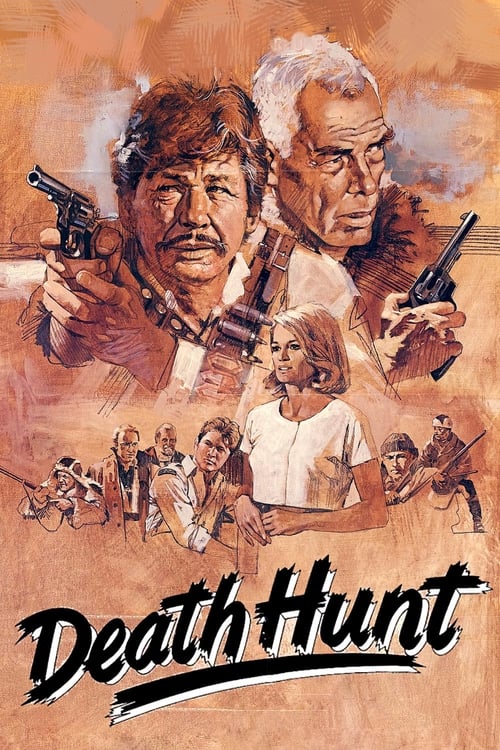
Death Hunt
Yukon Territory, Canada, November 1931. Albert Johnson, a trapper who lives alone in the mountains, buys a dog almost dead after a brutal dogfight, a good deed that will put him in trouble.
The film disappointed at the box office against its limited budget of $10.0M, earning $5.0M globally (-50% loss). While initial box office returns were modest, the film has gained appreciation for its unconventional structure within the action genre.
Plot Structure
Story beats plotted across runtime


Narrative Arc
Emotional journey through the story's key moments
Story Circle
Blueprint 15-beat structure
Arcplot Score Breakdown
Weighted: Precision (70%) + Arc (15%) + Theme (15%)
Death Hunt (1981) exemplifies strategically placed narrative architecture, characteristic of Peter R. Hunt's storytelling approach. This structural analysis examines how the film's 15-point plot structure maps to proven narrative frameworks across 1 hour and 37 minutes. With an Arcplot score of 7.4, the film balances conventional beats with creative variation.
Characters
Cast & narrative archetypes

Albert Johnson
Sgt. Edgar Millen
Sundog
Vanessa
Hazel
Hawkins
Main Cast & Characters
Albert Johnson
Played by Charles Bronson
A reclusive trapper in the Yukon who becomes the target of a massive manhunt after defending himself against trappers
Sgt. Edgar Millen
Played by Lee Marvin
A principled Mountie tasked with bringing Johnson in, who grows to respect his quarry
Sundog
Played by Carl Weathers
A loyal Native trapper and tracker who assists Millen in the hunt
Vanessa
Played by Angie Dickinson
A compassionate woman who runs a supply store and shows sympathy for Johnson
Hazel
Played by Tantoo Cardinal
A prostitute who befriends Johnson and witnesses his isolation
Hawkins
Played by Ed Lauter
A corrupt and sadistic trapper who instigates the conflict with Johnson
Structural Analysis
The Status Quo at 1 minutes (1% through the runtime) establishes Albert Johnson arrives in the Yukon wilderness as a mysterious, self-sufficient loner seeking isolation from civilization.. The analysis reveals that this early placement immediately immerses viewers in the story world.
The inciting incident occurs at 12 minutes when Hazel files false accusations against Johnson for stealing his dog, stirring up a vengeful posse that forces Sergeant Millen to investigate.. At 12% through the film, this Disruption aligns precisely with traditional story structure. This beat shifts the emotional landscape, launching the protagonist into the central conflict.
The First Threshold at 26 minutes marks the transition into Act II, occurring at 27% of the runtime. This shows the protagonist's commitment to The posse opens fire on Johnson's cabin. Johnson defends himself, killing Hazel and wounding others - transforming a minor dispute into a murder manhunt from which there is no return., moving from reaction to action.
At 50 minutes, the Midpoint arrives at 52% of the runtime—precisely centered, creating perfect narrative symmetry. Significantly, this crucial beat Modern technology arrives: a biplane and expert tracker Sundog are brought in. The authorities escalate resources and Johnson realizes conventional escape is impossible - the game has changed., fundamentally raising what's at risk. The emotional intensity shifts, dividing the narrative into clear before-and-after phases.
The Collapse moment at 73 minutes (75% through) represents the emotional nadir. Here, Johnson is cut off from his planned escape route to Alaska. Trapped by the posse's positioning and exhausted from the prolonged chase, his options collapse to a final deadly confrontation., demonstrates the protagonist at their lowest point. This beat's placement in the final quarter sets up the climactic reversal.
The Second Threshold at 79 minutes initiates the final act resolution at 81% of the runtime. Millen and Johnson finally meet face-to-face for the final confrontation. Despite mutual respect, both accept their roles in the tragedy that duty and circumstance have created., demonstrating the transformation achieved throughout the journey.
Emotional Journey
Death Hunt's emotional architecture traces a deliberate progression across 15 carefully calibrated beats.
Narrative Framework
This structural analysis employs proven narrative structure principles that track dramatic progression. By mapping Death Hunt against these established plot points, we can identify how Peter R. Hunt utilizes or subverts traditional narrative conventions. The plot point approach reveals not only adherence to structural principles but also creative choices that distinguish Death Hunt within the action genre.
Peter R. Hunt's Structural Approach
Among the 2 Peter R. Hunt films analyzed on Arcplot, the average structural score is 7.0, demonstrating varied approaches to story architecture. Death Hunt represents one of the director's most structurally precise works. For comparative analysis, explore the complete Peter R. Hunt filmography.
Comparative Analysis
Additional action films include The Bad Guys, Puss in Boots and Venom: The Last Dance. For more Peter R. Hunt analyses, see On Her Majesty's Secret Service.
Plot Points by Act
Act I
SetupStatus Quo
Albert Johnson arrives in the Yukon wilderness as a mysterious, self-sufficient loner seeking isolation from civilization.
Theme
A character observes that in the wilderness, a man makes his own law - establishing the film's central conflict between individual justice and societal law.
Worldbuilding
Introduction to the harsh 1931 Yukon setting, the remote outpost community, RCMP Sergeant Millen, and Johnson's moral code when he intervenes to save an abused dog from a brutal dogfight.
Disruption
Hazel files false accusations against Johnson for stealing his dog, stirring up a vengeful posse that forces Sergeant Millen to investigate.
Resistance
The posse travels to Johnson's remote cabin. Johnson refuses to cooperate or open his door. Tensions escalate as the aggressive posse members debate forcing entry, with Millen trying to maintain control.
Act II
ConfrontationFirst Threshold
The posse opens fire on Johnson's cabin. Johnson defends himself, killing Hazel and wounding others - transforming a minor dispute into a murder manhunt from which there is no return.
Mirror World
Millen's relationship with Vanessa provides emotional context and reflects on the costs of duty versus personal desire, mirroring Johnson's choice between principle and compromise.
Premise
The manhunt intensifies across brutal terrain. Johnson uses superior wilderness skills to evade capture through the frozen wilderness - the cat-and-mouse survival chase the audience came to see.
Midpoint
Modern technology arrives: a biplane and expert tracker Sundog are brought in. The authorities escalate resources and Johnson realizes conventional escape is impossible - the game has changed.
Opposition
Aerial searches and expert tracking close the net. Multiple near-captures occur. Both sides suffer losses. Millen develops grudging respect for his quarry while duty demands he continue the pursuit.
Collapse
Johnson is cut off from his planned escape route to Alaska. Trapped by the posse's positioning and exhausted from the prolonged chase, his options collapse to a final deadly confrontation.
Crisis
Johnson makes his desperate final push toward the border. Both he and Millen know this can only end one way - the dark acceptance that circumstances have made tragedy inevitable.
Act III
ResolutionSecond Threshold
Millen and Johnson finally meet face-to-face for the final confrontation. Despite mutual respect, both accept their roles in the tragedy that duty and circumstance have created.
Synthesis
The final shootout occurs in the snow. Johnson dies. Millen discovers Johnson's true identity and background, understanding the full tragedy of a good man destroyed by escalating circumstances.
Transformation
Millen stands in the snow reflecting on the waste and futility. The wilderness remains indifferent to human conflict - a somber meditation on the cost of inflexible law versus individual justice.