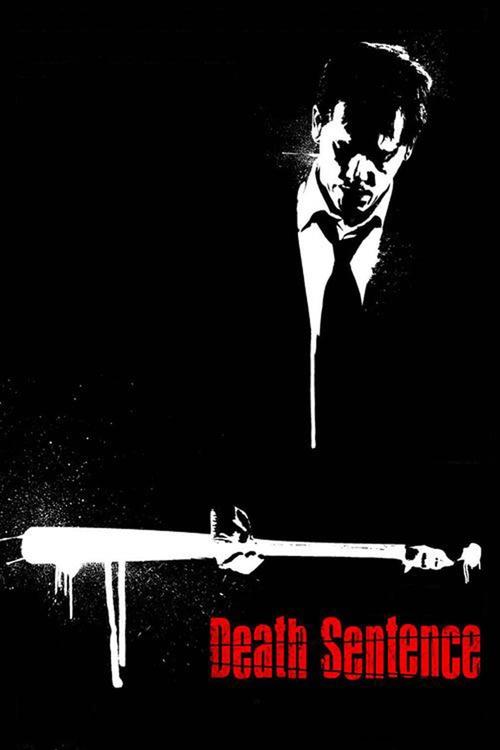
Death Sentence
Nick Hume is a mild-mannered executive with a perfect life, until one gruesome night he witnesses something that changes him forever. Transformed by grief, Hume eventually comes to the disturbing conclusion that no length is too great when protecting his family.
The film underperformed commercially against its mid-range budget of $20.0M, earning $17.0M globally (-15% loss).


Plot Structure
Story beats plotted across runtime


Narrative Arc
Emotional journey through the story's key moments
Story Circle
Blueprint 15-beat structure
Arcplot Score Breakdown
Weighted: Precision (70%) + Arc (15%) + Theme (15%)
Death Sentence (2007) demonstrates deliberately positioned story structure, characteristic of James Wan's storytelling approach. This structural analysis examines how the film's 15-point plot structure maps to proven narrative frameworks across 1 hour and 45 minutes. With an Arcplot score of 7.4, the film balances conventional beats with creative variation.
Characters
Cast & narrative archetypes

Nick Hume
Billy Darley
Helen Hume
Joe Darley
Bones Darley
Brendan Hume
Lucas Hume
Main Cast & Characters
Nick Hume
Played by Kevin Bacon
Mild-mannered insurance executive whose life is shattered when his son is murdered in a gang initiation, transforming him into a vengeful vigilante.
Billy Darley
Played by Garrett Hedlund
Sadistic gang leader who orchestrates violence and seeks to dominate his criminal territory through fear and brutality.
Helen Hume
Played by Kelly Preston
Nick's wife and mother of their children, struggling to hold the family together as Nick descends into violence.
Joe Darley
Played by Matt O'Leary
Billy's younger brother who commits the initial murder during a gang initiation, setting the entire tragedy in motion.
Bones Darley
Played by John Goodman
The father of Billy and Joe, a career criminal and gang patriarch who enables his sons' violence.
Brendan Hume
Played by Stuart Lafferty
Nick and Helen's eldest son, a promising hockey player who is murdered in a random act of gang violence.
Lucas Hume
Played by Jordan Garrett
Nick and Helen's younger son who becomes a target of the gang war his father initiated.
Structural Analysis
The Status Quo at 2 minutes (2% through the runtime) establishes Nick Hume celebrates son Brendan's hockey achievement with his family at a restaurant. Happy suburban family man with successful career, loving wife, two sons.. The analysis reveals that this early placement immediately immerses viewers in the story world.
The inciting incident occurs at 12 minutes when Nick stops at gas station on the way home. Gang initiation occurs - Joe Darley slashes Brendan's throat in front of Nick. Brendan dies in Nick's arms.. At 12% through the film, this Disruption aligns precisely with traditional story structure. This beat shifts the emotional landscape, launching the protagonist into the central conflict.
The First Threshold at 26 minutes marks the transition into Act II, occurring at 25% of the runtime. This indicates the protagonist's commitment to At courthouse, Nick makes active choice to NOT identify Joe Darley in lineup, letting him go free. Decides to take justice into his own hands., moving from reaction to action.
At 52 minutes, the Midpoint arrives at 50% of the runtime—precisely centered, creating perfect narrative symmetry. Significantly, this crucial beat Home invasion - gang kills younger son Lucas and critically wounds Helen. False defeat: Nick's attempt at limited revenge has destroyed everything he was trying to protect., fundamentally raising what's at risk. The emotional intensity shifts, dividing the narrative into clear before-and-after phases.
The Collapse moment at 78 minutes (74% through) represents the emotional nadir. Here, Nick wounded in parking garage shootout with gang. Barely escapes with his life. Returns home alone, family destroyed, wife in hospital, both sons dead. Rock bottom., demonstrates the protagonist at their lowest point. This beat's placement in the final quarter sets up the climactic reversal.
The Second Threshold at 83 minutes initiates the final act resolution at 79% of the runtime. Nick makes final choice: accept he cannot go back, must finish what he started. Discovers gang's location. Embraces complete transformation into instrument of vengeance., demonstrating the transformation achieved throughout the journey.
Emotional Journey
Death Sentence's emotional architecture traces a deliberate progression across 15 carefully calibrated beats.
Narrative Framework
This structural analysis employs a 15-point narrative structure framework that maps key story moments. By mapping Death Sentence against these established plot points, we can identify how James Wan utilizes or subverts traditional narrative conventions. The plot point approach reveals not only adherence to structural principles but also creative choices that distinguish Death Sentence within the action genre.
James Wan's Structural Approach
Among the 10 James Wan films analyzed on Arcplot, the average structural score is 7.0, reflecting strong command of classical structure. Death Sentence represents one of the director's most structurally precise works. For comparative analysis, explore the complete James Wan filmography.
Comparative Analysis
Additional action films include The Bad Guys, Puss in Boots and Venom: The Last Dance. For more James Wan analyses, see Furious 7, Insidious and Dead Silence.
Plot Points by Act
Act I
SetupStatus Quo
Nick Hume celebrates son Brendan's hockey achievement with his family at a restaurant. Happy suburban family man with successful career, loving wife, two sons.
Theme
Conversation about consequences and justice foreshadows the moral question: When the system fails, how far will you go for revenge?
Worldbuilding
Establish Nick's normal life: executive job, suburban home, wife Helen, sons Brendan and Lucas. Perfect American family with hockey dreams and college plans.
Disruption
Nick stops at gas station on the way home. Gang initiation occurs - Joe Darley slashes Brendan's throat in front of Nick. Brendan dies in Nick's arms.
Resistance
Nick identifies killer Joe Darley. Detective Walland explains plea bargain - only 3-5 years. Nick struggles with grief and the inadequacy of justice system. Funeral. Family fractures.
Act II
ConfrontationFirst Threshold
At courthouse, Nick makes active choice to NOT identify Joe Darley in lineup, letting him go free. Decides to take justice into his own hands.
Mirror World
Nick follows Joe to secluded area. Confrontation leads to Nick killing Joe with a machete. This violent act introduces the dark mirror world of revenge.
Premise
Nick tries to cover up the murder and return to normal life. Gang leader Billy Darley seeks revenge for his brother. Escalating violence - gang attacks Nick's home, kills son Lucas.
Midpoint
Home invasion - gang kills younger son Lucas and critically wounds Helen. False defeat: Nick's attempt at limited revenge has destroyed everything he was trying to protect.
Opposition
Nick transforms into vigilante. Shaves head, buys guns from Bones. Systematically hunts gang members. Billy escalates with more resources. Police pursue Nick. Helen remains in coma.
Collapse
Nick wounded in parking garage shootout with gang. Barely escapes with his life. Returns home alone, family destroyed, wife in hospital, both sons dead. Rock bottom.
Crisis
Nick sits in devastation, processing total loss. Dark night - he has become what he hunted, lost everything, but revenge cycle remains unfinished. Visits comatose Helen.
Act III
ResolutionSecond Threshold
Nick makes final choice: accept he cannot go back, must finish what he started. Discovers gang's location. Embraces complete transformation into instrument of vengeance.
Synthesis
Final assault on gang headquarters. Nick methodically eliminates gang members. Confrontation with Billy Darley. Mutual destruction - both fatally wounded. Cycle of revenge completed.
Transformation
Mortally wounded Nick crawls to street, collapses. Contrasts with opening family man - now alone, dying, family destroyed. Revenge achieved but at cost of everything. Tragedy.