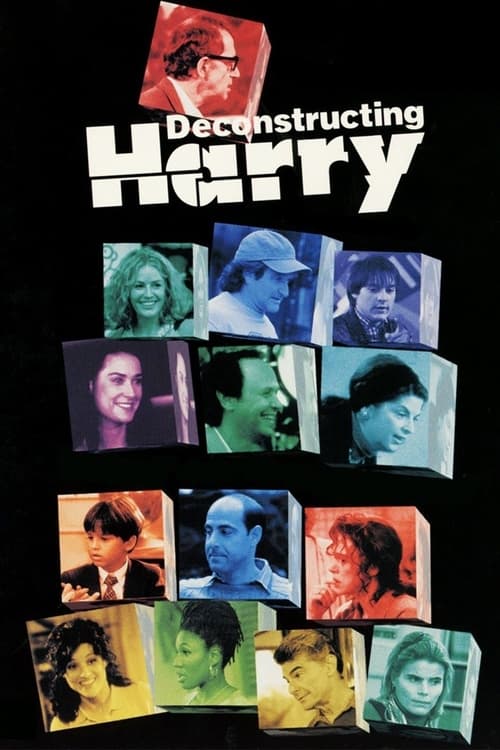
Deconstructing Harry
Writer Harry Block draws inspiration from people he knows, and from events that happened to him, sometimes causing these people to become alienated from him as a result.
The film disappointed at the box office against its moderate budget of $20.0M, earning $10.7M globally (-47% loss). While initial box office returns were modest, the film has gained appreciation for its compelling narrative within the comedy genre.
Nominated for 1 Oscar. 4 wins & 6 nominations


Plot Structure
Story beats plotted across runtime


Narrative Arc
Emotional journey through the story's key moments
Story Circle
Blueprint 15-beat structure
Arcplot Score Breakdown
Weighted: Precision (70%) + Arc (15%) + Theme (15%)
Deconstructing Harry (1997) exemplifies deliberately positioned plot construction, characteristic of Woody Allen's storytelling approach. This structural analysis examines how the film's 15-point plot structure maps to proven narrative frameworks across 1 hour and 36 minutes. With an Arcplot score of 7.4, the film balances conventional beats with creative variation.
Characters
Cast & narrative archetypes

Harry Block
Lucy
Fay
Jane
Cookie
Richard
Joan
Doris
Main Cast & Characters
Harry Block
Played by Woody Allen
A neurotic writer whose fictional characters blur with reality as he faces personal and creative crises.
Lucy
Played by Judy Davis
Harry's ex-girlfriend who left him for his best friend, representing one of his major emotional wounds.
Fay
Played by Elisabeth Shue
Harry's current girlfriend, a much younger therapist who becomes frustrated with his neuroses.
Jane
Played by Kirstie Alley
Harry's ex-wife who restricts his access to their son due to his erratic behavior.
Cookie
Played by Hazelle Goodman
A sex-worker Harry hires and brings on his chaotic road trip, showing surprising depth.
Richard
Played by Bob Balaban
Harry's former best friend who married Lucy, representing betrayal and abandonment.
Joan
Played by Caroline Aaron
Harry's sister who represents family connection and moral grounding he often rejects.
Doris
Played by Amy Irving
One of Harry's ex-wives who appears in his memories and fictional recreations.
Structural Analysis
The Status Quo at 1 minutes (1% through the runtime) establishes Harry Block sits alone in his apartment, disheveled and depressed, unable to write. His life is falling apart - he's blocked as a writer, alienated from everyone, haunted by his fictional characters coming to life around him.. Structural examination shows that this early placement immediately immerses viewers in the story world.
The inciting incident occurs at 12 minutes when Harry receives an invitation to be honored by the university that once expelled him. This triggers both his desire for validation and a crisis when he realizes he has no one to bring - everyone in his life hates him.. At 13% through the film, this Disruption is delayed, allowing extended setup of the story world. This beat shifts the emotional landscape, launching the protagonist into the central conflict.
The First Threshold at 24 minutes marks the transition into Act II, occurring at 25% of the runtime. This reveals the protagonist's commitment to Harry makes the active choice to kidnap his son Hilly from his ex-wife Joan and embark on a road trip to the university ceremony, bringing along a prostitute (Cookie) and his friend Richard. This desperate act launches him into chaos., moving from reaction to action.
At 49 minutes, the Midpoint arrives at 51% of the runtime—precisely centered, creating perfect narrative symmetry. Structural examination shows that this crucial beat Harry has a confrontation with Fay, his ex-wife who married his best friend Larry. The pain of this betrayal resurfaces intensely - false defeat. He realizes going to this ceremony won't fix anything; his past wounds are still raw and destroying him., fundamentally raising what's at risk. The emotional intensity shifts, dividing the narrative into clear before-and-after phases.
The Collapse moment at 71 minutes (74% through) represents the emotional nadir. Here, Harry hits rock bottom: he's arrested, his son is taken away, and he faces the complete destruction of all his relationships. In a metaphorical "death," he confronts that his art has consumed his humanity - he has nothing and no one left., shows the protagonist at their lowest point. This beat's placement in the final quarter sets up the climactic reversal.
The Second Threshold at 76 minutes initiates the final act resolution at 80% of the runtime. Harry experiences a revelation through his fictional alter-ego: he must accept himself, flaws and all. He understands that his art and life are inseparable - he can't change who he is, but he can accept it. He chooses to continue to the ceremony., demonstrating the transformation achieved throughout the journey.
Emotional Journey
Deconstructing Harry's emotional architecture traces a deliberate progression across 15 carefully calibrated beats.
Narrative Framework
This structural analysis employs proven narrative structure principles that track dramatic progression. By mapping Deconstructing Harry against these established plot points, we can identify how Woody Allen utilizes or subverts traditional narrative conventions. The plot point approach reveals not only adherence to structural principles but also creative choices that distinguish Deconstructing Harry within the comedy genre.
Woody Allen's Structural Approach
Among the 42 Woody Allen films analyzed on Arcplot, the average structural score is 7.0, demonstrating varied approaches to story architecture. Deconstructing Harry represents one of the director's most structurally precise works. For comparative analysis, explore the complete Woody Allen filmography.
Comparative Analysis
Additional comedy films include The Bad Guys, Ella Enchanted and The Evening Star. For more Woody Allen analyses, see Everyone Says I Love You, Celebrity and Interiors.
Plot Points by Act
Act I
SetupStatus Quo
Harry Block sits alone in his apartment, disheveled and depressed, unable to write. His life is falling apart - he's blocked as a writer, alienated from everyone, haunted by his fictional characters coming to life around him.
Theme
Lucy confronts Harry about how he uses real people in his fiction: "You take everyone's suffering and turn it into gold - literary gold." The theme is stated: the relationship between art and life, how artists exploit reality for their work.
Worldbuilding
Intercut sequences establish Harry's chaotic life: his three failed marriages, his psychiatrist sessions, his fictional characters materializing, his sister Doris's disapproval, and his self-destructive patterns. We see how he cannibalizes his life for his art.
Disruption
Harry receives an invitation to be honored by the university that once expelled him. This triggers both his desire for validation and a crisis when he realizes he has no one to bring - everyone in his life hates him.
Resistance
Harry debates whether to attend the ceremony. He desperately tries to find someone to accompany him - calling ex-wives, friends, all of whom reject him. His isolation becomes painfully clear. He continues therapy sessions exploring his dysfunction.
Act II
ConfrontationFirst Threshold
Harry makes the active choice to kidnap his son Hilly from his ex-wife Joan and embark on a road trip to the university ceremony, bringing along a prostitute (Cookie) and his friend Richard. This desperate act launches him into chaos.
Mirror World
Cookie, the prostitute Harry brings along, serves as an unlikely mirror - she's honest, direct, and unjudgmental. Unlike the intellectual characters in Harry's life, she accepts him without analyzing him, representing simple human connection without artistic pretension.
Premise
The road trip becomes a picaresque journey intercut with Harry's fictional stories coming to life. We see the "fun" of Harry's imagination - the blurred lines between reality and fiction, his self-aware neurosis, surreal encounters, and darkly comic situations that explore his psyche.
Midpoint
Harry has a confrontation with Fay, his ex-wife who married his best friend Larry. The pain of this betrayal resurfaces intensely - false defeat. He realizes going to this ceremony won't fix anything; his past wounds are still raw and destroying him.
Opposition
Everything falls apart on the journey. The police pursue Harry for kidnapping. Richard has a health crisis. Harry's fictional world and real world collapse into each other. His self-destructive patterns accelerate. Everyone abandons him or turns against him.
Collapse
Harry hits rock bottom: he's arrested, his son is taken away, and he faces the complete destruction of all his relationships. In a metaphorical "death," he confronts that his art has consumed his humanity - he has nothing and no one left.
Crisis
In his darkest moment, Harry reflects on his life through his fiction. He processes the death of his ability to connect authentically with people, sitting with the consequences of using everyone as material rather than loving them as humans.
Act III
ResolutionSecond Threshold
Harry experiences a revelation through his fictional alter-ego: he must accept himself, flaws and all. He understands that his art and life are inseparable - he can't change who he is, but he can accept it. He chooses to continue to the ceremony.
Synthesis
Harry arrives at the university ceremony. He faces his past, receives the honor, and acknowledges both his achievements and failures. He doesn't reconcile with everyone, but finds a fragile peace with his identity as an artist who exploits life for art.
Transformation
Harry sits with his fictional characters - the people from his imagination who've sustained him. He's still alone, still flawed, but no longer fighting what he is. He's found meaning in his art, even if it costs him human connection. Ambiguous peace, not redemption.