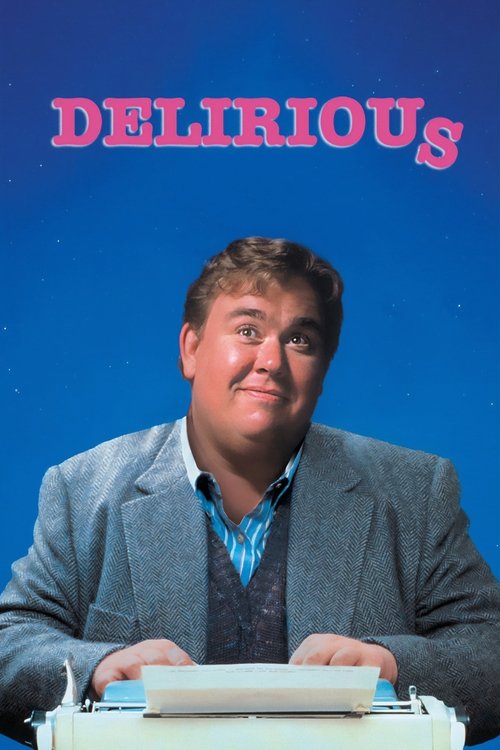
Delirious
A soap opera writer gets hit on the head and wakes up as a character in his own show.
The film box office disappointment against its moderate budget of $18.0M, earning $5.5M globally (-69% loss). While initial box office returns were modest, the film has gained appreciation for its unconventional structure within the fantasy genre.


Plot Structure
Story beats plotted across runtime


Narrative Arc
Emotional journey through the story's key moments
Story Circle
Blueprint 15-beat structure
Arcplot Score Breakdown
Weighted: Precision (70%) + Arc (15%) + Theme (15%)
Delirious (1991) reveals meticulously timed narrative design, characteristic of Tom Mankiewicz's storytelling approach. This structural analysis examines how the film's 15-point plot structure maps to proven narrative frameworks across 1 hour and 36 minutes. With an Arcplot score of 6.8, the film balances conventional beats with creative variation.
Characters
Cast & narrative archetypes

Jack Gable
Janet Dubois
Rachel Hedison
Ty Hedison
Arnie Fikus
Main Cast & Characters
Jack Gable
Played by John Candy
A struggling soap opera writer who gets knocked unconscious and wakes up inside his own fictional world, where he can control reality by typing on his typewriter.
Janet Dubois
Played by Mariel Hemingway
The beautiful and kind-hearted woman Jack creates as his ideal love interest, who becomes real in the soap opera world.
Rachel Hedison
Played by Emma Samms
The manipulative and glamorous villain of the soap opera "Beyond Our Dreams" who schemes and plots against others.
Ty Hedison
Played by David Rasche
Rachel's brother and a main character in the soap opera, often caught in romantic entanglements.
Arnie Fikus
Played by Charles Rocket
Jack's sleazy boss and executive producer of the soap opera who constantly belittles and mistreats him.
Structural Analysis
The Status Quo at 1 minutes (1% through the runtime) establishes Jack Gable is an overworked, underappreciated soap opera writer stuck in a thankless job writing "Beyond Our Dreams," overlooked by his boss and dreaming of recognition.. Structural examination shows that this early placement immediately immerses viewers in the story world.
The inciting incident occurs at 12 minutes when Jack is hit by a car after a frustrating confrontation with his boss. He sustains a head injury that will change everything.. At 12% through the film, this Disruption aligns precisely with traditional story structure. This beat shifts the emotional landscape, launching the protagonist into the central conflict.
The First Threshold at 23 minutes marks the transition into Act II, occurring at 24% of the runtime. This reveals the protagonist's commitment to Jack actively decides to embrace this new reality and use his godlike power as the writer to reshape the soap opera world to his advantage, starting by writing himself wealth, status, and romance., moving from reaction to action.
At 48 minutes, the Midpoint arrives at 51% of the runtime—precisely centered, creating perfect narrative symmetry. Notably, this crucial beat Jack discovers the limits and dark side of his power when he realizes that his selfish changes are having unintended consequences on the soap opera characters, who are now real people with real feelings. His control is corrupting the world., fundamentally raising what's at risk. The emotional intensity shifts, dividing the narrative into clear before-and-after phases.
The Collapse moment at 72 minutes (75% through) represents the emotional nadir. Here, Jack's typewriter is destroyed, leaving him powerless in the increasingly dangerous world he created. The villain he wrote threatens Janet's life, and Jack has lost the ability to save her or anyone else. His godlike power is gone., demonstrates the protagonist at their lowest point. This beat's placement in the final quarter sets up the climactic reversal.
The Second Threshold at 76 minutes initiates the final act resolution at 79% of the runtime. Jack realizes he must let go of control and face the villain without his writer powers, risking his life authentically. He chooses heroism over manipulation, accepting he cannot control outcomes., demonstrating the transformation achieved throughout the journey.
Emotional Journey
Delirious's emotional architecture traces a deliberate progression across 15 carefully calibrated beats.
Narrative Framework
This structural analysis employs systematic plot point analysis that identifies crucial turning points. By mapping Delirious against these established plot points, we can identify how Tom Mankiewicz utilizes or subverts traditional narrative conventions. The plot point approach reveals not only adherence to structural principles but also creative choices that distinguish Delirious within the fantasy genre.
Tom Mankiewicz's Structural Approach
Among the 2 Tom Mankiewicz films analyzed on Arcplot, the average structural score is 6.8, demonstrating varied approaches to story architecture. Delirious represents one of the director's most structurally precise works. For comparative analysis, explore the complete Tom Mankiewicz filmography.
Comparative Analysis
Additional fantasy films include Thinner, Ella Enchanted and Conan the Barbarian. For more Tom Mankiewicz analyses, see Dragnet.
Plot Points by Act
Act I
SetupStatus Quo
Jack Gable is an overworked, underappreciated soap opera writer stuck in a thankless job writing "Beyond Our Dreams," overlooked by his boss and dreaming of recognition.
Theme
Jack's assistant Laura tells him "You can't control everything in life" when he complains about how the show is being ruined by others, establishing the theme of control versus surrender.
Worldbuilding
Jack's miserable life is established: he's unappreciated at work, his boss takes credit for his ideas, he's ignored at the production meeting, and his creative control is constantly undermined. He has feelings for Laura but can't express them.
Disruption
Jack is hit by a car after a frustrating confrontation with his boss. He sustains a head injury that will change everything.
Resistance
Jack awakens in a hospital and gradually realizes he's inside the world of his soap opera "Beyond Our Dreams." Characters he created now surround him as real people. He struggles to understand if this is a dream, delusion, or reality.
Act II
ConfrontationFirst Threshold
Jack actively decides to embrace this new reality and use his godlike power as the writer to reshape the soap opera world to his advantage, starting by writing himself wealth, status, and romance.
Mirror World
Jack meets Janet Dubois (the soap opera version of Laura), who represents genuine connection and love versus the superficial wish-fulfillment he's been pursuing. She challenges his selfish use of power.
Premise
Jack gleefully rewrites reality to give himself everything he wanted: he becomes rich, successful, irresistible to women, and beloved. He indulges in the power fantasy of controlling his world through his typewriter. The fun and games of being God.
Midpoint
Jack discovers the limits and dark side of his power when he realizes that his selfish changes are having unintended consequences on the soap opera characters, who are now real people with real feelings. His control is corrupting the world.
Opposition
The soap opera world begins to rebel against Jack's manipulation. Characters act unpredictably, relationships he forced become toxic, and his villain creation threatens everyone. Jack tries desperately to write his way out but makes things worse. His relationship with Janet deteriorates.
Collapse
Jack's typewriter is destroyed, leaving him powerless in the increasingly dangerous world he created. The villain he wrote threatens Janet's life, and Jack has lost the ability to save her or anyone else. His godlike power is gone.
Crisis
Jack faces his darkest moment, realizing his selfish attempts to control everything have destroyed the world and endangered the woman he loves. He must confront that he can't write his way out and must act with genuine courage and selflessness.
Act III
ResolutionSecond Threshold
Jack realizes he must let go of control and face the villain without his writer powers, risking his life authentically. He chooses heroism over manipulation, accepting he cannot control outcomes.
Synthesis
Jack confronts the villain through genuine bravery rather than written manipulation. He saves Janet and the soap opera world by accepting reality as it is rather than forcing it to be what he wants. The climax resolves with authentic heroism.
Transformation
Jack wakes up back in the real world, transformed by his experience. He now appreciates life without needing to control it, stands up for himself authentically, and genuinely pursues a relationship with the real Laura, accepting uncertainty.