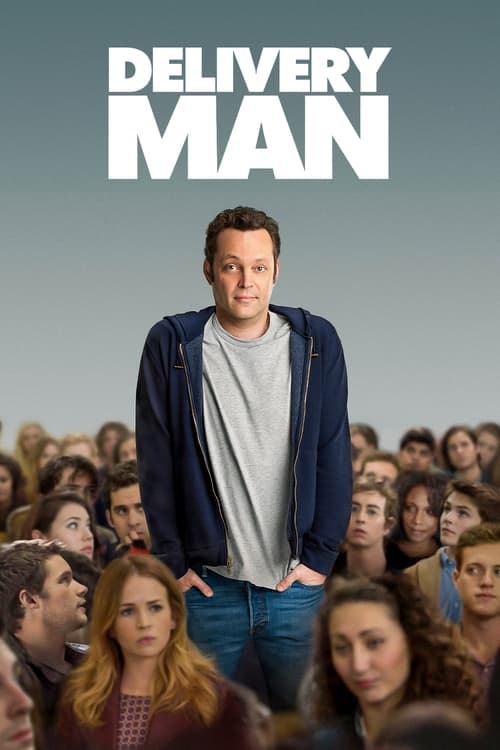
Delivery Man
An affable underachiever finds out he's fathered 533 children through anonymous donations to a fertility clinic 20 years ago. Now he must decide whether or not to come forward when 142 of them file a lawsuit to reveal his identity.
Working with a moderate budget of $26.0M, the film achieved a modest success with $51.2M in global revenue (+97% profit margin).





Plot Structure
Story beats plotted across runtime


Narrative Arc
Emotional journey through the story's key moments
Story Circle
Blueprint 15-beat structure
Arcplot Score Breakdown
Weighted: Precision (70%) + Arc (15%) + Theme (15%)
Delivery Man (2013) reveals meticulously timed dramatic framework, characteristic of Ken Scott's storytelling approach. This structural analysis examines how the film's 15-point plot structure maps to proven narrative frameworks across 1 hour and 45 minutes. With an Arcplot score of 6.3, the film takes an unconventional approach to traditional narrative frameworks.
Structural Analysis
The Status Quo at 2 minutes (2% through the runtime) establishes David Wozniak is an immature, irresponsible delivery driver for his family's butcher shop, constantly making mistakes and late on deliveries. He owes $80,000 to thugs and his girlfriend Emma announces she's pregnant but doesn't want him involved.. Notably, this early placement immediately immerses viewers in the story world.
The inciting incident occurs at 13 minutes when David receives notice that his anonymous sperm donations from 20 years ago resulted in 533 children, and 142 of them are filing a lawsuit to reveal his identity. His pseudonym "Starbuck" is now the most prolific sperm donor in history.. At 12% through the film, this Disruption aligns precisely with traditional story structure. This beat shifts the emotional landscape, launching the protagonist into the central conflict.
The First Threshold at 26 minutes marks the transition into Act II, occurring at 25% of the runtime. This demonstrates the protagonist's commitment to David decides to secretly investigate his biological children using the profiles, without revealing his identity. He chooses to engage with this new world rather than simply hide from the lawsuit., moving from reaction to action.
At 53 minutes, the Midpoint arrives at 50% of the runtime—precisely centered, creating perfect narrative symmetry. Significantly, this crucial beat David experiences a false victory as he bonds with many of his children and feels genuinely good about himself for the first time. He attends a gathering of his donor offspring and sees the community they've formed, feeling pride and connection., fundamentally raising what's at risk. The emotional intensity shifts, dividing the narrative into clear before-and-after phases.
The Collapse moment at 79 minutes (75% through) represents the emotional nadir. Here, David's identity as Starbuck is revealed publicly or he confesses the truth, and his children feel betrayed by his deception. Emma fully rejects him. David loses the trust of both his biological children and his pregnant girlfriend, hitting rock bottom., illustrates the protagonist at their lowest point. This beat's placement in the final quarter sets up the climactic reversal.
The Second Threshold at 85 minutes initiates the final act resolution at 81% of the runtime. David has a realization: he needs to stop hiding and fully commit, even if it means public humiliation and rejection. He decides to publicly acknowledge he is Starbuck and embrace fatherhood openly, synthesizing his newfound capacity for love with authentic identity., demonstrating the transformation achieved throughout the journey.
Emotional Journey
Delivery Man's emotional architecture traces a deliberate progression across 15 carefully calibrated beats.
Narrative Framework
This structural analysis employs structural analysis methodology used to understand storytelling architecture. By mapping Delivery Man against these established plot points, we can identify how Ken Scott utilizes or subverts traditional narrative conventions. The plot point approach reveals not only adherence to structural principles but also creative choices that distinguish Delivery Man within the comedy genre.
Ken Scott's Structural Approach
Among the 2 Ken Scott films analyzed on Arcplot, the average structural score is 6.8, demonstrating varied approaches to story architecture. Delivery Man takes a more unconventional approach compared to the director's typical style. For comparative analysis, explore the complete Ken Scott filmography.
Comparative Analysis
Additional comedy films include The Ministry of Ungentlemanly Warfare, The Bad Guys and Lake Placid. For more Ken Scott analyses, see Unfinished Business.
Plot Points by Act
Act I
SetupStatus Quo
David Wozniak is an immature, irresponsible delivery driver for his family's butcher shop, constantly making mistakes and late on deliveries. He owes $80,000 to thugs and his girlfriend Emma announces she's pregnant but doesn't want him involved.
Theme
David's father or friend comments on responsibility and what it means to be a real father/man, establishing the theme of stepping up and accepting responsibility for one's actions.
Worldbuilding
Establishing David's chaotic life: his failing delivery business, debt to loan sharks, strained family relationships at the butcher shop, and Emma's pregnancy news. David is a lovable screw-up who can't commit to anything.
Disruption
David receives notice that his anonymous sperm donations from 20 years ago resulted in 533 children, and 142 of them are filing a lawsuit to reveal his identity. His pseudonym "Starbuck" is now the most prolific sperm donor in history.
Resistance
David consults his lawyer friend Brett who advises fighting the lawsuit. David receives profiles of the 142 plaintiffs. He debates whether to reveal himself or stay anonymous, wrestling with the magnitude of having 533 biological children.
Act II
ConfrontationFirst Threshold
David decides to secretly investigate his biological children using the profiles, without revealing his identity. He chooses to engage with this new world rather than simply hide from the lawsuit.
Mirror World
David begins meeting his children one by one - he encounters Viggo, a struggling actor, and others. These relationships become the mirror that reflects what David could become as a father and responsible adult.
Premise
David secretly helps his biological children - supporting Viggo's acting career, helping another child who is homeless, visiting one in a care facility with special needs. He begins to find purpose and meaning through these anonymous acts of fatherhood.
Midpoint
David experiences a false victory as he bonds with many of his children and feels genuinely good about himself for the first time. He attends a gathering of his donor offspring and sees the community they've formed, feeling pride and connection.
Opposition
The pressure mounts: Emma is progressing in her pregnancy, the lawsuit intensifies, David's double life becomes harder to maintain. His lies and secrecy catch up with him as his children start to discover inconsistencies. His fundamental flaw - irresponsibility and inability to commit - threatens everything.
Collapse
David's identity as Starbuck is revealed publicly or he confesses the truth, and his children feel betrayed by his deception. Emma fully rejects him. David loses the trust of both his biological children and his pregnant girlfriend, hitting rock bottom.
Crisis
David wallows in his failure, believing he's proven everyone right - that he's incapable of being a real father or responsible adult. He faces the dark night knowing he may lose everyone: his 533 children and his unborn child with Emma.
Act III
ResolutionSecond Threshold
David has a realization: he needs to stop hiding and fully commit, even if it means public humiliation and rejection. He decides to publicly acknowledge he is Starbuck and embrace fatherhood openly, synthesizing his newfound capacity for love with authentic identity.
Synthesis
David withdraws the lawsuit against revealing his identity and publicly embraces being Starbuck. He shows up for Emma and their baby's birth, proving he can be a real father. He reconciles with his biological children, showing up authentically as their father.
Transformation
David walks through a park with his infant child in a stroller, surrounded by many of his 533 biological children who have come to meet their half-sibling. The irresponsible man-child has transformed into a committed father figure to hundreds, mirroring the opening but showing complete transformation.