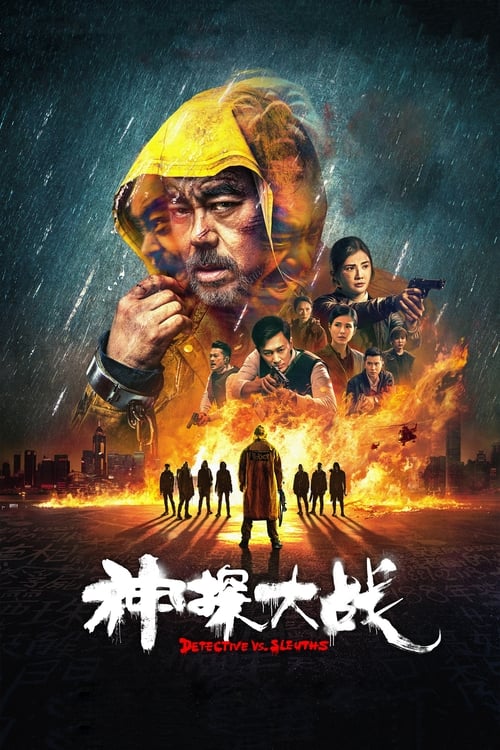
Detective vs. Sleuths
When Hong Kong is rocked by multiple gruesome murders, the police forms a task force to investigate.
The film earned $105.5M at the global box office.


Plot Structure
Story beats plotted across runtime


Narrative Arc
Emotional journey through the story's key moments
Story Circle
Blueprint 15-beat structure
Arcplot Score Breakdown
Weighted: Precision (70%) + Arc (15%) + Theme (15%)
Detective vs. Sleuths (2022) reveals deliberately positioned narrative architecture, characteristic of Wai Ka-Fai's storytelling approach. This structural analysis examines how the film's 15-point plot structure maps to proven narrative frameworks across 1 hour and 42 minutes. With an Arcplot score of 7.2, the film balances conventional beats with creative variation.
Structural Analysis
The Status Quo at 1 minutes (1% through the runtime) establishes Former detective Lee Chun confronts a suspect in a tense standoff, showcasing his brilliant but unstable investigative abilities and establishing his fragile mental state after years of trauma.. Significantly, this early placement immediately immerses viewers in the story world.
The inciting incident occurs at 13 minutes when A prominent former detective is murdered in a gruesome, theatrical manner. The case bears the signature of "The Chosen One," a vigilante targeting corrupt law enforcement officers.. At 13% through the film, this Disruption is delayed, allowing extended setup of the story world. This beat shifts the emotional landscape, launching the protagonist into the central conflict.
The First Threshold at 26 minutes marks the transition into Act II, occurring at 25% of the runtime. This reveals the protagonist's commitment to Lee Chun makes the active choice to fully commit to the investigation when he discovers a personal connection to the victims, realizing he may be on the killer's list and must enter the dangerous world of his past., moving from reaction to action.
At 51 minutes, the Midpoint arrives at 50% of the runtime—precisely centered, creating perfect narrative symmetry. The analysis reveals that this crucial beat Lee discovers shocking evidence that he himself may have been involved in the crimes during his mental blackouts, transforming him from hunter to potential suspect and raising the stakes dramatically., fundamentally raising what's at risk. The emotional intensity shifts, dividing the narrative into clear before-and-after phases.
The Collapse moment at 77 minutes (75% through) represents the emotional nadir. Here, A major confrontation results in the apparent death of a key ally, and Lee is captured by police. His reputation is destroyed, and he faces the possibility that he is the monster he's been hunting all along., illustrates the protagonist at their lowest point. This beat's placement in the final quarter sets up the climactic reversal.
The Second Threshold at 82 minutes initiates the final act resolution at 80% of the runtime. Lee has a breakthrough realization about the true killer's identity by synthesizing fragmented memories with the case evidence, seeing the pattern he missed. He understands the conspiracy and knows what he must do., demonstrating the transformation achieved throughout the journey.
Emotional Journey
Detective vs. Sleuths's emotional architecture traces a deliberate progression across 15 carefully calibrated beats.
Narrative Framework
This structural analysis employs a 15-point narrative structure framework that maps key story moments. By mapping Detective vs. Sleuths against these established plot points, we can identify how Wai Ka-Fai utilizes or subverts traditional narrative conventions. The plot point approach reveals not only adherence to structural principles but also creative choices that distinguish Detective vs. Sleuths within the action genre.
Comparative Analysis
Additional action films include The Ministry of Ungentlemanly Warfare, The Bad Guys and Lake Placid.
Plot Points by Act
Act I
SetupStatus Quo
Former detective Lee Chun confronts a suspect in a tense standoff, showcasing his brilliant but unstable investigative abilities and establishing his fragile mental state after years of trauma.
Theme
A character observes that "the line between detective and criminal is thinner than you think," introducing the film's exploration of justice, obsession, and moral ambiguity.
Worldbuilding
Introduction to Hong Kong's detective world, Lee Chun's reputation and mental instability, his relationship with the police force, and the establishment of a brewing serial murder case targeting former detectives.
Disruption
A prominent former detective is murdered in a gruesome, theatrical manner. The case bears the signature of "The Chosen One," a vigilante targeting corrupt law enforcement officers.
Resistance
Lee Chun reluctantly partners with young inspector Fong Lai-sun to investigate. Lee resists full involvement, haunted by past cases and his deteriorating mental state, while evidence points to a conspiracy among former detective colleagues.
Act II
ConfrontationFirst Threshold
Lee Chun makes the active choice to fully commit to the investigation when he discovers a personal connection to the victims, realizing he may be on the killer's list and must enter the dangerous world of his past.
Mirror World
Lee forms a deeper investigative partnership with Fong, whose idealistic view of justice contrasts with Lee's cynical experience, representing the thematic tension between pure and corrupted approaches to truth.
Premise
Lee and Fong dive deep into the investigation, uncovering a web of corruption among former detective colleagues. Lee uses his brilliant deductive skills while battling hallucinations, delivering the psychological thriller experience promised by the premise.
Midpoint
Lee discovers shocking evidence that he himself may have been involved in the crimes during his mental blackouts, transforming him from hunter to potential suspect and raising the stakes dramatically.
Opposition
The police turn against Lee as evidence mounts. His mental state deteriorates further, making it unclear what is real. The killer stays ahead, eliminating witnesses and tightening the noose around Lee while bodies continue to pile up.
Collapse
A major confrontation results in the apparent death of a key ally, and Lee is captured by police. His reputation is destroyed, and he faces the possibility that he is the monster he's been hunting all along.
Crisis
In custody and at his lowest point, Lee confronts his fractured memories and identity. He must decide whether to accept defeat or trust his instincts one final time despite overwhelming evidence against him.
Act III
ResolutionSecond Threshold
Lee has a breakthrough realization about the true killer's identity by synthesizing fragmented memories with the case evidence, seeing the pattern he missed. He understands the conspiracy and knows what he must do.
Synthesis
Lee orchestrates his escape and confronts the real mastermind in a climactic showdown. The truth about the detective conspiracy is revealed, and Lee must use both his investigative brilliance and acceptance of his fractured mind to stop the killer.
Transformation
Lee stands amid the aftermath, his reputation unclear but his inner truth established. He has accepted who he is—both brilliant and broken—no longer running from his demons but integrating them into his identity.