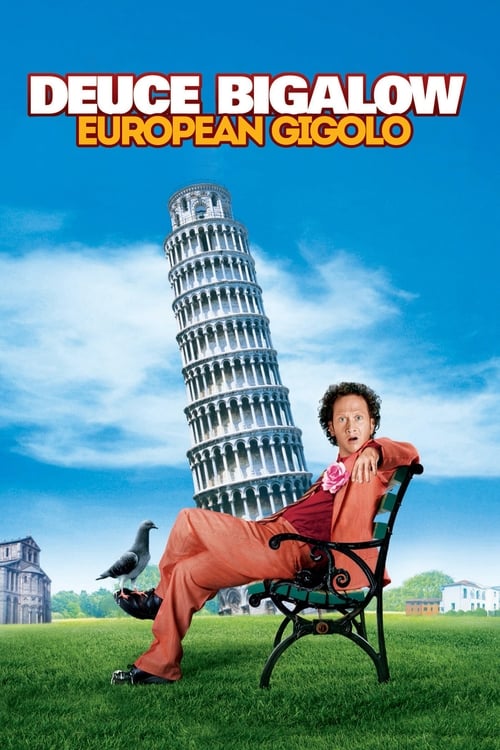
Deuce Bigalow: European Gigolo
Deuce Bigalow goes to Amsterdam after a little accident including two irritating kids and a bunch of aggressive dolphins. There he meets up with his old friend T.J. Hicks. But a mysterious killer starts killing some of Amsterdam's finest gigolos and T.J. is mistaken for the extremely gay murderer. Deuce must enter the gigolo industry again to find the real murderer and clear T.J.'s name.
Despite a respectable budget of $22.0M, Deuce Bigalow: European Gigolo became a box office success, earning $45.1M worldwide—a 105% return.
3 wins & 10 nominations


Plot Structure
Story beats plotted across runtime


Narrative Arc
Emotional journey through the story's key moments
Story Circle
Blueprint 15-beat structure
Arcplot Score Breakdown
Weighted: Precision (70%) + Arc (15%) + Theme (15%)
Deuce Bigalow: European Gigolo (2005) exhibits deliberately positioned story structure, characteristic of Mike Bigelow's storytelling approach. This structural analysis examines how the film's 15-point plot structure maps to proven narrative frameworks across 1 hour and 23 minutes. With an Arcplot score of 6.7, the film balances conventional beats with creative variation.
Characters
Cast & narrative archetypes

Deuce Bigalow
T.J. Hicks
Eva
Gaspar Voorsboch
Heinz Hummer
Lily
Main Cast & Characters
Deuce Bigalow
Played by Rob Schneider
An inexperienced male prostitute who travels to Amsterdam and gets caught up in a murder mystery involving gigolos.
T.J. Hicks
Played by Eddie Griffin
Deuce's pimp friend who helps him navigate the European gigolo scene while running from his past.
Eva
Played by Hanna Verboom
A beautiful woman with a prosthetic leg who becomes Deuce's love interest.
Gaspar Voorsboch
Played by Jeroen Krabbé
A flamboyant Dutch gigolo and member of the European prostitute society who befriends Deuce.
Heinz Hummer
Played by Til Schweiger
An Austrian gigolo and leader of the European gigolo union who suspects Deuce of the murders.
Lily
Played by Katie Downes
T.J.'s love interest, a woman with a large appetite who works at a restaurant.
Structural Analysis
The Status Quo at 1 minutes (1% through the runtime) establishes Deuce Bigalow is shown living a quiet, mundane life after retiring from his man-whore career, establishing his ordinary world before the adventure begins.. Of particular interest, this early placement immediately immerses viewers in the story world.
The inciting incident occurs at 10 minutes when Deuce receives an urgent call from T.J. In Amsterdam—gigolos are being murdered and T.J. Has been framed as the prime suspect. Deuce must travel to Europe immediately.. At 12% through the film, this Disruption aligns precisely with traditional story structure. This beat shifts the emotional landscape, launching the protagonist into the central conflict.
The First Threshold at 21 minutes marks the transition into Act II, occurring at 25% of the runtime. This illustrates the protagonist's commitment to Deuce makes the active choice to come out of retirement and work as a man-whore again, going undercover to infiltrate the gigolo community and find the real killer., moving from reaction to action.
At 42 minutes, the Midpoint arrives at 51% of the runtime—precisely centered, creating perfect narrative symmetry. Significantly, this crucial beat False victory: Deuce believes he's narrowing in on the killer and his relationship with Eva is blossoming. He feels confident in both his investigation and romantic pursuits, but the stakes are about to escalate dramatically., fundamentally raising what's at risk. The emotional intensity shifts, dividing the narrative into clear before-and-after phases.
The Collapse moment at 62 minutes (75% through) represents the emotional nadir. Here, All is lost: T.J. Is arrested by police, Eva rejects Deuce after learning the truth about his gigolo activities, and the real killer remains at large. Deuce has failed on all fronts—his friend, his love, and his mission., reveals the protagonist at their lowest point. This beat's placement in the final quarter sets up the climactic reversal.
The Second Threshold at 66 minutes initiates the final act resolution at 80% of the runtime. Deuce pieces together the clues and realizes who the real killer is—Gaspar Voorsboch, who has been killing gigolos out of jealousy. Armed with this knowledge, Deuce commits to exposing the truth and saving T.J., demonstrating the transformation achieved throughout the journey.
Emotional Journey
Deuce Bigalow: European Gigolo's emotional architecture traces a deliberate progression across 15 carefully calibrated beats.
Narrative Framework
This structural analysis employs systematic plot point analysis that identifies crucial turning points. By mapping Deuce Bigalow: European Gigolo against these established plot points, we can identify how Mike Bigelow utilizes or subverts traditional narrative conventions. The plot point approach reveals not only adherence to structural principles but also creative choices that distinguish Deuce Bigalow: European Gigolo within the comedy genre.
Comparative Analysis
Additional comedy films include The Bad Guys, Ella Enchanted and The Evening Star.
Plot Points by Act
Act I
SetupStatus Quo
Deuce Bigalow is shown living a quiet, mundane life after retiring from his man-whore career, establishing his ordinary world before the adventure begins.
Theme
T.J. tells Deuce that being a gigolo isn't just about sex—it's about making women feel special and accepted for who they are, stating the film's theme of acceptance and seeing inner beauty.
Worldbuilding
Establishes Deuce's retired life from gigolo work, introduces his connection to T.J. Hicks, and sets up the world of European gigolos in Amsterdam where someone is murdering man-whores.
Disruption
Deuce receives an urgent call from T.J. in Amsterdam—gigolos are being murdered and T.J. has been framed as the prime suspect. Deuce must travel to Europe immediately.
Resistance
Deuce arrives in Amsterdam and reconnects with T.J., who is in hiding. They debate how to clear T.J.'s name, with T.J. guiding Deuce through the European gigolo underworld and explaining the dangers they face.
Act II
ConfrontationFirst Threshold
Deuce makes the active choice to come out of retirement and work as a man-whore again, going undercover to infiltrate the gigolo community and find the real killer.
Mirror World
Deuce meets Eva, a beautiful woman with severe OCD who obsessively cleans everything. Their connection introduces the B-story of finding genuine love through acceptance of each other's flaws.
Premise
The "fun and games" section delivers on the premise: Deuce dates a series of unusual women with bizarre quirks while gathering clues about the killer. Each date showcases the film's outrageous comedy while advancing the mystery.
Midpoint
False victory: Deuce believes he's narrowing in on the killer and his relationship with Eva is blossoming. He feels confident in both his investigation and romantic pursuits, but the stakes are about to escalate dramatically.
Opposition
The killer strikes again, getting closer to T.J. and Deuce. Police pressure intensifies, evidence mounts against T.J., and Deuce's cover is threatened. His relationship with Eva faces obstacles as she discovers his true profession.
Collapse
All is lost: T.J. is arrested by police, Eva rejects Deuce after learning the truth about his gigolo activities, and the real killer remains at large. Deuce has failed on all fronts—his friend, his love, and his mission.
Crisis
Dark night of the soul: Deuce wallows in defeat, questioning his abilities and worth. He reflects on his failures and considers giving up, but memories of what T.J. taught him about making people feel accepted spark a realization.
Act III
ResolutionSecond Threshold
Deuce pieces together the clues and realizes who the real killer is—Gaspar Voorsboch, who has been killing gigolos out of jealousy. Armed with this knowledge, Deuce commits to exposing the truth and saving T.J.
Synthesis
The finale: Deuce confronts the killer at the Man-Whore Awards ceremony, publicly exposes the truth, and clears T.J.'s name in spectacular fashion. He also reconciles with Eva, demonstrating he's learned to embrace authenticity and acceptance.
Transformation
Deuce and Eva are together, both accepting each other's quirks completely. T.J. is vindicated and celebrated. Unlike the isolated man at the start, Deuce has found genuine connection through embracing imperfection—his own and others'.