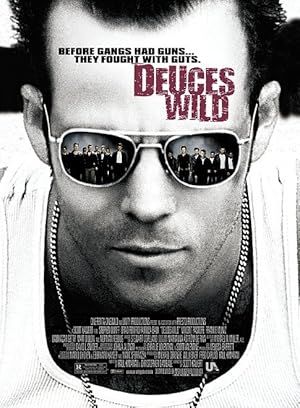
Deuces Wild
Two brothers, Leon and Bobby are members of the street gang in Brooklyn known as the deuces. Their brother was killed by a drug overdose a few years earlier and the gang is determined to keep drugs off their block. Another more vicous gang known as the vipers is a possible threat to Leon and Bobby's efforts. The deuces are determined to do whatever is necessary to keep drugs off their block even if that means dying.
The film struggled financially against its small-scale budget of $10.0M, earning $6.3M globally (-37% loss). While initial box office returns were modest, the film has gained appreciation for its innovative storytelling within the action genre.
1 win & 1 nomination


Plot Structure
Story beats plotted across runtime


Narrative Arc
Emotional journey through the story's key moments
Story Circle
Blueprint 15-beat structure
Arcplot Score Breakdown
Weighted: Precision (70%) + Arc (15%) + Theme (15%)
Deuces Wild (2002) showcases carefully calibrated narrative design, characteristic of Scott Kalvert's storytelling approach. This structural analysis examines how the film's 15-point plot structure maps to proven narrative frameworks across 1 hour and 36 minutes. With an Arcplot score of 7.7, the film showcases strong structural fundamentals.
Characters
Cast & narrative archetypes

Leon
Bobby
Marco
Annie
Jimmy Pockets
Scooch
Betsy
Fritzy
Main Cast & Characters
Leon
Played by Stephen Dorff
Leader of the Deuces gang who seeks to protect his Brooklyn neighborhood and younger brother from violence and drugs.
Bobby
Played by Brad Renfro
Leon's younger brother who struggles between loyalty to the Deuces and his desire for a peaceful life with his girlfriend.
Marco
Played by Norman Reedus
Dangerous drug dealer and leader of the Vipers who returns to the neighborhood seeking revenge and control.
Annie
Played by Fairuza Balk
Bobby's girlfriend who dreams of leaving the neighborhood and starting a better life away from gang violence.
Jimmy Pockets
Played by Balthazar Getty
Loyal member of the Deuces gang known for his fighting skills and unwavering support of Leon.
Scooch
Played by Drea de Matteo
Member of the Deuces gang who provides comic relief while remaining fiercely loyal to his crew.
Betsy
Played by Frankie Muniz
Annie's friend and member of the neighborhood social circle caught up in the gang tensions.
Fritzy
Played by Matt Dillon
Elderly neighborhood figure who serves as a connection to the community's past and moral conscience.
Structural Analysis
The Status Quo at 1 minutes (1% through the runtime) establishes Brooklyn 1958: The Deuces gang controls their neighborhood in Sunset Park. Leon and Bobby lead their crew in keeping drugs and violence out of their turf, establishing their protective role in the community.. The analysis reveals that this early placement immediately immerses viewers in the story world.
The inciting incident occurs at 11 minutes when Marco Vendetti returns from prison to Sunset Park. His presence immediately threatens the fragile peace, as he was responsible for introducing drugs that led to Allie's death. The old wound reopens.. At 11% through the film, this Disruption aligns precisely with traditional story structure. This beat shifts the emotional landscape, launching the protagonist into the central conflict.
The First Threshold at 24 minutes marks the transition into Act II, occurring at 25% of the runtime. This illustrates the protagonist's commitment to Bobby actively decides to pursue revenge against Marco despite Leon's warnings. He crosses the line from defensive protection to offensive aggression, committing to confrontation., moving from reaction to action.
At 48 minutes, the Midpoint arrives at 50% of the runtime—precisely centered, creating perfect narrative symmetry. Structural examination shows that this crucial beat A major gang confrontation results in serious violence. The stakes raise dramatically as the conflict becomes personal and potentially deadly. What seemed like manageable tension becomes all-out war., fundamentally raising what's at risk. The emotional intensity shifts, dividing the narrative into clear before-and-after phases.
The Collapse moment at 70 minutes (73% through) represents the emotional nadir. Here, Leon is killed by Marco's gang. The death of Bobby's protective older brother represents the complete failure of restraint and the ultimate whiff of death. Everything Bobby feared and tried to prevent has happened., illustrates the protagonist at their lowest point. This beat's placement in the final quarter sets up the climactic reversal.
The Second Threshold at 76 minutes initiates the final act resolution at 79% of the runtime. Bobby realizes that true strength and honor come from protecting what matters—Annie, the neighborhood, the future—not from revenge. He synthesizes Leon's wisdom with his own need for justice, finding a new path forward., demonstrating the transformation achieved throughout the journey.
Emotional Journey
Deuces Wild's emotional architecture traces a deliberate progression across 15 carefully calibrated beats.
Narrative Framework
This structural analysis employs a 15-point narrative structure framework that maps key story moments. By mapping Deuces Wild against these established plot points, we can identify how Scott Kalvert utilizes or subverts traditional narrative conventions. The plot point approach reveals not only adherence to structural principles but also creative choices that distinguish Deuces Wild within the action genre.
Comparative Analysis
Additional action films include The Bad Guys, Puss in Boots and Venom: The Last Dance.
Plot Points by Act
Act I
SetupStatus Quo
Brooklyn 1958: The Deuces gang controls their neighborhood in Sunset Park. Leon and Bobby lead their crew in keeping drugs and violence out of their turf, establishing their protective role in the community.
Theme
Leon tells Bobby about their responsibility to protect the neighborhood and honor their dead brother Allie's memory: "This is our block. We keep it clean." The theme of loyalty versus vengeance is established.
Worldbuilding
Introduces the Deuces gang members, their girlfriends, the neighborhood dynamics, and the lingering trauma from Allie's death years ago. Shows Bobby's relationship with Annie and the gang's street-level conflicts with rivals.
Disruption
Marco Vendetti returns from prison to Sunset Park. His presence immediately threatens the fragile peace, as he was responsible for introducing drugs that led to Allie's death. The old wound reopens.
Resistance
Leon struggles to keep Bobby from seeking revenge against Marco. Tensions escalate between the Deuces and Vipers gangs. Bobby debates whether to follow Leon's path of restraint or give in to his need for vengeance.
Act II
ConfrontationFirst Threshold
Bobby actively decides to pursue revenge against Marco despite Leon's warnings. He crosses the line from defensive protection to offensive aggression, committing to confrontation.
Mirror World
Bobby's deepening relationship with Annie represents the life he could have beyond gang violence. She embodies the theme of choosing love and future over hatred and past.
Premise
Gang warfare escalates with rumbles, confrontations, and strategic moves. The Deuces defend their territory while Bobby inches closer to direct conflict with Marco. Street fights and turf battles deliver on the genre premise.
Midpoint
A major gang confrontation results in serious violence. The stakes raise dramatically as the conflict becomes personal and potentially deadly. What seemed like manageable tension becomes all-out war.
Opposition
Marco's Vipers gain ground and become more brutal. Leon's control over the situation weakens. Bobby's relationship with Annie strains under the violence. The cycle of revenge intensifies despite attempts to contain it.
Collapse
Leon is killed by Marco's gang. The death of Bobby's protective older brother represents the complete failure of restraint and the ultimate whiff of death. Everything Bobby feared and tried to prevent has happened.
Crisis
Bobby spirals into grief and rage. He must decide whether to become the very thing Leon died trying to prevent—a killer driven by vengeance—or find another way to honor his brother and end the cycle.
Act III
ResolutionSecond Threshold
Bobby realizes that true strength and honor come from protecting what matters—Annie, the neighborhood, the future—not from revenge. He synthesizes Leon's wisdom with his own need for justice, finding a new path forward.
Synthesis
Final confrontation with Marco and the Vipers. Bobby leads the Deuces in a climactic battle but ultimately must face the personal choice of executing Marco or breaking the cycle. Resolution of gang war and personal vendetta.
Transformation
Bobby walks away from the violence with Annie, choosing life and future over death and past. The neighborhood is free from Marco's threat, but more importantly, Bobby has broken free from the cycle of revenge that claimed his brothers.