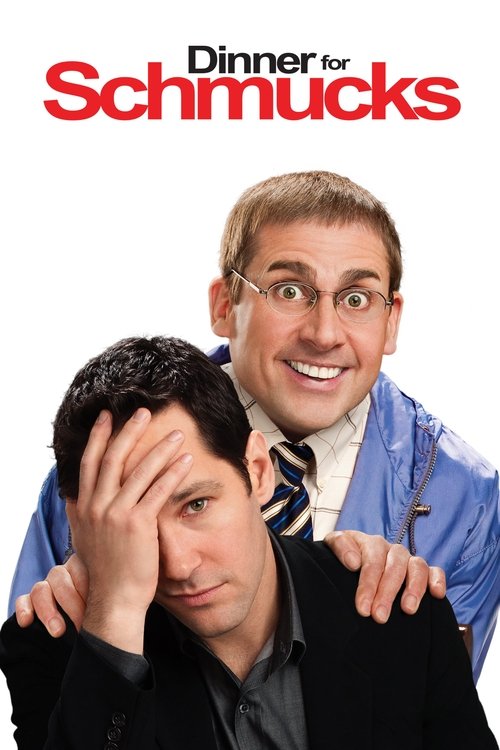
Dinner for Schmucks
Rising executive Tim Conrad works for a boss who hosts a monthly dinner in which the guest who brings the biggest buffoon gets a career-boost. Tim plans on not attending until he meets Barry, a man who builds dioramas using stuffed mice. Barry's blundering but good intentions send Tim's life into a downward spiral, threatening a major business deal and possibly scuttling Tim's engagement to his fiancee.
Working with a moderate budget of $69.0M, the film achieved a steady performer with $86.4M in global revenue (+25% profit margin).


Plot Structure
Story beats plotted across runtime


Narrative Arc
Emotional journey through the story's key moments
Story Circle
Blueprint 15-beat structure
Arcplot Score Breakdown
Weighted: Precision (70%) + Arc (15%) + Theme (15%)
Dinner for Schmucks (2010) demonstrates strategically placed story structure, characteristic of Jay Roach's storytelling approach. This structural analysis examines how the film's 15-point plot structure maps to proven narrative frameworks across 1 hour and 54 minutes. With an Arcplot score of 7.2, the film balances conventional beats with creative variation.
Characters
Cast & narrative archetypes

Tim Conrad
Barry Speck
Julie
Therman Murch
Kieran
Lance Fender
Darla
Fender's Mueller
Main Cast & Characters
Tim Conrad
Played by Paul Rudd
An ambitious financial analyst who must bring an idiot to his boss's dinner party to secure a promotion.
Barry Speck
Played by Steve Carell
An eccentric IRS employee who creates elaborate dioramas with stuffed dead mice, completely oblivious to social norms.
Julie
Played by Stephanie Szostak
Tim's girlfriend, an artist who disapproves of the cruel dinner party concept.
Therman Murch
Played by Zach Galifianakis
Barry's intense and unstable former boss at the IRS who believes he can control minds.
Kieran
Played by Jemaine Clement
A wealthy, eccentric artist obsessed with Julie who creates bizarre sheep-inspired art.
Lance Fender
Played by David Walliams
Tim's arrogant coworker who competes for the same promotion.
Darla
Played by Lucy Punch
An obsessive stalker who had a brief relationship with Tim and refuses to let go.
Fender's Mueller
Played by Chris O'Dowd
A Swiss man with vulgar taxidermy who is Lance's guest for the dinner.
Structural Analysis
The Status Quo at 2 minutes (1% through the runtime) establishes Tim Conrad is an ambitious financial analyst climbing the corporate ladder, focused solely on career success and impressing his boss to get a promotion. He's competent but morally compromised, willing to do whatever it takes to advance.. The analysis reveals that this early placement immediately immerses viewers in the story world.
The inciting incident occurs at 14 minutes when Tim literally hits Barry Speck with his car. Barry is an IRS employee who creates elaborate dioramas with dead mice. Tim realizes Barry is the perfect "idiot" to bring to the dinner and win the promotion, despite Julie's objections.. At 12% through the film, this Disruption aligns precisely with traditional story structure. This beat shifts the emotional landscape, launching the protagonist into the central conflict.
The First Threshold at 29 minutes marks the transition into Act II, occurring at 25% of the runtime. This demonstrates the protagonist's commitment to Tim actively chooses to call Barry and invite him to prepare for the dinner, fully committing to using him. This is the moment he crosses the moral line, choosing ambition over integrity despite Julie's warnings., moving from reaction to action.
At 58 minutes, the Midpoint arrives at 51% of the runtime—precisely centered, creating perfect narrative symmetry. The analysis reveals that this crucial beat Julie discovers Tim's deception about the dinner's true purpose and breaks up with him. What seemed like manageable chaos becomes a real crisis. Tim has lost the thing that mattered most while pursuing the promotion. The stakes are now deeply personal., fundamentally raising what's at risk. The emotional intensity shifts, dividing the narrative into clear before-and-after phases.
The Collapse moment at 86 minutes (75% through) represents the emotional nadir. Here, At the dinner, Tim witnesses the cruel mockery of Barry and the other guests. He has his "whiff of death" moment - the death of his self-respect and the realization of who he's become. He's won nothing and lost everything, including his integrity., demonstrates the protagonist at their lowest point. This beat's placement in the final quarter sets up the climactic reversal.
The Second Threshold at 92 minutes initiates the final act resolution at 81% of the runtime. Tim publicly defends Barry at the dinner, calling out his boss and the other executives for their cruelty. He quits, choosing integrity over ambition. He synthesizes his old ambition with Barry's lesson about authenticity and dignity., demonstrating the transformation achieved throughout the journey.
Emotional Journey
Dinner for Schmucks's emotional architecture traces a deliberate progression across 15 carefully calibrated beats.
Narrative Framework
This structural analysis employs proven narrative structure principles that track dramatic progression. By mapping Dinner for Schmucks against these established plot points, we can identify how Jay Roach utilizes or subverts traditional narrative conventions. The plot point approach reveals not only adherence to structural principles but also creative choices that distinguish Dinner for Schmucks within the comedy genre.
Jay Roach's Structural Approach
Among the 10 Jay Roach films analyzed on Arcplot, the average structural score is 7.4, reflecting strong command of classical structure. Dinner for Schmucks takes a more unconventional approach compared to the director's typical style. For comparative analysis, explore the complete Jay Roach filmography.
Comparative Analysis
Additional comedy films include The Bad Guys, Ella Enchanted and The Evening Star. For more Jay Roach analyses, see Austin Powers: International Man of Mystery, Meet the Fockers and Meet the Parents.
Plot Points by Act
Act I
SetupStatus Quo
Tim Conrad is an ambitious financial analyst climbing the corporate ladder, focused solely on career success and impressing his boss to get a promotion. He's competent but morally compromised, willing to do whatever it takes to advance.
Theme
Tim's boss Fender explains the "dinner for winners" concept where executives bring idiots to mock them. The theme of dignity vs. ambition is stated: how far will you compromise your values to get what you want?
Worldbuilding
We see Tim's world: his relationship with girlfriend Julie (an artist who values integrity), his competitive workplace, the cutthroat nature of his firm, and the introduction of the morally questionable "dinner for schmucks" tradition that could make his career.
Disruption
Tim literally hits Barry Speck with his car. Barry is an IRS employee who creates elaborate dioramas with dead mice. Tim realizes Barry is the perfect "idiot" to bring to the dinner and win the promotion, despite Julie's objections.
Resistance
Tim debates whether to use Barry for the dinner. Julie strongly objects, representing his moral compass. Tim initially tries to avoid Barry but keeps his business card. He wrestles with his conscience, knowing it's wrong but wanting the promotion desperately.
Act II
ConfrontationFirst Threshold
Tim actively chooses to call Barry and invite him to prepare for the dinner, fully committing to using him. This is the moment he crosses the moral line, choosing ambition over integrity despite Julie's warnings.
Mirror World
Barry arrives early at Tim's apartment and chaos begins. Barry represents everything Tim isn't: guileless, genuine, emotionally open, and unashamed of who he is. Their relationship will force Tim to confront what he's become.
Premise
The "promise of the premise" - Barry's well-intentioned incompetence destroys Tim's life piece by piece: he causes Julie to leave, brings Tim's stalker Darla back into his life, loses Tim's cell phone, and creates escalating catastrophes. Comic mayhem ensues.
Midpoint
Julie discovers Tim's deception about the dinner's true purpose and breaks up with him. What seemed like manageable chaos becomes a real crisis. Tim has lost the thing that mattered most while pursuing the promotion. The stakes are now deeply personal.
Opposition
Everything falls apart: Tim must attend the dinner while his life crumbles, Julie is gone, his stalker Darla escalates, his boss is suspicious, and Barry's own nemesis Therman appears. At the dinner itself, Tim sees the cruelty he's participating in and begins to recognize Barry's humanity.
Collapse
At the dinner, Tim witnesses the cruel mockery of Barry and the other guests. He has his "whiff of death" moment - the death of his self-respect and the realization of who he's become. He's won nothing and lost everything, including his integrity.
Crisis
Tim sits with the weight of his choices. He recognizes that Barry isn't the schmuck - he is. He's betrayed someone who considered him a friend, lost Julie, and compromised everything for a promotion that now feels hollow.
Act III
ResolutionSecond Threshold
Tim publicly defends Barry at the dinner, calling out his boss and the other executives for their cruelty. He quits, choosing integrity over ambition. He synthesizes his old ambition with Barry's lesson about authenticity and dignity.
Synthesis
Tim and Barry work together to win back Julie and set things right. Tim uses his business skills combined with his newfound integrity. They expose the Swiss investor as a fraud, save Tim's career on his own terms, and Tim proves to Julie he's changed.
Transformation
Tim has transformed from someone willing to exploit others for success into someone who values genuine friendship and integrity. He's with Julie, has Barry as a true friend, and has found success without compromising his humanity. The final image shows authentic connection rather than hollow ambition.