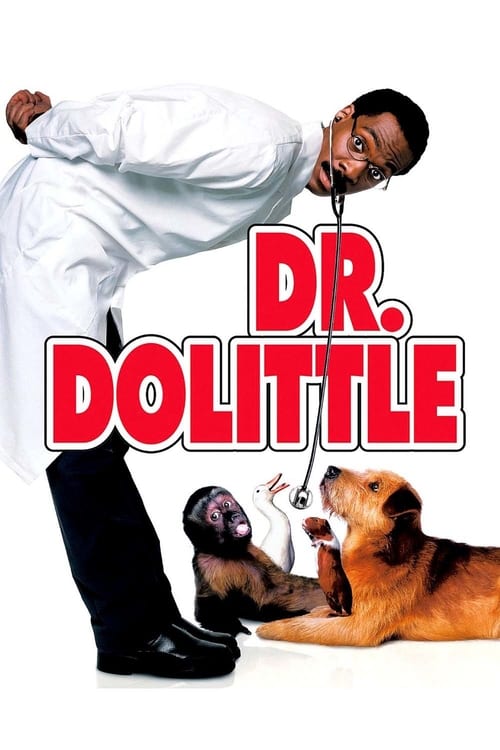
Doctor Dolittle
A successful physician and devoted family man, John Dolittle seems to have the world by the tail, until a long suppressed talent he possessed as a child, the ability to communicate with animals is suddenly reawakened with a vengeance! Now every creature within squawking distance wants the good doctor's advice, unleashing an outrageous chain of events that turns his world upside down!
Despite a moderate budget of $71.0M, Doctor Dolittle became a commercial success, earning $294.5M worldwide—a 315% return.
4 wins & 10 nominations


Plot Structure
Story beats plotted across runtime


Narrative Arc
Emotional journey through the story's key moments
Story Circle
Blueprint 15-beat structure
Arcplot Score Breakdown
Weighted: Precision (70%) + Arc (15%) + Theme (15%)
Doctor Dolittle (1998) exhibits carefully calibrated plot construction, characteristic of Betty Thomas's storytelling approach. This structural analysis examines how the film's 15-point plot structure maps to proven narrative frameworks across 1 hour and 25 minutes. With an Arcplot score of 7.5, the film showcases strong structural fundamentals.
Characters
Cast & narrative archetypes

Dr. John Dolittle
Lisa Dolittle
Charisse Dolittle
Maya Dolittle
Lucky the Dog
Dr. Mark Weller
Dr. Gene Reiss
Calloway
Main Cast & Characters
Dr. John Dolittle
Played by Eddie Murphy
A successful San Francisco physician who rediscovers his childhood ability to talk to animals, forcing him to balance his medical career with his unique gift.
Lisa Dolittle
Played by Kristen Wilson
John's supportive but increasingly concerned wife who struggles to understand her husband's strange behavior and talking to animals.
Charisse Dolittle
Played by Raven-Symoné
The Dolittles' teenage daughter who is embarrassed by her father's eccentric behavior and concerned about her social status.
Maya Dolittle
Played by Kyla Pratt
The younger Dolittle daughter who is more accepting and curious about her father's ability to communicate with animals.
Lucky the Dog
Played by Norm Macdonald
The Dolittle family dog who becomes John's confidant and helps him navigate his rediscovered ability to talk to animals.
Dr. Mark Weller
Played by Oliver Platt
John's ambitious medical partner who is focused on selling their practice to an HMO and views John's behavior as a threat to the deal.
Dr. Gene Reiss
Played by Richard Schiff
A skeptical colleague and partner in the medical practice who questions John's sanity as his behavior becomes more erratic.
Calloway
Played by Garry Shandling
A neurotic germophobic dog who seeks medical help from Dr. Dolittle and represents the neurotic patients he encounters.
Structural Analysis
The Status Quo at 1 minutes (1% through the runtime) establishes Young John Dolittle talks to animals naturally as a child, showing his authentic gift before the world tells him it's wrong.. Notably, this early placement immediately immerses viewers in the story world.
The inciting incident occurs at 10 minutes when Dolittle hits a dog with his car and hears it say "Bonehead!" His suppressed ability to communicate with animals suddenly returns, disrupting his carefully controlled life.. At 12% through the film, this Disruption aligns precisely with traditional story structure. This beat shifts the emotional landscape, launching the protagonist into the central conflict.
The First Threshold at 22 minutes marks the transition into Act II, occurring at 26% of the runtime. This reveals the protagonist's commitment to Dolittle actively chooses to help Lucky the dog with a serious medical condition, committing to using his gift despite the risks to his reputation., moving from reaction to action.
At 44 minutes, the Midpoint arrives at 51% of the runtime—precisely centered, creating perfect narrative symmetry. Significantly, this crucial beat Dolittle's secret is exposed publicly when he's caught talking to animals. His partners and the medical board question his sanity. False defeat: everything he feared is coming true., fundamentally raising what's at risk. The emotional intensity shifts, dividing the narrative into clear before-and-after phases.
The Collapse moment at 62 minutes (73% through) represents the emotional nadir. Here, Dolittle is taken to a psychiatric evaluation. His gift—his true self—is about to be labeled as insanity. He faces losing everything: career, family, freedom. The metaphorical death of his authentic identity., illustrates the protagonist at their lowest point. This beat's placement in the final quarter sets up the climactic reversal.
The Second Threshold at 67 minutes initiates the final act resolution at 79% of the runtime. Dolittle fully accepts his gift and chooses to be authentic, no matter the cost. He realizes that being true to himself is more important than others' approval. He commits to proving his gift is real., demonstrating the transformation achieved throughout the journey.
Emotional Journey
Doctor Dolittle's emotional architecture traces a deliberate progression across 15 carefully calibrated beats.
Narrative Framework
This structural analysis employs structural analysis methodology used to understand storytelling architecture. By mapping Doctor Dolittle against these established plot points, we can identify how Betty Thomas utilizes or subverts traditional narrative conventions. The plot point approach reveals not only adherence to structural principles but also creative choices that distinguish Doctor Dolittle within the comedy genre.
Betty Thomas's Structural Approach
Among the 7 Betty Thomas films analyzed on Arcplot, the average structural score is 7.3, reflecting strong command of classical structure. Doctor Dolittle represents one of the director's most structurally precise works. For comparative analysis, explore the complete Betty Thomas filmography.
Comparative Analysis
Additional comedy films include The Bad Guys, Ella Enchanted and The Evening Star. For more Betty Thomas analyses, see The Brady Bunch Movie, Private Parts and I Spy.
Plot Points by Act
Act I
SetupStatus Quo
Young John Dolittle talks to animals naturally as a child, showing his authentic gift before the world tells him it's wrong.
Theme
John's father tells him "There's no such thing as talking animals" and forces him to suppress his gift, establishing the theme of denying one's true nature for acceptance.
Worldbuilding
Adult Dr. Dolittle is established as a successful, overworked physician who has completely buried his gift. He's focused on a lucrative deal to sell his practice to an HMO.
Disruption
Dolittle hits a dog with his car and hears it say "Bonehead!" His suppressed ability to communicate with animals suddenly returns, disrupting his carefully controlled life.
Resistance
Dolittle resists his gift, thinking he's going crazy. Animals seek him out for medical help. He debates whether to embrace this ability or fight it, fearing professional and personal consequences.
Act II
ConfrontationFirst Threshold
Dolittle actively chooses to help Lucky the dog with a serious medical condition, committing to using his gift despite the risks to his reputation.
Mirror World
Lucky the dog becomes Dolittle's guide and conscience, representing the authentic, honest life Dolittle abandoned. Their relationship carries the thematic weight of accepting oneself.
Premise
The "fun and games" of a doctor who talks to animals. Dolittle helps various animals with their problems, embracing his gift while trying to keep it secret from his professional life.
Midpoint
Dolittle's secret is exposed publicly when he's caught talking to animals. His partners and the medical board question his sanity. False defeat: everything he feared is coming true.
Opposition
Pressure mounts as his medical partners try to have him committed. His family struggles with the situation. The HMO deal is threatened. Dolittle fights to prove his sanity while helping a suicidal circus tiger.
Collapse
Dolittle is taken to a psychiatric evaluation. His gift—his true self—is about to be labeled as insanity. He faces losing everything: career, family, freedom. The metaphorical death of his authentic identity.
Crisis
Dolittle's dark night: he must choose between denying his gift again (living a lie) or embracing it and risking being institutionalized. His family and the animals rally around him.
Act III
ResolutionSecond Threshold
Dolittle fully accepts his gift and chooses to be authentic, no matter the cost. He realizes that being true to himself is more important than others' approval. He commits to proving his gift is real.
Synthesis
Dolittle saves the tiger Jake by helping him overcome depression. He proves his gift is real to the medical board through the animals. He reconciles his authentic self with his professional life.
Transformation
Closing image mirrors opening: Dolittle openly talks to animals with his daughters, who also have the gift. He's integrated his true nature into his life, transformed from denial to acceptance.