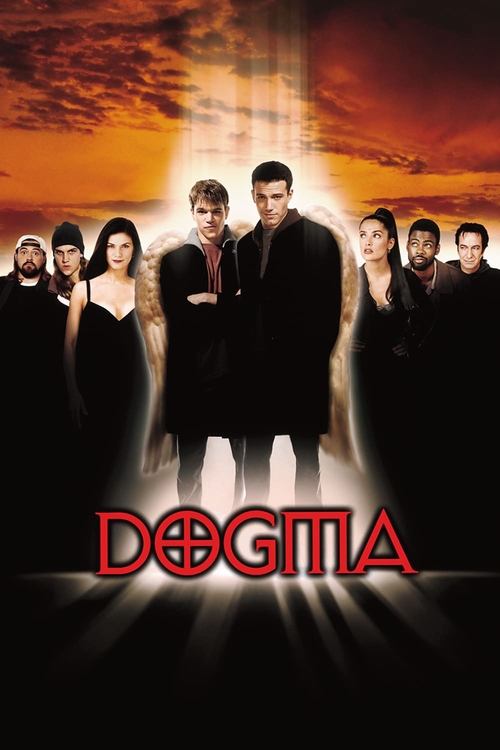
Dogma
An abortion clinic worker with a special heritage is called upon to save the existence of humanity from being negated by two renegade angels trying to exploit a loophole and reenter Heaven.
Despite its small-scale budget of $10.0M, Dogma became a commercial success, earning $33.5M worldwide—a 235% return. The film's innovative storytelling connected with viewers, showing that strong storytelling can transcend budget limitations.


Plot Structure
Story beats plotted across runtime


Narrative Arc
Emotional journey through the story's key moments
Story Circle
Blueprint 15-beat structure
Arcplot Score Breakdown
Weighted: Precision (70%) + Arc (15%) + Theme (15%)
Dogma (1999) reveals meticulously timed narrative architecture, characteristic of Kevin Smith's storytelling approach. This structural analysis examines how the film's 15-point plot structure maps to proven narrative frameworks across 2 hours and 10 minutes. With an Arcplot score of 6.5, the film balances conventional beats with creative variation.
Characters
Cast & narrative archetypes

Bethany Sloane
Bartleby
Loki
Rufus
Jay
Silent Bob
Azrael
Serendipity
Metatron
God
Main Cast & Characters
Bethany Sloane
Played by Linda Fiorentino
A disillusioned abortion clinic worker who is the last descendant of Jesus Christ, chosen to save existence itself.
Bartleby
Played by Ben Affleck
A fallen angel seeking to exploit a church loophole to re-enter Heaven, which would unmake existence.
Loki
Played by Matt Damon
A vengeful fallen angel and former Angel of Death, Bartleby's companion in their scheme to return to Heaven.
Rufus
Played by Chris Rock
The 13th Apostle, left out of the Bible, who guides Bethany on her mission with irreverent wisdom.
Jay
Played by Jason Mewes
A foul-mouthed drug dealer who becomes one of the prophets sent to protect Bethany.
Silent Bob
Played by Kevin Smith
Jay's silent companion, a prophet with surprising wisdom who rarely speaks but acts decisively.
Azrael
Played by Jason Lee
A demon plotting to destroy existence by helping the fallen angels, using charm and manipulation.
Serendipity
Played by Salma Hayek
A muse who quit inspiring and now works as a stripper, helping Bethany understand her mission.
Metatron
Played by Alan Rickman
The Voice of God, an angel who delivers God's messages and recruits Bethany for her mission.
God
Played by Alanis Morissette
The supreme being who appears as a playful woman at the film's conclusion, restoring order to creation.
Structural Analysis
The Status Quo at 1 minutes (1% through the runtime) establishes Bethany works at an abortion clinic, going through the motions of her faith-conflicted life. She attends church but prays without conviction, revealing a woman disconnected from her spirituality after personal tragedy.. Structural examination shows that this early placement immediately immerses viewers in the story world.
The inciting incident occurs at 16 minutes when Metatron reveals to Bethany that two fallen angels will exploit a church loophole to re-enter Heaven, and if they succeed, they will prove God fallible—unmaking all existence. She must stop them to save reality itself.. At 12% through the film, this Disruption aligns precisely with traditional story structure. This beat shifts the emotional landscape, launching the protagonist into the central conflict.
The First Threshold at 33 minutes marks the transition into Act II, occurring at 25% of the runtime. This indicates the protagonist's commitment to Bethany commits to the journey to New Jersey after Rufus convinces her that ideas—not rigid beliefs—are what matter. She actively chooses to embrace her mission to stop the angels, crossing from reluctant participant to willing champion., moving from reaction to action.
At 65 minutes, the Midpoint arrives at 50% of the runtime—precisely centered, creating perfect narrative symmetry. Structural examination shows that this crucial beat Azrael reveals himself, explaining he manipulated the angels because he'd rather not exist than spend eternity in Hell. The stakes escalate from stopping two angels to confronting a demonic mastermind who wants to unmake creation entirely—a false defeat that reframes the entire conflict., fundamentally raising what's at risk. The emotional intensity shifts, dividing the narrative into clear before-and-after phases.
The Collapse moment at 98 minutes (75% through) represents the emotional nadir. Here, Bartleby kills Loki, completing his fall from regretful exile to wrathful destroyer. Azrael captures the group. It appears all is lost—they cannot reach the church in time, God remains missing, and Bartleby massacres everyone outside the church in his rage against humanity., illustrates the protagonist at their lowest point. This beat's placement in the final quarter sets up the climactic reversal.
The Second Threshold at 104 minutes initiates the final act resolution at 80% of the runtime. Bethany realizes she can use her own blood—as the Last Scion carrying the bloodline of Christ—to stop Bartleby. She synthesizes her newfound faith with her lineage, understanding that her purpose was never just to witness but to sacrifice., demonstrating the transformation achieved throughout the journey.
Emotional Journey
Dogma's emotional architecture traces a deliberate progression across 15 carefully calibrated beats.
Narrative Framework
This structural analysis employs a 15-point narrative structure framework that maps key story moments. By mapping Dogma against these established plot points, we can identify how Kevin Smith utilizes or subverts traditional narrative conventions. The plot point approach reveals not only adherence to structural principles but also creative choices that distinguish Dogma within the fantasy genre.
Kevin Smith's Structural Approach
Among the 8 Kevin Smith films analyzed on Arcplot, the average structural score is 6.9, demonstrating varied approaches to story architecture. Dogma takes a more unconventional approach compared to the director's typical style. For comparative analysis, explore the complete Kevin Smith filmography.
Comparative Analysis
Additional fantasy films include Thinner, Ella Enchanted and Conan the Barbarian. For more Kevin Smith analyses, see Jersey Girl, Chasing Amy and Zack and Miri Make a Porno.
Plot Points by Act
Act I
SetupStatus Quo
Bethany works at an abortion clinic, going through the motions of her faith-conflicted life. She attends church but prays without conviction, revealing a woman disconnected from her spirituality after personal tragedy.
Theme
Metatron tells Bethany: "You people. If there isn't a movie about it, it's not worth knowing, is it?" This underscores the theme that faith requires belief beyond proof—ideas must be embraced, not just understood intellectually.
Worldbuilding
The world is established: Loki and Bartleby are fallen angels in Wisconsin planning to exploit a Catholic loophole to re-enter Heaven. The Metatron appears to Bethany explaining she is the Last Scion. Cardinal Glick's "Catholicism WOW!" campaign introduces the plenary indulgence that will enable the angels' plan.
Disruption
Metatron reveals to Bethany that two fallen angels will exploit a church loophole to re-enter Heaven, and if they succeed, they will prove God fallible—unmaking all existence. She must stop them to save reality itself.
Resistance
Bethany resists her mission, questioning why her. Jay and Silent Bob are revealed as prophets sent to guide her. She survives attacks from the Stygian Triplets. Serendipity the muse and Rufus the 13th Apostle join the quest, building her unlikely fellowship while she debates accepting her role.
Act II
ConfrontationFirst Threshold
Bethany commits to the journey to New Jersey after Rufus convinces her that ideas—not rigid beliefs—are what matter. She actively chooses to embrace her mission to stop the angels, crossing from reluctant participant to willing champion.
Mirror World
Rufus explains that Christ was black and that the Church has distorted many truths. This B-story of religious deconstruction parallels Bethany's internal journey—she must learn that questioning dogma strengthens rather than weakens authentic faith.
Premise
The misfit band journeys toward New Jersey. Jay's crude humor contrasts with theological debates. Bartleby and Loki kill the Mooby Corporation board. The group bonds over revelations about Heaven, Hell, and humanity. Azrael is revealed as the demon orchestrating events from behind the scenes.
Midpoint
Azrael reveals himself, explaining he manipulated the angels because he'd rather not exist than spend eternity in Hell. The stakes escalate from stopping two angels to confronting a demonic mastermind who wants to unmake creation entirely—a false defeat that reframes the entire conflict.
Opposition
The group races against time as Bartleby descends into murderous zealotry. Loki has second thoughts but is dominated by Bartleby's rage. Azrael's forces attack relentlessly. The Golgothan shit demon nearly kills them. Internal conflicts arise as Bethany's faith wavers under pressure.
Collapse
Bartleby kills Loki, completing his fall from regretful exile to wrathful destroyer. Azrael captures the group. It appears all is lost—they cannot reach the church in time, God remains missing, and Bartleby massacres everyone outside the church in his rage against humanity.
Crisis
The group is trapped as Bartleby slaughters the crowds outside the church. Bethany confronts her own mortality and the seeming impossibility of their mission. Silent Bob's unexpected action with the golf club kills Azrael, offering a sliver of hope in the darkness.
Act III
ResolutionSecond Threshold
Bethany realizes she can use her own blood—as the Last Scion carrying the bloodline of Christ—to stop Bartleby. She synthesizes her newfound faith with her lineage, understanding that her purpose was never just to witness but to sacrifice.
Synthesis
Bethany confronts Bartleby at the church doors. She dies stopping him from entering but mortally wounds him with her divine blood. God—in the form of Alanis Morissette—arrives, silences Bartleby with Her voice, and resurrects Bethany with a new gift: the child she could never have.
Transformation
Bethany, alive and pregnant, watches God playfully do a handstand before departing. Where she once prayed without belief, she now possesses lived proof of the divine—yet the film suggests her real transformation is learning that faith is about ideas, not certainty.