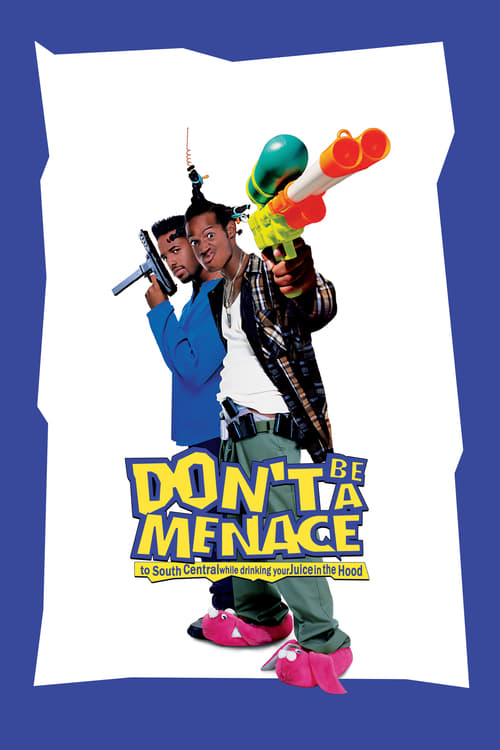
Don't Be a Menace to South Central While Drinking Your Juice in the Hood
When Ashtray moves to South Central L.A. to live with his father (who appears to be the same age he is) and grandmother (who likes to talk tough and smoke reefer), he falls in with his gang-banging cousin Loc Dog, who along with the requisite pistols and Uzi carries a thermo-nuclear warhead for self-defense. Will Ashtray be able to keep living the straight life?
Despite its small-scale budget of $3.8M, Don't Be a Menace to South Central While Drinking Your Juice in the Hood became a box office success, earning $20.1M worldwide—a 429% return. The film's distinctive approach attracted moviegoers, showing that strong storytelling can transcend budget limitations.


Plot Structure
Story beats plotted across runtime


Narrative Arc
Emotional journey through the story's key moments
Story Circle
Blueprint 15-beat structure
Arcplot Score Breakdown
Weighted: Precision (70%) + Arc (15%) + Theme (15%)
Don't Be a Menace to South Central While Drinking Your Juice in the Hood (1996) exhibits precise dramatic framework, characteristic of Paris Barclay's storytelling approach. This structural analysis examines how the film's 15-point plot structure maps to proven narrative frameworks across 1 hour and 29 minutes. With an Arcplot score of 6.7, the film balances conventional beats with creative variation.
Characters
Cast & narrative archetypes

Ashtray
Loc Dog
Dashiki
Preach
Crazy Legs
Toothpick
Main Cast & Characters
Ashtray
Played by Shawn Wayans
A naive young man who moves to South Central LA to live with his father and learns to navigate hood life through absurd parody scenarios.
Loc Dog
Played by Marlon Wayans
Ashtray's trigger-happy best friend with a wheelchair-bound grandmother and a penchant for violence, serving as comic relief and loyal companion.
Dashiki
Played by Tracey Cherelle Jones
A strong-willed, educated young woman who becomes Ashtray's love interest while trying to better herself and escape the cycle of poverty.
Preach
Played by Chris Spencer
Ashtray's philosophical father figure who dispenses wisdom and absurd life lessons while encouraging his son to stay out of trouble.
Crazy Legs
Played by Helen Martin
Loc Dog's tough, no-nonsense grandmother in a wheelchair who frequently engages in violent confrontations despite her disability.
Toothpick
Played by Darrel Heath
Ashtray's cousin, a smooth-talking character who provides comic commentary on hood life and survival.
Structural Analysis
The Status Quo at 1 minutes (1% through the runtime) establishes Ashtray's mother drops him off at his father's house in South Central, telling him she's sending him to live with his dad to learn how to be a man. The absurdist tone is set as his father appears younger than him.. Notably, this early placement immediately immerses viewers in the story world.
The inciting incident occurs at 11 minutes when Ashtray meets Dashiki at the mailbox and is immediately smitten with her despite her seven kids from seven different fathers. His world shifts from mere survival to pursuing romance in the hood.. At 12% through the film, this Disruption aligns precisely with traditional story structure. This beat shifts the emotional landscape, launching the protagonist into the central conflict.
The First Threshold at 21 minutes marks the transition into Act II, occurring at 24% of the runtime. This illustrates the protagonist's commitment to Ashtray commits to pursuing Dashiki and fully embracing hood life with Loc Dog. He makes the active choice to stay and become part of this world rather than just observing it., moving from reaction to action.
At 44 minutes, the Midpoint arrives at 49% of the runtime—precisely centered, creating perfect narrative symmetry. Significantly, this crucial beat Ashtray's relationship with Dashiki deepens at a party scene, creating a false victory. Meanwhile, tensions with local gang members escalate, raising the stakes for the second half., fundamentally raising what's at risk. The emotional intensity shifts, dividing the narrative into clear before-and-after phases.
The Collapse moment at 66 minutes (75% through) represents the emotional nadir. Here, Preach is shot and killed in a drive-by shooting, parodying the deaths of Ricky in Boyz n the Hood and other hood film martyrs. The whiff of death arrives in comedic but still impactful fashion., reveals the protagonist at their lowest point. This beat's placement in the final quarter sets up the climactic reversal.
The Second Threshold at 71 minutes initiates the final act resolution at 80% of the runtime. Rather than pursuing revenge in the typical hood movie fashion, Ashtray realizes he can break the cycle. The Message appears to deliver explicit social commentary about escaping violence., demonstrating the transformation achieved throughout the journey.
Emotional Journey
Don't Be a Menace to South Central While Drinking Your Juice in the Hood's emotional architecture traces a deliberate progression across 15 carefully calibrated beats.
Narrative Framework
This structural analysis employs structural analysis methodology used to understand storytelling architecture. By mapping Don't Be a Menace to South Central While Drinking Your Juice in the Hood against these established plot points, we can identify how Paris Barclay utilizes or subverts traditional narrative conventions. The plot point approach reveals not only adherence to structural principles but also creative choices that distinguish Don't Be a Menace to South Central While Drinking Your Juice in the Hood within the comedy genre.
Comparative Analysis
Additional comedy films include The Bad Guys, Ella Enchanted and The Evening Star.
Plot Points by Act
Act I
SetupStatus Quo
Ashtray's mother drops him off at his father's house in South Central, telling him she's sending him to live with his dad to learn how to be a man. The absurdist tone is set as his father appears younger than him.
Theme
Ashtray's father tells him that the hood is a dangerous place and he needs to learn to survive. The satirical theme is established: every hood movie cliché will be exaggerated to absurdity.
Worldbuilding
We meet the key players: Loc Dog (Ashtray's cousin with an endless arsenal), Grandma (violent elderly woman), Preach, Crazy Legs, and other neighborhood characters. The South Central setting is established through rapid-fire parody gags.
Disruption
Ashtray meets Dashiki at the mailbox and is immediately smitten with her despite her seven kids from seven different fathers. His world shifts from mere survival to pursuing romance in the hood.
Resistance
Loc Dog serves as Ashtray's guide through hood life, taking him to various locations and teaching him street rules. They encounter numerous characters and situations that parody classic hood film scenes.
Act II
ConfrontationFirst Threshold
Ashtray commits to pursuing Dashiki and fully embracing hood life with Loc Dog. He makes the active choice to stay and become part of this world rather than just observing it.
Mirror World
Dashiki represents the B-story and romantic subplot. Her character embodies the theme by being a parody of every hood movie love interest while also offering Ashtray a potential different path.
Premise
The promise of the premise delivers: non-stop parody gags including drive-bys, house parties, prison visits, and countless movie references. Ashtray and Loc Dog navigate increasingly absurd hood scenarios.
Midpoint
Ashtray's relationship with Dashiki deepens at a party scene, creating a false victory. Meanwhile, tensions with local gang members escalate, raising the stakes for the second half.
Opposition
Toothpick and his gang intensify their antagonism toward Ashtray and Loc Dog. Various mishaps occur, relationships are tested, and the parody targets become darker, including violence and death gags.
Collapse
Preach is shot and killed in a drive-by shooting, parodying the deaths of Ricky in Boyz n the Hood and other hood film martyrs. The whiff of death arrives in comedic but still impactful fashion.
Crisis
Ashtray and the crew process Preach's death. The film briefly gets serious before undercutting the drama with more absurdist humor, questioning whether cycle-of-violence revenge is the answer.
Act III
ResolutionSecond Threshold
Rather than pursuing revenge in the typical hood movie fashion, Ashtray realizes he can break the cycle. The Message appears to deliver explicit social commentary about escaping violence.
Synthesis
The finale unfolds with Ashtray confronting his situation and making choices about his future. The film wraps up its various parody threads while delivering a satirical take on hood movie endings.
Transformation
Ashtray drives off with Dashiki, having survived the hood. The final image parodies the freeze-frame text endings of serious hood films while undercutting them with absurdist humor about his future.