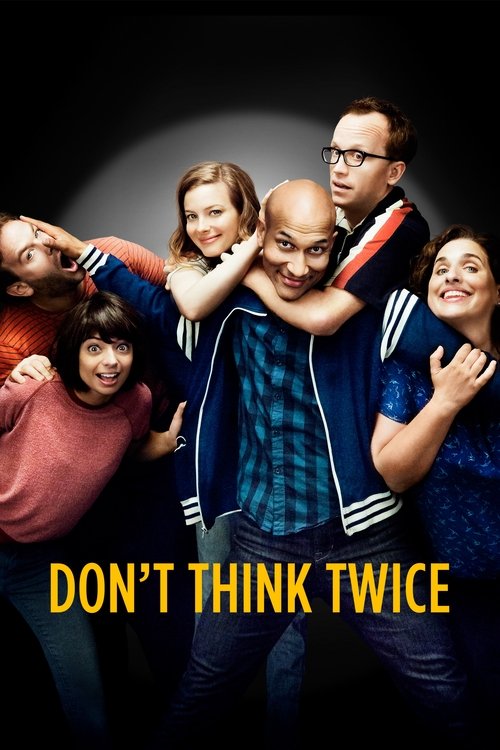
Don't Think Twice
An improv group deals with several crises, including the loss of their lease and one member hitting the big time.
The film earned $4.4M at the global box office.





Plot Structure
Story beats plotted across runtime


Narrative Arc
Emotional journey through the story's key moments
Story Circle
Blueprint 15-beat structure
Arcplot Score Breakdown
Weighted: Precision (70%) + Arc (15%) + Theme (15%)
Don't Think Twice (2016) showcases meticulously timed narrative design, characteristic of Mike Birbiglia's storytelling approach. This structural analysis examines how the film's 15-point plot structure maps to proven narrative frameworks across 1 hour and 32 minutes. With an Arcplot score of 7.7, the film showcases strong structural fundamentals.
Structural Analysis
The Status Quo at 1 minutes (1% through the runtime) establishes The Commune performs an energetic improv show to a packed, laughing audience. The troupe is tight, successful, and living their creative dream together.. Significantly, this early placement immediately immerses viewers in the story world.
The inciting incident occurs at 10 minutes when A Weekend Live (clear SNL analog) scout attends The Commune's show. The possibility of mainstream success suddenly becomes real, disrupting their comfortable underground existence.. At 11% through the film, this Disruption aligns precisely with traditional story structure. This beat shifts the emotional landscape, launching the protagonist into the central conflict.
The First Threshold at 22 minutes marks the transition into Act II, occurring at 24% of the runtime. This shows the protagonist's commitment to Jack gets cast on Weekend Live. He chooses to accept, entering a new world of TV success while leaving the troupe behind. The group throws him a goodbye party, but the choice fractures their unity., moving from reaction to action.
At 46 minutes, the Midpoint arrives at 50% of the runtime—precisely centered, creating perfect narrative symmetry. The analysis reveals that this crucial beat Jack brings the Weekend Live cast to see The Commune perform. What should be an honor becomes humiliating—the troupe bombs, the audience is cold, and Jack's new world collides with their struggling one. False victory (exposure) becomes defeat (exposure of how far apart they've grown)., fundamentally raising what's at risk. The emotional intensity shifts, dividing the narrative into clear before-and-after phases.
The Collapse moment at 68 minutes (74% through) represents the emotional nadir. Here, The Commune performs one final show that falls apart on stage. They can't support each other anymore. The dream dies. The theater closes. Metaphorical death of the troupe and everything they built together., illustrates the protagonist at their lowest point. This beat's placement in the final quarter sets up the climactic reversal.
The Second Threshold at 73 minutes initiates the final act resolution at 80% of the runtime. Allison's father dies, and she delivers a beautiful improvised eulogy that synthesizes everything they learned about improv and life: truth, support, letting go, saying yes. The group reunites at the funeral, understanding finally what matters., demonstrating the transformation achieved throughout the journey.
Emotional Journey
Don't Think Twice's emotional architecture traces a deliberate progression across 15 carefully calibrated beats.
Narrative Framework
This structural analysis employs proven narrative structure principles that track dramatic progression. By mapping Don't Think Twice against these established plot points, we can identify how Mike Birbiglia utilizes or subverts traditional narrative conventions. The plot point approach reveals not only adherence to structural principles but also creative choices that distinguish Don't Think Twice within the comedy genre.
Comparative Analysis
Additional comedy films include The Ministry of Ungentlemanly Warfare, The Bad Guys and Lake Placid.
Plot Points by Act
Act I
SetupStatus Quo
The Commune performs an energetic improv show to a packed, laughing audience. The troupe is tight, successful, and living their creative dream together.
Theme
Miles tells his improv class: "The first rule of improv is you have to support your fellow improviser. If you don't support each other, the whole thing falls apart." This defines the central question: can they support each other when one succeeds and others don't?
Worldbuilding
Introduction to The Commune troupe members: Jack and Sam (dating), Miles (teaching improv), Allison (caring for her sick father), Lindsay and Bill. They perform together, teach classes, share dreams of "making it" in comedy. Weekend at Miles' dad's house establishes their tight-knit family dynamic.
Disruption
A Weekend Live (clear SNL analog) scout attends The Commune's show. The possibility of mainstream success suddenly becomes real, disrupting their comfortable underground existence.
Resistance
The troupe members debate what they'd do if chosen for Weekend Live. Jack gets called in for an audition. The group tries to be supportive but underlying tensions emerge. Miles confronts his age (mid-30s) and missed opportunities. They continue performing, teaching, trying to stay unified.
Act II
ConfrontationFirst Threshold
Jack gets cast on Weekend Live. He chooses to accept, entering a new world of TV success while leaving the troupe behind. The group throws him a goodbye party, but the choice fractures their unity.
Mirror World
Sam (Jack's girlfriend) becomes the emotional center representing the thematic question. She must navigate supporting Jack's success while dealing with her own stalled career and their deteriorating relationship. Her journey will teach others what true support means.
Premise
The "promise of the premise": watching talented people navigate jealousy and ambition. The troupe continues performing without Jack. Miles obsessively pitches sketch packets to Weekend Live. Sam tries to be supportive but feels abandoned. Allison struggles with her father's illness. They watch Jack on TV, faces revealing complex emotions.
Midpoint
Jack brings the Weekend Live cast to see The Commune perform. What should be an honor becomes humiliating—the troupe bombs, the audience is cold, and Jack's new world collides with their struggling one. False victory (exposure) becomes defeat (exposure of how far apart they've grown).
Opposition
The pressure intensifies. Miles becomes desperate, performing Jack's characters in class to get attention. Sam and Jack's relationship crumbles. Bill gets frustrated with the troupe's lack of progress. The theater faces financial trouble. Lindsay tries to create her own one-woman show. Everyone's flaws and resentments surface.
Collapse
The Commune performs one final show that falls apart on stage. They can't support each other anymore. The dream dies. The theater closes. Metaphorical death of the troupe and everything they built together.
Crisis
Members process the loss separately. Sam and Jack officially break up. Miles sits alone. Allison tends to her dying father. Bill questions his choices. Lindsay reflects on her path. Dark night of individual reckonings.
Act III
ResolutionSecond Threshold
Allison's father dies, and she delivers a beautiful improvised eulogy that synthesizes everything they learned about improv and life: truth, support, letting go, saying yes. The group reunites at the funeral, understanding finally what matters.
Synthesis
Members move forward separately but authentically. Miles begins teaching again with renewed purpose. Lindsay performs her show. Bill finds new direction. Sam begins working on her graphic novel. Jack continues on Weekend Live but changed. They each find their own version of success.
Transformation
Miles teaches a new improv class, giving the same "support each other" lesson from the opening—but now he understands it differently. The camera pulls back showing new students, new possibilities. The cycle continues, but he's transformed from bitter to accepting.