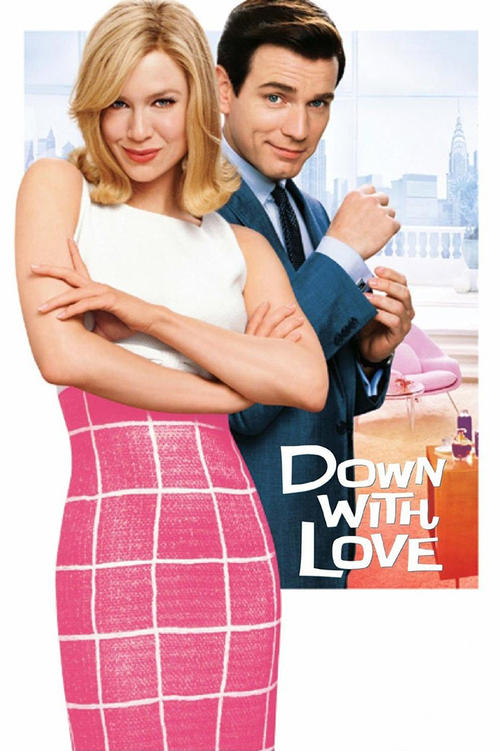
Down with Love
In 1962 New York City, love blossoms between a playboy journalist and a feminist advice author.
The film underperformed commercially against its mid-range budget of $35.0M, earning $20.3M globally (-42% loss). While initial box office returns were modest, the film has gained appreciation for its bold vision within the comedy genre.
4 wins & 8 nominations


Plot Structure
Story beats plotted across runtime


Narrative Arc
Emotional journey through the story's key moments
Story Circle
Blueprint 15-beat structure
Arcplot Score Breakdown
Weighted: Precision (70%) + Arc (15%) + Theme (15%)
Down with Love (2003) exhibits carefully calibrated story structure, characteristic of Peyton Reed's storytelling approach. This structural analysis examines how the film's 15-point plot structure maps to proven narrative frameworks across 1 hour and 42 minutes. With an Arcplot score of 7.3, the film balances conventional beats with creative variation.
Characters
Cast & narrative archetypes

Barbara Novak
Catcher Block
Vikki Hiller
Peter MacMannus
Zip Martin
Main Cast & Characters
Barbara Novak
Played by Renée Zellweger
A feminist author who writes a manifesto advocating independence from men and love, becoming a cultural phenomenon in 1962 New York.
Catcher Block
Played by Ewan McGregor
A charismatic playboy journalist and ladies' man who schemes to discredit Barbara's philosophy while hiding his true identity.
Vikki Hiller
Played by Sarah Paulson
Barbara's loyal editor and best friend who supports her career and navigates her own romantic journey.
Peter MacMannus
Played by David Hyde Pierce
Catcher's loyal best friend and boss at Know Magazine who falls for Vikki and supports Catcher's schemes.
Zip Martin
Played by Ewan McGregor
Catcher's astronaut alter ego, a sensitive southern gentleman he creates to seduce Barbara.
Structural Analysis
The Status Quo at 1 minutes (1% through the runtime) establishes Split-screen montage of 1962 New York establishes Barbara Novak arriving from Maine as an idealistic feminist author, while Catcher Block enjoys his playboy lifestyle. The stylized opening sets up two worlds about to collide.. Significantly, this early placement immediately immerses viewers in the story world.
The inciting incident occurs at 13 minutes when After being stood up multiple times by Catcher, Barbara appears on The Ed Sullivan Show without his endorsement. Despite this setback, her book becomes an overnight sensation, threatening Catcher's playboy lifestyle as women across America adopt her philosophy.. At 13% through the film, this Disruption is delayed, allowing extended setup of the story world. This beat shifts the emotional landscape, launching the protagonist into the central conflict.
The First Threshold at 26 minutes marks the transition into Act II, occurring at 26% of the runtime. This shows the protagonist's commitment to Catcher makes the active choice to seduce Barbara by creating an alternate identity. He disguises himself as "Zip Martin," a naive, virginal astronaut who represents everything opposite to his playboy persona - the perfect bait for someone who claims not to believe in love., moving from reaction to action.
At 52 minutes, the Midpoint arrives at 51% of the runtime—precisely centered, creating perfect narrative symmetry. Of particular interest, this crucial beat False victory: Catcher believes his plan is working perfectly as Barbara seems to be falling in love with Zip. They share an intimate moment where she appears vulnerable. But the stakes raise - Catcher realizes he's genuinely falling for Barbara, complicating his scheme to expose her., fundamentally raising what's at risk. The emotional intensity shifts, dividing the narrative into clear before-and-after phases.
The Collapse moment at 76 minutes (74% through) represents the emotional nadir. Here, Barbara discovers Catcher's true identity and his scheme to discredit her. The relationship "dies" as she feels betrayed and humiliated. Catcher's attempt to expose her has backfired, and he realizes he's lost the woman he truly loves through his own manipulation., shows the protagonist at their lowest point. This beat's placement in the final quarter sets up the climactic reversal.
The Second Threshold at 81 minutes initiates the final act resolution at 80% of the runtime. The twist revelation: Barbara turns the tables and reveals she knew Catcher's identity all along. She orchestrated everything - even writing "Down with Love" - as an elaborate scheme to make him fall in love with her. She synthesizes her intelligence with vulnerability, exposing her true feelings., demonstrating the transformation achieved throughout the journey.
Emotional Journey
Down with Love's emotional architecture traces a deliberate progression across 15 carefully calibrated beats.
Narrative Framework
This structural analysis employs structural analysis methodology used to understand storytelling architecture. By mapping Down with Love against these established plot points, we can identify how Peyton Reed utilizes or subverts traditional narrative conventions. The plot point approach reveals not only adherence to structural principles but also creative choices that distinguish Down with Love within the comedy genre.
Peyton Reed's Structural Approach
Among the 7 Peyton Reed films analyzed on Arcplot, the average structural score is 7.3, reflecting strong command of classical structure. Down with Love takes a more unconventional approach compared to the director's typical style. For comparative analysis, explore the complete Peyton Reed filmography.
Comparative Analysis
Additional comedy films include The Bad Guys, Ella Enchanted and The Evening Star. For more Peyton Reed analyses, see Ant-Man and the Wasp: Quantumania, Ant-Man and the Wasp and Yes Man.
Plot Points by Act
Act I
SetupStatus Quo
Split-screen montage of 1962 New York establishes Barbara Novak arriving from Maine as an idealistic feminist author, while Catcher Block enjoys his playboy lifestyle. The stylized opening sets up two worlds about to collide.
Theme
Vikki Hiller tells Barbara: "Love is just a distraction that keeps women from being all they can be." The film's central thematic question about love versus independence is stated by Barbara's editor and best friend.
Worldbuilding
Barbara meets her editor Vikki and prepares for her book launch. We learn about her manifesto "Down with Love" promoting sex without emotional attachment. Catcher Block is introduced as KNOW magazine's star journalist who repeatedly stands Barbara up for scheduled interviews, too busy with his conquests.
Disruption
After being stood up multiple times by Catcher, Barbara appears on The Ed Sullivan Show without his endorsement. Despite this setback, her book becomes an overnight sensation, threatening Catcher's playboy lifestyle as women across America adopt her philosophy.
Resistance
Barbara's book becomes a cultural phenomenon. Women everywhere embrace "Down with Love," transforming fashion and dating. Catcher realizes his lifestyle is threatened and debates how to respond. His editor Peter suggests he expose Barbara as a fraud by making her fall in love, but Catcher initially resists this manipulative plan.
Act II
ConfrontationFirst Threshold
Catcher makes the active choice to seduce Barbara by creating an alternate identity. He disguises himself as "Zip Martin," a naive, virginal astronaut who represents everything opposite to his playboy persona - the perfect bait for someone who claims not to believe in love.
Mirror World
Barbara meets "Zip Martin" and is charmed by his innocence and sincerity. This relationship will serve as the thematic mirror, forcing both characters to confront what they truly want. Meanwhile, Vikki and Peter begin their own romance subplot that parallels the main relationship.
Premise
The "promise of the premise" - romantic comedy disguise games play out. Catcher-as-Zip courts Barbara with elaborate dates while maintaining his secret. Barbara appears to fall for Zip while publicly maintaining her anti-love stance. Stylized split-screen sequences, costume changes, and 1960s pastiche deliver the fun the audience came for.
Midpoint
False victory: Catcher believes his plan is working perfectly as Barbara seems to be falling in love with Zip. They share an intimate moment where she appears vulnerable. But the stakes raise - Catcher realizes he's genuinely falling for Barbara, complicating his scheme to expose her.
Opposition
Complications mount as Catcher struggles to maintain his dual identity while developing real feelings. Barbara pushes for commitment from Zip. Peter and Vikki's relationship pressures both protagonists. The deception becomes harder to maintain, and Catcher faces exposure. His feelings conflict with his original mission.
Collapse
Barbara discovers Catcher's true identity and his scheme to discredit her. The relationship "dies" as she feels betrayed and humiliated. Catcher's attempt to expose her has backfired, and he realizes he's lost the woman he truly loves through his own manipulation.
Crisis
Dark night of the soul. Both Barbara and Catcher process their loss separately. Catcher realizes he sabotaged his chance at real love. Barbara retreats to her public persona but is clearly heartbroken. The question hangs: can either admit they need love?
Act III
ResolutionSecond Threshold
The twist revelation: Barbara turns the tables and reveals she knew Catcher's identity all along. She orchestrated everything - even writing "Down with Love" - as an elaborate scheme to make him fall in love with her. She synthesizes her intelligence with vulnerability, exposing her true feelings.
Synthesis
Barbara's confession speech reveals her entire plan. Catcher realizes they both played the same game and both fell in love for real. They confront their fears of commitment and admit their true feelings. The finale resolves both the main romance and the Vikki/Peter subplot, with dual weddings.
Transformation
Closing image mirrors the opening split-screen: Barbara and Catcher, now married, share equal space in a life of partnership. Both have transformed from rigid ideologues (anti-love feminist vs commitment-phobe playboy) into people who embrace both independence and love. The final image shows equality and romance coexisting.