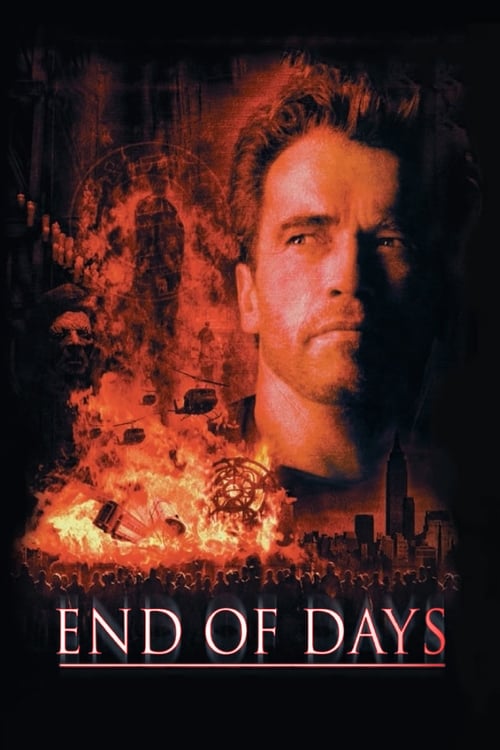
End of Days
Cynical bodyguard Jericho is hired by a man possessed by Satan, who is in search of his bride. When Jericho realizes what is happening, he must do everything he can to save the woman and the world.
Despite a substantial budget of $100.0M, End of Days became a solid performer, earning $212.0M worldwide—a 112% return.
1 win & 7 nominations


Plot Structure
Story beats plotted across runtime


Narrative Arc
Emotional journey through the story's key moments
Story Circle
Blueprint 15-beat structure
Arcplot Score Breakdown
Weighted: Precision (70%) + Arc (15%) + Theme (15%)
End of Days (1999) exemplifies precise story structure, characteristic of Peter Hyams's storytelling approach. This structural analysis examines how the film's 15-point plot structure maps to proven narrative frameworks across 2 hours and 2 minutes. With an Arcplot score of 7.0, the film balances conventional beats with creative variation.
Characters
Cast & narrative archetypes

Jericho Cane
Christine York
The Man/Satan
Bobby Chicago
Father Kovak
Mabel
Main Cast & Characters
Jericho Cane
Played by Arnold Schwarzenegger
A suicidal ex-cop and alcoholic security specialist who must protect a woman from Satan at the turn of the millennium.
Christine York
Played by Robin Tunney
A young woman chosen to bear Satan's child at the stroke of midnight on New Year's Eve 1999.
The Man/Satan
Played by Gabriel Byrne
The embodiment of evil who possesses a banker to sire his child and bring about the apocalypse.
Bobby Chicago
Played by Kevin Pollak
Jericho's loyal partner and best friend who works with him in security.
Father Kovak
Played by Rod Steiger
A renegade priest who has researched Satan's plan and tries to help Jericho stop the apocalypse.
Mabel
Played by Miriam Margolyes
Christine's devoted nurse and protector who has cared for her since childhood.
Structural Analysis
The Status Quo at 1 minutes (1% through the runtime) establishes Jericho Cane wakes alone in his apartment, drinks a blended breakfast with alcohol and painkillers, contemplates suicide with his gun - a man broken by the murder of his wife and daughter, existing without purpose or faith.. Structural examination shows that this early placement immediately immerses viewers in the story world.
The inciting incident occurs at 15 minutes when During a security detail, an old priest attempts to assassinate the banker Jericho is protecting. When Jericho captures the shooter, he discovers the old man's tongue has been cut out - entering him into the supernatural conspiracy.. At 12% through the film, this Disruption aligns precisely with traditional story structure. This beat shifts the emotional landscape, launching the protagonist into the central conflict.
The First Threshold at 30 minutes marks the transition into Act II, occurring at 24% of the runtime. This reveals the protagonist's commitment to Jericho discovers the banker he saved is actually Satan incarnate and witnesses his supernatural power. He chooses to pursue the investigation despite the danger, committing to find Christine York before Satan does., moving from reaction to action.
At 62 minutes, the Midpoint arrives at 50% of the runtime—precisely centered, creating perfect narrative symmetry. Notably, this crucial beat Satan confronts Jericho directly, offering to restore his murdered wife and daughter if he surrenders Christine. The false victory of having Christine safe is shattered by this temptation that forces Jericho to confront his deepest wound and crisis of faith., fundamentally raising what's at risk. The emotional intensity shifts, dividing the narrative into clear before-and-after phases.
The Collapse moment at 90 minutes (74% through) represents the emotional nadir. Here, Bobby, possessed by Satan, betrays and shoots Jericho, leaving him for dead. Christine is captured and taken for the dark ritual. Jericho's body lies broken in the church - the whiff of death both literal and spiritual as his last ally became his enemy., demonstrates the protagonist at their lowest point. This beat's placement in the final quarter sets up the climactic reversal.
The Second Threshold at 98 minutes initiates the final act resolution at 80% of the runtime. Jericho's prayer is answered with renewed strength and purpose. He realizes that faith - not guns - is the true weapon. He chooses to fight not for vengeance or nihilism but through genuine spiritual conviction, accepting that sacrifice may be required., demonstrating the transformation achieved throughout the journey.
Emotional Journey
End of Days's emotional architecture traces a deliberate progression across 15 carefully calibrated beats.
Narrative Framework
This structural analysis employs a 15-point narrative structure framework that maps key story moments. By mapping End of Days against these established plot points, we can identify how Peter Hyams utilizes or subverts traditional narrative conventions. The plot point approach reveals not only adherence to structural principles but also creative choices that distinguish End of Days within the action genre.
Peter Hyams's Structural Approach
Among the 14 Peter Hyams films analyzed on Arcplot, the average structural score is 7.1, reflecting strong command of classical structure. End of Days takes a more unconventional approach compared to the director's typical style. For comparative analysis, explore the complete Peter Hyams filmography.
Comparative Analysis
Additional action films include The Bad Guys, Puss in Boots and Venom: The Last Dance. For more Peter Hyams analyses, see Capricorn One, Timecop and The Musketeer.
Plot Points by Act
Act I
SetupStatus Quo
Jericho Cane wakes alone in his apartment, drinks a blended breakfast with alcohol and painkillers, contemplates suicide with his gun - a man broken by the murder of his wife and daughter, existing without purpose or faith.
Theme
A Vatican priest warns that the dark angel walks among us as we approach the millennium, stating that faith alone can defeat evil - establishing that spiritual weapons, not physical ones, are the true defense against Satan.
Worldbuilding
The dual worlds are established: Jericho's cynical existence as a security specialist living without faith after tragedy, and the Vatican's secret knowledge of Satan's imminent arrival in New York to find his chosen bride before the millennium.
Disruption
During a security detail, an old priest attempts to assassinate the banker Jericho is protecting. When Jericho captures the shooter, he discovers the old man's tongue has been cut out - entering him into the supernatural conspiracy.
Resistance
Jericho investigates the assassination attempt, following clues from the tongueless priest to discover references to "The Man" and Christine York. He debates with his partner Bobby Chicago while piecing together the religious conspiracy.
Act II
ConfrontationFirst Threshold
Jericho discovers the banker he saved is actually Satan incarnate and witnesses his supernatural power. He chooses to pursue the investigation despite the danger, committing to find Christine York before Satan does.
Mirror World
Jericho meets Christine York, a troubled young woman who has been plagued by visions her entire life. Her journey of being chosen against her will mirrors Jericho's loss of faith, both victims of forces beyond their control.
Premise
Jericho protects Christine while learning about the prophecy - she was marked at birth to bear Satan's child during the final hour before the millennium. Action sequences and supernatural confrontations as Jericho uses his tactical skills against demonic forces.
Midpoint
Satan confronts Jericho directly, offering to restore his murdered wife and daughter if he surrenders Christine. The false victory of having Christine safe is shattered by this temptation that forces Jericho to confront his deepest wound and crisis of faith.
Opposition
Satan's power intensifies as the millennium approaches. Jericho and Christine are hunted by both Satan's followers and the Vatican's Knight faction who want to kill Christine. Trust erodes as Jericho's partner Bobby is revealed to be corrupted by Satan.
Collapse
Bobby, possessed by Satan, betrays and shoots Jericho, leaving him for dead. Christine is captured and taken for the dark ritual. Jericho's body lies broken in the church - the whiff of death both literal and spiritual as his last ally became his enemy.
Crisis
Wounded and alone, Jericho confronts his complete spiritual desolation in the church. He screams at God demanding answers, finally breaking down and praying for the first time since losing his family - his dark night of the soul becomes his first moment of genuine faith.
Act III
ResolutionSecond Threshold
Jericho's prayer is answered with renewed strength and purpose. He realizes that faith - not guns - is the true weapon. He chooses to fight not for vengeance or nihilism but through genuine spiritual conviction, accepting that sacrifice may be required.
Synthesis
Jericho storms Satan's ritual location as midnight approaches. The climactic battle unfolds as he fights through Satan's minions to reach Christine. When Satan possesses Jericho's body to complete the ritual, Jericho must find another way to stop him.
Transformation
Jericho, possessed by Satan, fights for control of his own body. He throws himself onto a sword held by a statue of the archangel Michael, sacrificing his life to prevent Satan from consummating the ritual before midnight. He dies at peace, finally reunited with his family in the afterlife - the suicidal man at the start now choosing death for redemption rather than despair.