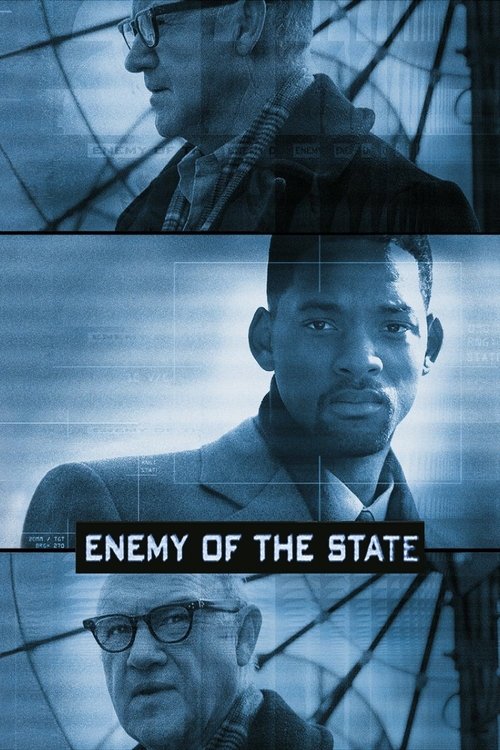
Enemy of the State
When the videotape of the murder of a congressman unknowingly ends up in the hands of labor lawyer and dedicated family man Robert Clayton Dean, he is framed for the murder. With the help of the mysterious Brill, Dean attempts to throw the NSA off his trail and prove his innocence.
Despite a substantial budget of $90.0M, Enemy of the State became a box office success, earning $250.6M worldwide—a 178% return.
5 wins & 16 nominations


Plot Structure
Story beats plotted across runtime


Narrative Arc
Emotional journey through the story's key moments
Story Circle
Blueprint 15-beat structure
Arcplot Score Breakdown
Weighted: Precision (70%) + Arc (15%) + Theme (15%)
Enemy of the State (1998) exemplifies carefully calibrated plot construction, characteristic of Tony Scott's storytelling approach. This structural analysis examines how the film's 15-point plot structure maps to proven narrative frameworks across 2 hours and 12 minutes. With an Arcplot score of 7.2, the film balances conventional beats with creative variation.
Characters
Cast & narrative archetypes

Robert Clayton Dean
Edward "Brill" Lyle
Thomas Brian Reynolds
Carla Dean
Rachel Banks
Daniel Leon Zavitz
Main Cast & Characters
Robert Clayton Dean
Played by Will Smith
A successful labor lawyer who becomes the target of NSA surveillance after unwittingly receiving evidence of a political murder.
Edward "Brill" Lyle
Played by Gene Hackman
A former NSA communications expert turned surveillance specialist who helps Dean evade the agency.
Thomas Brian Reynolds
Played by Jon Voight
A corrupt NSA official who orchestrates the murder of a congressman and ruthlessly pursues Dean to recover the evidence.
Carla Dean
Played by Regina King
Robert Dean's wife, who becomes suspicious of her husband's behavior as he tries to protect his family.
Rachel Banks
Played by Lisa Bonet
Dean's former girlfriend and a contact who inadvertently draws him deeper into danger.
Daniel Leon Zavitz
Played by Jason Lee
A wildlife researcher who captures footage of the congressman's murder and passes it to Dean before being killed.
Structural Analysis
The Status Quo at 1 minutes (1% through the runtime) establishes Dean is a successful labor lawyer enjoying his comfortable life, shopping for lingerie for his wife's birthday, unaware he's about to become a target of government surveillance.. Notably, this early placement immediately immerses viewers in the story world.
The inciting incident occurs at 13 minutes when Daniel Zavitz, wildlife researcher and witness to Congressman Hammersley's murder, accidentally bumps into Dean at a lingerie store and plants the incriminating videotape in Dean's shopping bag without his knowledge.. At 10% through the film, this Disruption aligns precisely with traditional story structure. This beat shifts the emotional landscape, launching the protagonist into the central conflict.
The First Threshold at 32 minutes marks the transition into Act II, occurring at 24% of the runtime. This shows the protagonist's commitment to Dean's wife kicks him out after seeing fabricated evidence of his affair with Rachel. His law firm fires him. He actively chooses to find out who is destroying his life and fight back., moving from reaction to action.
At 66 minutes, the Midpoint arrives at 50% of the runtime—precisely centered, creating perfect narrative symmetry. Structural examination shows that this crucial beat False defeat: The NSA tracks them to Brill's hideout and destroys it. Dean realizes the scope of the surveillance apparatus - satellites, cameras everywhere, infinite resources. The enemy seems unbeatable., fundamentally raising what's at risk. The emotional intensity shifts, dividing the narrative into clear before-and-after phases.
The Collapse moment at 97 minutes (73% through) represents the emotional nadir. Here, Brill tells Dean he's leaving - he can't win against the NSA. Dean is alone, his family hates him, his career is destroyed, his friend is dead, and his mentor is abandoning him. The whiff of death: his old life is completely gone., shows the protagonist at their lowest point. This beat's placement in the final quarter sets up the climactic reversal.
The Second Threshold at 104 minutes initiates the final act resolution at 79% of the runtime. Dean devises a plan: use the NSA's surveillance technology against them by setting up Reynolds to meet with the mob boss Paulie Pintero, creating a situation where they'll destroy each other. Brill returns to help., demonstrating the transformation achieved throughout the journey.
Emotional Journey
Enemy of the State's emotional architecture traces a deliberate progression across 15 carefully calibrated beats.
Narrative Framework
This structural analysis employs structural analysis methodology used to understand storytelling architecture. By mapping Enemy of the State against these established plot points, we can identify how Tony Scott utilizes or subverts traditional narrative conventions. The plot point approach reveals not only adherence to structural principles but also creative choices that distinguish Enemy of the State within the action genre.
Tony Scott's Structural Approach
Among the 13 Tony Scott films analyzed on Arcplot, the average structural score is 7.0, demonstrating varied approaches to story architecture. Enemy of the State represents one of the director's most structurally precise works. For comparative analysis, explore the complete Tony Scott filmography.
Comparative Analysis
Additional action films include The Bad Guys, Puss in Boots and Venom: The Last Dance. For more Tony Scott analyses, see Man on Fire, Crimson Tide and The Taking of Pelham 1 2 3.
Plot Points by Act
Act I
SetupStatus Quo
Dean is a successful labor lawyer enjoying his comfortable life, shopping for lingerie for his wife's birthday, unaware he's about to become a target of government surveillance.
Theme
Congressman Hammersley warns Reynolds about the Telecommunications Security and Privacy Act: "This is about the erosion of civil liberties." The theme of surveillance vs. freedom is stated before Hammersley is murdered.
Worldbuilding
Establishment of Dean's world: his law practice, his marriage to Carla, his friendship with Rachel Banks, and the parallel world of NSA operations under Reynolds. The stakes of the surveillance bill are explained.
Disruption
Daniel Zavitz, wildlife researcher and witness to Congressman Hammersley's murder, accidentally bumps into Dean at a lingerie store and plants the incriminating videotape in Dean's shopping bag without his knowledge.
Resistance
Dean remains unaware of the tape while his life begins to unravel. His credit cards are cancelled, his bank accounts frozen, false evidence of an affair surfaces. He doesn't understand what's happening or why he's being targeted.
Act II
ConfrontationFirst Threshold
Dean's wife kicks him out after seeing fabricated evidence of his affair with Rachel. His law firm fires him. He actively chooses to find out who is destroying his life and fight back.
Mirror World
Dean encounters "Brill" (Gene Hackman), a former NSA operative living off the grid. Brill represents the thematic counterpoint - someone who understands the surveillance state and has rejected it entirely.
Premise
The cat-and-mouse game Dean signed up for. Brill teaches Dean about surveillance technology, they discover the videotape, and work to evade the NSA's omnipresent monitoring. The "fun" of outsmarting high-tech surveillance.
Midpoint
False defeat: The NSA tracks them to Brill's hideout and destroys it. Dean realizes the scope of the surveillance apparatus - satellites, cameras everywhere, infinite resources. The enemy seems unbeatable.
Opposition
Reynolds intensifies his hunt. Dean and Brill are constantly on the run. The NSA closes in from all angles. Rachel is killed. Dean's family remains in danger. Every move is tracked and countered.
Collapse
Brill tells Dean he's leaving - he can't win against the NSA. Dean is alone, his family hates him, his career is destroyed, his friend is dead, and his mentor is abandoning him. The whiff of death: his old life is completely gone.
Crisis
Dean's dark night - he processes the loss and realizes he can't run forever. He must confront Reynolds directly, even if it means his death. He finds new resolve to fight.
Act III
ResolutionSecond Threshold
Dean devises a plan: use the NSA's surveillance technology against them by setting up Reynolds to meet with the mob boss Paulie Pintero, creating a situation where they'll destroy each other. Brill returns to help.
Synthesis
The finale: Dean and Brill orchestrate an elaborate setup at the restaurant, using hidden cameras and surveillance equipment to record Reynolds confessing. The confrontation erupts into a shootout where Reynolds and Pintero's men kill each other.
Transformation
Dean is reunited with his family on Christmas, his name cleared. But he now sees surveillance cameras everywhere - transformed from naive citizen to aware participant who understands the price of security. Brill vanishes, still off the grid.