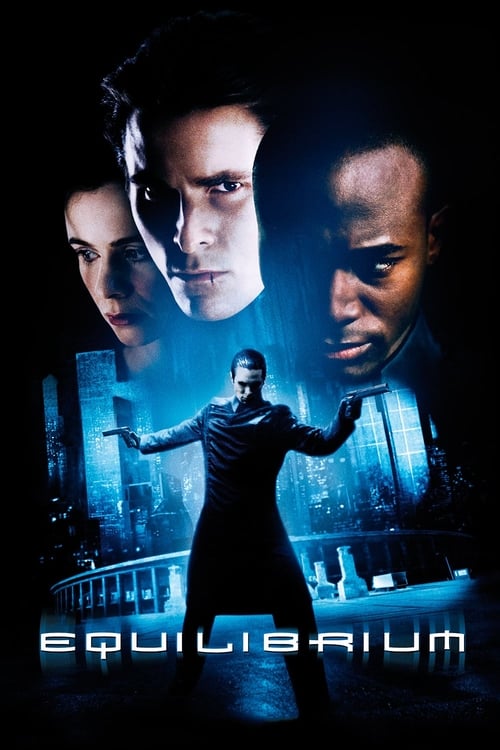
Equilibrium
In a dystopian future, a totalitarian regime maintains peace by subduing the populace with a drug, and displays of emotion are punishable by death. A man in charge of enforcing the law rises to overthrow the system.
The film financial setback against its mid-range budget of $20.0M, earning $5.4M globally (-73% loss). While initial box office returns were modest, the film has gained appreciation for its unconventional structure within the action genre.


Plot Structure
Story beats plotted across runtime


Narrative Arc
Emotional journey through the story's key moments
Story Circle
Blueprint 15-beat structure
Arcplot Score Breakdown
Weighted: Precision (70%) + Arc (15%) + Theme (15%)
Equilibrium (2002) exhibits carefully calibrated plot construction, characteristic of Kurt Wimmer's storytelling approach. This structural analysis examines how the film's 12-point plot structure maps to proven narrative frameworks across 1 hour and 47 minutes. With an Arcplot score of 6.3, the film takes an unconventional approach to traditional narrative frameworks.
Characters
Cast & narrative archetypes

John Preston
Errol Partridge
Mary O'Brien
Andrew Brandt
Vice-Counsel DuPont
Jurgen
Main Cast & Characters
John Preston
Played by Christian Bale
A high-ranking Cleric enforcer who begins to feel emotions after missing his dose of Prozium and questions the totalitarian regime he serves.
Errol Partridge
Played by Sean Bean
Preston's partner and fellow Cleric who secretly stops taking Prozium and is executed for sense offense.
Mary O'Brien
Played by Emily Watson
A sense offender arrested by Preston who helps awaken his suppressed emotions through their encounters.
Andrew Brandt
Played by Taye Diggs
Preston's new partner after Partridge's death, secretly ambitious and suspicious of Preston's behavior.
Vice-Counsel DuPont
Played by Angus Macfadyen
The apparent leader of Libria who enforces the emotion-suppressing regime through propaganda and fear.
Jurgen
Played by William Fichtner
The leader of the Underground resistance movement fighting against the authoritarian Tetragrammaton regime.
Structural Analysis
The Status Quo at 1 minutes (1% through the runtime) establishes Cleric John Preston methodically executes sense offenders and destroys contraband art, embodying the emotionless perfection Libria demands of its citizens.. Structural examination shows that this early placement immediately immerses viewers in the story world.
The inciting incident occurs at 13 minutes when Preston discovers his partner Partridge has been secretly reading Yeats poetry and is a sense offender. Preston executes him without hesitation, but Partridge's final words—"I'll see you, Preston. Someday."—plant a seed of doubt.. At 12% through the film, this Disruption aligns precisely with traditional story structure. This beat shifts the emotional landscape, launching the protagonist into the central conflict.
The First Threshold at 27 minutes marks the transition into Act II, occurring at 25% of the runtime. This demonstrates the protagonist's commitment to Preston makes the conscious choice not to take his replacement Prozium dose, deliberately stepping into a life of feeling. This irreversible decision transforms him from enforcer to potential rebel., moving from reaction to action.
At 54 minutes, the Midpoint arrives at 50% of the runtime—precisely centered, creating perfect narrative symmetry. Notably, this crucial beat Mary O'Brien is incinerated despite Preston's desperate, covert attempts to save her. Her death devastates him and raises the stakes—he can no longer remain passive. This false defeat transforms his mission from self-preservation to active rebellion., fundamentally raising what's at risk. The emotional intensity shifts, dividing the narrative into clear before-and-after phases.
The Collapse moment at 80 minutes (75% through) represents the emotional nadir. Here, Preston's cover is blown. Brandt arrests him, the Resistance leadership is captured, and Preston's children are taken. Everything he fought for appears lost, and he faces certain execution as a sense offender—the very crime he once punished with death., indicates the protagonist at their lowest point. This beat's placement in the final quarter sets up the climactic reversal.
The Synthesis at 86 minutes initiates the final act resolution at 80% of the runtime. Preston's masterful Gun Kata skills, combined with his newfound emotional purpose, make him unstoppable. He fights through the Tetragrammaton guards, defeats Brandt in single combat, and finally confronts DuPont—who is revealed to be Father himself, a hypocrite who feels while enforcing emotionlessness. Preston kills him and destroys the Prozium manufacturing center., demonstrating the transformation achieved throughout the journey.
Emotional Journey
Equilibrium's emotional architecture traces a deliberate progression across 12 carefully calibrated beats.
Narrative Framework
This structural analysis employs a 15-point narrative structure framework that maps key story moments. By mapping Equilibrium against these established plot points, we can identify how Kurt Wimmer utilizes or subverts traditional narrative conventions. The plot point approach reveals not only adherence to structural principles but also creative choices that distinguish Equilibrium within the action genre.
Kurt Wimmer's Structural Approach
Among the 2 Kurt Wimmer films analyzed on Arcplot, the average structural score is 6.8, demonstrating varied approaches to story architecture. Equilibrium takes a more unconventional approach compared to the director's typical style. For comparative analysis, explore the complete Kurt Wimmer filmography.
Comparative Analysis
Additional action films include The Bad Guys, Puss in Boots and Venom: The Last Dance. For more Kurt Wimmer analyses, see Ultraviolet.
Plot Points by Act
Act I
SetupStatus Quo
Cleric John Preston methodically executes sense offenders and destroys contraband art, embodying the emotionless perfection Libria demands of its citizens.
Theme
Father's broadcast declares that emotion is the root of all evil and that Prozium ensures humanity's survival through feeling nothing—establishing the central thematic question of whether peace without feeling is worth the cost.
Worldbuilding
The dystopian world of Libria is established: daily Prozium doses suppress all emotion, Clerics enforce compliance through Gun Kata, and sense offenders are incinerated. Preston's cold efficiency and his partner Partridge's subtle doubts foreshadow the conflict to come.
Disruption
Preston discovers his partner Partridge has been secretly reading Yeats poetry and is a sense offender. Preston executes him without hesitation, but Partridge's final words—"I'll see you, Preston. Someday."—plant a seed of doubt.
Resistance
Preston is partnered with the ambitious Brandt, who watches him suspiciously. During a raid in the Nethers, Preston accidentally breaks his Prozium vial. As the drug wears off, he begins experiencing forbidden emotions—touching fabric, watching sunrises, sparing a puppy from execution.
Act II
ConfrontationFirst Threshold
Preston makes the conscious choice not to take his replacement Prozium dose, deliberately stepping into a life of feeling. This irreversible decision transforms him from enforcer to potential rebel.
Premise
Preston explores his awakening emotions while maintaining his Cleric facade. He secretly keeps the puppy, listens to forbidden music, touches textures, and watches Mary's scheduled incineration with hidden anguish. He begins making contact with the Resistance, navigating between his two identities.
Midpoint
Mary O'Brien is incinerated despite Preston's desperate, covert attempts to save her. Her death devastates him and raises the stakes—he can no longer remain passive. This false defeat transforms his mission from self-preservation to active rebellion.
Opposition
Preston works with the Resistance to locate and assassinate Father, planning to disable the Prozium distribution network. Meanwhile, Brandt grows increasingly suspicious, and Preston must eliminate threats while maintaining his cover. The pressure mounts as he orchestrates raids that secretly protect Resistance members.
Collapse
Preston's cover is blown. Brandt arrests him, the Resistance leadership is captured, and Preston's children are taken. Everything he fought for appears lost, and he faces certain execution as a sense offender—the very crime he once punished with death.
Crisis
Imprisoned and awaiting processing, Preston confronts the full weight of his transformation. He has lost everything—his partner, Mary, his position, his children, and seemingly the Resistance itself. The system he served will now destroy him.
Act III
ResolutionSynthesis
Preston's masterful Gun Kata skills, combined with his newfound emotional purpose, make him unstoppable. He fights through the Tetragrammaton guards, defeats Brandt in single combat, and finally confronts DuPont—who is revealed to be Father himself, a hypocrite who feels while enforcing emotionlessness. Preston kills him and destroys the Prozium manufacturing center.