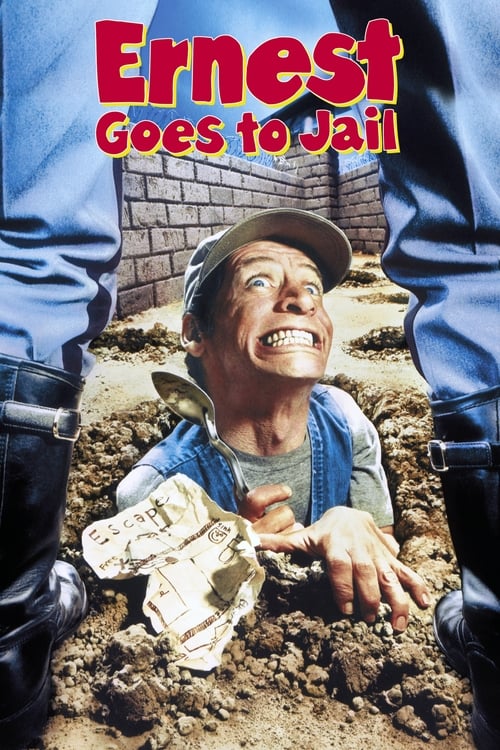
Ernest Goes to Jail
Bumbling bank janitor Ernest P. Worrell is assigned to jury duty, and soon finds himself in trouble when he is covertly switched with a look-a-like crime boss. Ernest must escape from jail to expose the mix-up.
The film earned $25.0M at the global box office.


Plot Structure
Story beats plotted across runtime


Narrative Arc
Emotional journey through the story's key moments
Story Circle
Blueprint 15-beat structure
Arcplot Score Breakdown
Weighted: Precision (70%) + Arc (15%) + Theme (15%)
Ernest Goes to Jail (1990) exhibits meticulously timed narrative design, characteristic of John Cherry's storytelling approach. This structural analysis examines how the film's 15-point plot structure maps to proven narrative frameworks across 1 hour and 21 minutes. With an Arcplot score of 7.7, the film showcases strong structural fundamentals.
Characters
Cast & narrative archetypes

Ernest P. Worrell
Felix Nash
Charlotte Sparrow
Chuck
Oscar Pendlesmythe
Main Cast & Characters
Ernest P. Worrell
Played by Jim Varney
A bumbling but good-hearted janitor who is mistaken for a dangerous criminal and swaps places with his evil lookalike.
Felix Nash
Played by Jim Varney
A ruthless criminal mastermind who is Ernest's exact physical double and orchestrates a prison break to steal diamonds.
Charlotte Sparrow
Played by Barbara Tyson
Ernest's kind-hearted co-worker and romantic interest who works at the bank.
Chuck
Played by Bill Byrge
Ernest's loyal friend and co-worker at the bank who supports him throughout his ordeal.
Oscar Pendlesmythe
Played by Gailard Sartain
The bank manager who initially doubts Ernest but comes to appreciate his dedication.
Structural Analysis
The Status Quo at 1 minutes (1% through the runtime) establishes Ernest P. Worrell works as a janitor at a bank, bumbling through his duties while dreaming of becoming a bank clerk. He lives his simple life helping others despite constant mishaps.. Structural examination shows that this early placement immediately immerses viewers in the story world.
The inciting incident occurs at 10 minutes when Ernest serves on the jury that convicts Nash, his evil doppelgänger. Nash sees Ernest and realizes they are identical, setting his escape plan in motion.. At 12% through the film, this Disruption aligns precisely with traditional story structure. This beat shifts the emotional landscape, launching the protagonist into the central conflict.
The First Threshold at 20 minutes marks the transition into Act II, occurring at 24% of the runtime. This reveals the protagonist's commitment to The switch occurs: Ernest is knocked out and replaced with Nash during the prison tour. Ernest wakes up on death row while Nash assumes his identity in the outside world., moving from reaction to action.
At 40 minutes, the Midpoint arrives at 50% of the runtime—precisely centered, creating perfect narrative symmetry. Notably, this crucial beat Nash successfully robs the bank using Ernest's identity, framing Ernest further. Ernest's execution date is moved up, raising the stakes dramatically. What seemed like a temporary mix-up becomes a life-or-death situation., fundamentally raising what's at risk. The emotional intensity shifts, dividing the narrative into clear before-and-after phases.
The Collapse moment at 61 minutes (75% through) represents the emotional nadir. Here, Ernest is strapped into the electric chair for execution. This is his darkest moment - literal death is imminent, and no one believes he is innocent. All hope seems lost., shows the protagonist at their lowest point. This beat's placement in the final quarter sets up the climactic reversal.
The Second Threshold at 65 minutes initiates the final act resolution at 80% of the runtime. Ernest realizes he must use his magnetic powers and his inherent goodness to escape, expose Nash, and save Charlotte. He synthesizes his newfound abilities with his true character - accepting who he is., demonstrating the transformation achieved throughout the journey.
Emotional Journey
Ernest Goes to Jail's emotional architecture traces a deliberate progression across 15 carefully calibrated beats.
Narrative Framework
This structural analysis employs a 15-point narrative structure framework that maps key story moments. By mapping Ernest Goes to Jail against these established plot points, we can identify how John Cherry utilizes or subverts traditional narrative conventions. The plot point approach reveals not only adherence to structural principles but also creative choices that distinguish Ernest Goes to Jail within the comedy genre.
John Cherry's Structural Approach
Among the 3 John Cherry films analyzed on Arcplot, the average structural score is 7.6, reflecting strong command of classical structure. Ernest Goes to Jail represents one of the director's most structurally precise works. For comparative analysis, explore the complete John Cherry filmography.
Comparative Analysis
Additional comedy films include The Bad Guys, Ella Enchanted and The Evening Star. For more John Cherry analyses, see Ernest Goes to Camp, Ernest Saves Christmas.
Plot Points by Act
Act I
SetupStatus Quo
Ernest P. Worrell works as a janitor at a bank, bumbling through his duties while dreaming of becoming a bank clerk. He lives his simple life helping others despite constant mishaps.
Theme
A colleague tells Ernest that believing in yourself and doing the right thing is what matters, not what others think of you - establishing the film's theme about self-worth and integrity.
Worldbuilding
Ernest's world is established: his job at the bank, his relationship with Charlotte (the bank clerk he admires), his kind nature, and his role as a jury member. Meanwhile, death row inmate Nash is introduced as Ernest's exact lookalike.
Disruption
Ernest serves on the jury that convicts Nash, his evil doppelgänger. Nash sees Ernest and realizes they are identical, setting his escape plan in motion.
Resistance
Ernest continues his normal life unaware of the danger. Nash and his lawyer girlfriend Rubin plot to switch Nash with Ernest. Ernest visits the prison on a field trip, unknowingly setting up the switch.
Act II
ConfrontationFirst Threshold
The switch occurs: Ernest is knocked out and replaced with Nash during the prison tour. Ernest wakes up on death row while Nash assumes his identity in the outside world.
Mirror World
Ernest meets his fellow death row inmates who become unlikely allies. They represent a mirror to Ernest's own situation - good people trapped by circumstances beyond their control.
Premise
Ernest experiences prison life with comedic mishaps while trying to prove his innocence. Meanwhile, Nash uses Ernest's identity to plan a bank heist. Ernest gains magnetic powers from an electric chair accident, adding to the fun and games.
Midpoint
Nash successfully robs the bank using Ernest's identity, framing Ernest further. Ernest's execution date is moved up, raising the stakes dramatically. What seemed like a temporary mix-up becomes a life-or-death situation.
Opposition
Ernest's attempts to escape or prove his innocence fail repeatedly. Nash continues to exploit Ernest's life, getting closer to Charlotte and planning bigger crimes. The pressure intensifies as execution approaches.
Collapse
Ernest is strapped into the electric chair for execution. This is his darkest moment - literal death is imminent, and no one believes he is innocent. All hope seems lost.
Crisis
Ernest survives the electric chair due to his magnetic powers but faces the emotional reality that he may never clear his name. His fellow inmates and he process this dark moment before finding new resolve.
Act III
ResolutionSecond Threshold
Ernest realizes he must use his magnetic powers and his inherent goodness to escape, expose Nash, and save Charlotte. He synthesizes his newfound abilities with his true character - accepting who he is.
Synthesis
Ernest escapes prison using his magnetic powers. He confronts Nash at the bank during the final heist, saves Charlotte, defeats the criminals, and proves his innocence. His bumbling nature becomes his strength.
Transformation
Ernest is cleared of all charges and celebrated as a hero. He receives recognition at the bank and wins Charlotte's affection. The final image shows Ernest confident and valued - transformed from overlooked janitor to respected hero.