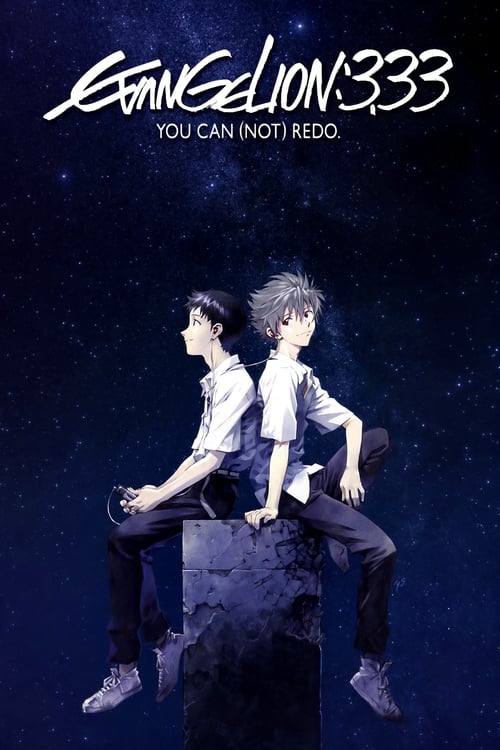
Evangelion: 3.0 You Can (Not) Redo
Fourteen years after Third Impact, Shinji Ikari awakens to a world he does not remember. He hasn't aged. Much of Earth is laid in ruins, NERV has been dismantled, and people who he once protected have turned against him. Befriending the enigmatic Kaworu Nagisa, Shinji continues the fight against the angels and realizes the fighting is far from over, even when it could be against his former allies. The characters' struggles continue amidst the battles against the angels and each other, spiraling down to what could inevitably be the end of the world.
Despite its limited budget of $13.0M, Evangelion: 3.0 You Can (Not) Redo became a box office success, earning $67.3M worldwide—a 418% return. The film's innovative storytelling connected with viewers, showing that strong storytelling can transcend budget limitations.


Plot Structure
Story beats plotted across runtime


Narrative Arc
Emotional journey through the story's key moments
Story Circle
Blueprint 15-beat structure
Arcplot Score Breakdown
Weighted: Precision (70%) + Arc (15%) + Theme (15%)
Evangelion: 3.0 You Can (Not) Redo (2012) exhibits carefully calibrated story structure, characteristic of Hideaki Anno's storytelling approach. This structural analysis examines how the film's 15-point plot structure maps to proven narrative frameworks across 1 hour and 36 minutes. With an Arcplot score of 6.8, the film balances conventional beats with creative variation.
Characters
Cast & narrative archetypes

Shinji Ikari
Kaworu Nagisa
Rei Ayanami (Q)
Asuka Langley Shikinami
Mari Illustrious Makinami
Misato Katsuragi
Gendo Ikari
Ritsuko Akagi
Main Cast & Characters
Shinji Ikari
Played by Megumi Ogata
The Third Child, awakens after 14 years to find the world transformed and his former allies now enemies. Struggles with immense guilt over Near Third Impact.
Kaworu Nagisa
Played by Akira Ishida
The First Angel, befriends Shinji and guides him through despair. Reveals mysteries of the Evas and sacrifices himself to prevent Fourth Impact.
Rei Ayanami (Q)
Played by Megumi Hayashibara
A mysterious clone who lacks memories of Shinji. Distant and emotionless, piloting Eva Unit-00 for WILLE despite having no connection to her past.
Asuka Langley Shikinami
Played by Yuko Miyamura
Now designated as Captain, wears an eyepatch and pilots Eva Unit-02 for WILLE. Hardened by 14 years of war, harbors deep resentment toward Shinji.
Mari Illustrious Makinami
Played by Maaya Sakamoto
Energetic Eva pilot who operates Unit-08. Playful and combat-focused, she serves as reconnaissance and support for WILLE operations.
Misato Katsuragi
Played by Kotono Mitsuishi
Now Captain of WILLE and commander of the AAA Wunder. Cold and militaristic toward Shinji, whom she sees as a threat after Near Third Impact.
Gendo Ikari
Played by Fumihiko Tachiki
Commander of NERV, pursuing Human Instrumentality Project. Manipulates Shinji and Kaworu as pawns in his plan to trigger Fourth Impact.
Ritsuko Akagi
Played by Yuriko Yamaguchi
WILLE's head scientist and technical officer aboard the Wunder. Works alongside Misato to prevent further Impacts while managing Eva operations.
Structural Analysis
The Status Quo at 1 minutes (1% through the runtime) establishes Asuka and Mari execute a dangerous orbital rescue mission to retrieve the dormant EVA-01 containing Shinji, establishing a world at war and technology pushed to its limits.. Of particular interest, this early placement immediately immerses viewers in the story world.
The inciting incident occurs at 12 minutes when A mysterious EVA Mark.09 piloted by a Rei-like figure attacks the Wunder and extracts Shinji, forcibly removing him from WILLE and delivering him to NERV headquarters.. At 12% through the film, this Disruption aligns precisely with traditional story structure. This beat shifts the emotional landscape, launching the protagonist into the central conflict.
The First Threshold at 24 minutes marks the transition into Act II, occurring at 25% of the runtime. This indicates the protagonist's commitment to Shinji chooses to pilot the dual-entry EVA-13 alongside Kaworu, believing they can retrieve the Spears of Longinus and Cassius to undo the damage of Third Impact and restore the world., moving from reaction to action.
At 47 minutes, the Midpoint arrives at 49% of the runtime—precisely centered, creating perfect narrative symmetry. The analysis reveals that this crucial beat EVA-13 descends into the depths of Terminal Dogma with Shinji and Kaworu. The mission to retrieve the two spears begins, but Kaworu notices something is wrong as they approach Lilith's corpse., fundamentally raising what's at risk. The emotional intensity shifts, dividing the narrative into clear before-and-after phases.
The Collapse moment at 72 minutes (75% through) represents the emotional nadir. Here, Fourth Impact begins as EVA-13 awakens. To stop the apocalypse and protect Shinji, Kaworu allows the DSS Choker to transfer to himself and detonate, sacrificing his life. Shinji watches his only friend die., shows the protagonist at their lowest point. This beat's placement in the final quarter sets up the climactic reversal.
The Second Threshold at 76 minutes initiates the final act resolution at 79% of the runtime. Asuka forcibly ejects Shinji from EVA-13, physically extracting him from the machine despite his catatonic state. She makes the choice to save him even though he caused the catastrophe., demonstrating the transformation achieved throughout the journey.
Emotional Journey
Evangelion: 3.0 You Can (Not) Redo's emotional architecture traces a deliberate progression across 15 carefully calibrated beats.
Narrative Framework
This structural analysis employs proven narrative structure principles that track dramatic progression. By mapping Evangelion: 3.0 You Can (Not) Redo against these established plot points, we can identify how Hideaki Anno utilizes or subverts traditional narrative conventions. The plot point approach reveals not only adherence to structural principles but also creative choices that distinguish Evangelion: 3.0 You Can (Not) Redo within the animation genre.
Comparative Analysis
Additional animation films include The Bad Guys, Puss in Boots and Violet Evergarden: Eternity and the Auto Memory Doll.
Plot Points by Act
Act I
SetupStatus Quo
Asuka and Mari execute a dangerous orbital rescue mission to retrieve the dormant EVA-01 containing Shinji, establishing a world at war and technology pushed to its limits.
Theme
Misato's cold, silent treatment of the awakened Shinji and the explosive DSS Choker placed around his neck communicate the theme: actions have irreversible consequences, and trust once broken cannot be easily restored.
Worldbuilding
The film establishes the post-Near Third Impact world: WILLE's resistance aboard the Wunder, the hostile relationship between former allies and Shinji, and the revelation that 14 years have passed while Shinji hasn't aged.
Disruption
A mysterious EVA Mark.09 piloted by a Rei-like figure attacks the Wunder and extracts Shinji, forcibly removing him from WILLE and delivering him to NERV headquarters.
Resistance
Shinji arrives at the ruined NERV headquarters, confronts his father's continued coldness, and meets Kaworu Nagisa, who becomes his guide to understanding what happened and offers him hope through genuine connection.
Act II
ConfrontationFirst Threshold
Shinji chooses to pilot the dual-entry EVA-13 alongside Kaworu, believing they can retrieve the Spears of Longinus and Cassius to undo the damage of Third Impact and restore the world.
Mirror World
Kaworu teaches Shinji to play piano as a duet, demonstrating that connection and harmony between people is possible. Their growing friendship represents the unconditional acceptance Shinji has always craved.
Premise
Shinji and Kaworu's bond deepens through music and conversation. Kaworu shows Shinji the devastated Earth and explains the true scope of Third Impact, while preparing for their mission to retrieve the spears.
Midpoint
EVA-13 descends into the depths of Terminal Dogma with Shinji and Kaworu. The mission to retrieve the two spears begins, but Kaworu notices something is wrong as they approach Lilith's corpse.
Opposition
The horrifying truth is revealed: both spears are the Spear of Longinus, not one of each. Kaworu realizes they've been manipulated by Gendo. Despite Kaworu's warnings, the desperate Shinji pulls the spears, triggering Fourth Impact.
Collapse
Fourth Impact begins as EVA-13 awakens. To stop the apocalypse and protect Shinji, Kaworu allows the DSS Choker to transfer to himself and detonate, sacrificing his life. Shinji watches his only friend die.
Crisis
Shinji is utterly destroyed by Kaworu's death and his role in triggering another Impact. He becomes catatonic inside EVA-13's entry plug, unable to respond as the world crumbles around him.
Act III
ResolutionSecond Threshold
Asuka forcibly ejects Shinji from EVA-13, physically extracting him from the machine despite his catatonic state. She makes the choice to save him even though he caused the catastrophe.
Synthesis
Asuka drags the unresponsive Shinji across the barren red wasteland, accompanied by the Rei clone who chose to leave NERV. The three survivors walk toward an uncertain horizon, with Asuka berating Shinji to keep moving.
Transformation
The final image shows Shinji, Asuka, and Rei as three small figures walking through an endless crimson desert toward distant ruins. Unlike the isolation of the opening, they are together—broken but not alone.