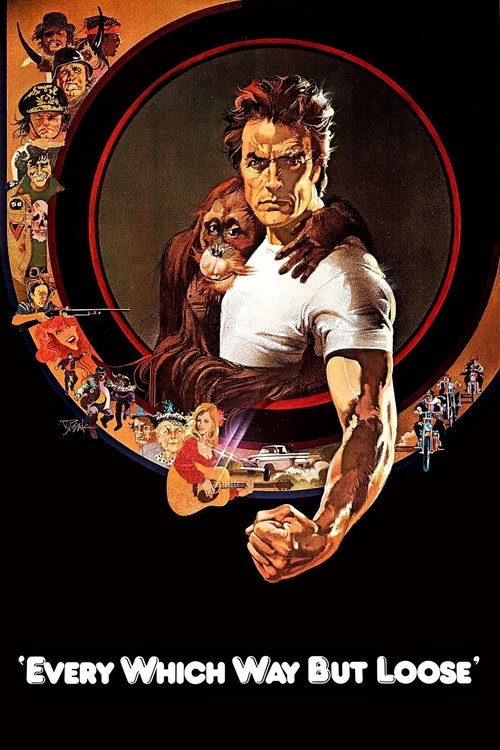
Every Which Way but Loose
Philo Beddoe is your regular, easygoing, truck-driving guy. He's also the best bar-room brawler west of the Rockies. And he lives with a 165-pound orangutan named Clyde. Like other guys, Philo finally falls in love - with a flighty singer who leads him on a screwball chase across the American Southwest. Nothing's in the way except a motorcycle gang, some cops, and legendary brawler Tank Murdock.
Despite its small-scale budget of $5.0M, Every Which Way but Loose became a massive hit, earning $85.2M worldwide—a remarkable 1604% return. The film's compelling narrative found its audience, illustrating how strong storytelling can transcend budget limitations.
1 win & 4 nominations


Plot Structure
Story beats plotted across runtime


Narrative Arc
Emotional journey through the story's key moments
Story Circle
Blueprint 15-beat structure
Arcplot Score Breakdown
Weighted: Precision (70%) + Arc (15%) + Theme (15%)
Every Which Way but Loose (1978) reveals meticulously timed narrative design, characteristic of James Fargo's storytelling approach. This structural analysis examines how the film's 15-point plot structure maps to proven narrative frameworks across 1 hour and 50 minutes. With an Arcplot score of 7.6, the film showcases strong structural fundamentals.
Characters
Cast & narrative archetypes

Philo Beddoe
Orville Boggs
Lynn Halsey-Taylor
Ma Boggs
Echo
Cholla
Main Cast & Characters
Philo Beddoe
Played by Clint Eastwood
A laid-back trucker and bare-knuckle fighter who travels with his pet orangutan Clyde, searching for a country singer he fell for.
Orville Boggs
Played by Geoffrey Lewis
Philo's best friend and manager, a simple-minded but loyal companion who joins him on his adventures.
Lynn Halsey-Taylor
Played by Sondra Locke
A fickle country singer who becomes the object of Philo's affection, leading him on a wild chase across the Southwest.
Ma Boggs
Played by Ruth Gordon
Orville's feisty, foul-mouthed mother who enjoys betting on Philo's fights and provides comic relief.
Echo
Played by Beverly D'Angelo
A kind-hearted mechanic who genuinely cares for Philo and represents a more stable romantic possibility.
Cholla
Played by Bill McKinney
The leader of the Black Widows motorcycle gang who becomes Philo's persistent antagonist after losing a bar fight.
Structural Analysis
The Status Quo at 1 minutes (1% through the runtime) establishes Philo Beddoe works as a trucker and bare-knuckle fighter in San Fernando Valley, living with his orangutan Clyde and best friend Orville. His simple life revolves around fighting for money and hanging out at the local bar.. The analysis reveals that this early placement immediately immerses viewers in the story world.
The inciting incident occurs at 13 minutes when Philo meets Lynn Halsey-Taylor at the Palomino Club and is immediately smitten. She seems interested but mysterious, creating an instant connection that disrupts his comfortable bachelor existence.. At 12% through the film, this Disruption aligns precisely with traditional story structure. This beat shifts the emotional landscape, launching the protagonist into the central conflict.
The First Threshold at 28 minutes marks the transition into Act II, occurring at 25% of the runtime. This reveals the protagonist's commitment to Philo makes the active choice to go after Lynn when she leaves town without warning. He, Orville, and Clyde hit the road to track her down, leaving behind their comfortable life for an uncertain cross-country journey., moving from reaction to action.
At 55 minutes, the Midpoint arrives at 50% of the runtime—precisely centered, creating perfect narrative symmetry. Of particular interest, this crucial beat Philo gets closer to finding Lynn or has a significant encounter that raises the stakes. Perhaps a major fight victory or getting solid information on her whereabouts, giving false hope that his quest will succeed., fundamentally raising what's at risk. The emotional intensity shifts, dividing the narrative into clear before-and-after phases.
The Collapse moment at 83 minutes (75% through) represents the emotional nadir. Here, Philo finally finds Lynn only to discover she has a boyfriend/husband or never intended to be with him. The dream dies - the woman he's been chasing across the country doesn't want him. His romantic illusion is shattered., illustrates the protagonist at their lowest point. This beat's placement in the final quarter sets up the climactic reversal.
The Second Threshold at 88 minutes initiates the final act resolution at 80% of the runtime. Philo realizes that the journey and friendships (Orville, Clyde, the people he's met) matter more than the destination. He synthesizes the theme: true freedom and happiness come from accepting life as it is, not chasing illusions., demonstrating the transformation achieved throughout the journey.
Emotional Journey
Every Which Way but Loose's emotional architecture traces a deliberate progression across 15 carefully calibrated beats.
Narrative Framework
This structural analysis employs structural analysis methodology used to understand storytelling architecture. By mapping Every Which Way but Loose against these established plot points, we can identify how James Fargo utilizes or subverts traditional narrative conventions. The plot point approach reveals not only adherence to structural principles but also creative choices that distinguish Every Which Way but Loose within the action genre.
James Fargo's Structural Approach
Among the 3 James Fargo films analyzed on Arcplot, the average structural score is 7.6, reflecting strong command of classical structure. Every Which Way but Loose represents one of the director's most structurally precise works. For comparative analysis, explore the complete James Fargo filmography.
Comparative Analysis
Additional action films include The Bad Guys, Puss in Boots and Venom: The Last Dance. For more James Fargo analyses, see The Enforcer, Forced Vengeance.
Plot Points by Act
Act I
SetupStatus Quo
Philo Beddoe works as a trucker and bare-knuckle fighter in San Fernando Valley, living with his orangutan Clyde and best friend Orville. His simple life revolves around fighting for money and hanging out at the local bar.
Theme
Orville or another character discusses how sometimes chasing what you want isn't as important as appreciating what you have. The theme of pursuing love versus accepting freedom is introduced.
Worldbuilding
Establishment of Philo's world: his relationship with Clyde the orangutan, his friendship with Orville, his mechanic skills, bare-knuckle fighting lifestyle, and the bar scene where he meets Lynn Halsey-Taylor, a country singer who captures his attention.
Disruption
Philo meets Lynn Halsey-Taylor at the Palomino Club and is immediately smitten. She seems interested but mysterious, creating an instant connection that disrupts his comfortable bachelor existence.
Resistance
Philo pursues Lynn, they begin a romance, but she remains elusive and mysterious. He debates whether to chase after her when she suddenly leaves town. Friends and Ma advise him, but he's torn between his settled life and this new passion.
Act II
ConfrontationFirst Threshold
Philo makes the active choice to go after Lynn when she leaves town without warning. He, Orville, and Clyde hit the road to track her down, leaving behind their comfortable life for an uncertain cross-country journey.
Mirror World
The developing relationship with Lynn (in flashbacks or calls) and encounters with various characters on the road serve as thematic mirrors, showing different approaches to love, freedom, and commitment.
Premise
The fun road trip with Clyde and Orville: bar fights, encounters with the Black Widow biker gang, comedic mishaps with the orangutan, and Philo taking on local fighters to earn money. The promise of the premise - action, comedy, and an orangutan.
Midpoint
Philo gets closer to finding Lynn or has a significant encounter that raises the stakes. Perhaps a major fight victory or getting solid information on her whereabouts, giving false hope that his quest will succeed.
Opposition
Complications multiply: the Black Widow gang becomes more aggressive in pursuing revenge, the cops are after them, fights get more dangerous, and doubts grow about whether Lynn actually wants to be found. The fun turns more serious.
Collapse
Philo finally finds Lynn only to discover she has a boyfriend/husband or never intended to be with him. The dream dies - the woman he's been chasing across the country doesn't want him. His romantic illusion is shattered.
Crisis
Philo processes the heartbreak and questions the entire journey. He reflects on what he's learned about himself, love, and freedom. The emotional low point before finding new resolve.
Act III
ResolutionSecond Threshold
Philo realizes that the journey and friendships (Orville, Clyde, the people he's met) matter more than the destination. He synthesizes the theme: true freedom and happiness come from accepting life as it is, not chasing illusions.
Synthesis
Philo faces the final challenges - possibly a climactic fight with Tank Murdock or resolving the conflict with the Black Widow gang. He acts from his new understanding, fighting for the right reasons and embracing his true life.
Transformation
Philo returns home with Orville and Clyde, transformed. Unlike the opening where he was restless, he now appreciates his life and friendships. The image mirrors the status quo but shows a man who's learned to value what he has.