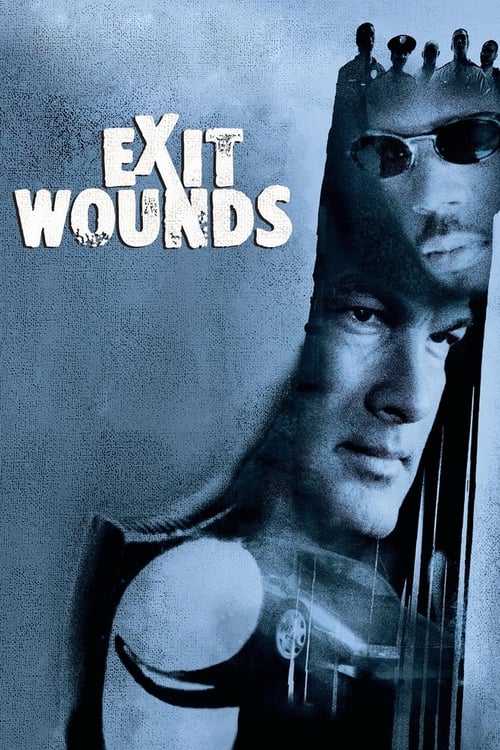
Exit Wounds
Maverick cop Orin Boyd always brings down the domestic terrorists he tracks, but he ruffles feathers with his unorthodox techniques -- and soon finds himself reassigned to the toughest district in Detroit. When he discovers a group of detectives secretly operating a drug ring, Boyd joins forces with an unlikely ally -- gangster Latrell Walker -- to bring down the rotten cops.
Despite a moderate budget of $33.0M, Exit Wounds became a box office success, earning $80.0M worldwide—a 142% return.


Plot Structure
Story beats plotted across runtime


Narrative Arc
Emotional journey through the story's key moments
Story Circle
Blueprint 15-beat structure
Arcplot Score Breakdown
Weighted: Precision (70%) + Arc (15%) + Theme (15%)
Exit Wounds (2001) reveals strategically placed narrative architecture, characteristic of Andrzej Bartkowiak's storytelling approach. This structural analysis examines how the film's 15-point plot structure maps to proven narrative frameworks across 1 hour and 41 minutes. With an Arcplot score of 7.0, the film balances conventional beats with creative variation.
Characters
Cast & narrative archetypes

Orin Boyd
Latrell Walker
George Clark
Annette Mulcahy
Henry Wayne
Matt Montini
Trish
Main Cast & Characters
Orin Boyd
Played by Steven Seagal
A maverick Detroit cop reassigned to the worst precinct after a controversial incident, who uncovers corruption within his own department.
Latrell Walker
Played by DMX
A wealthy street hustler and club owner who becomes an unlikely ally to Boyd in exposing police corruption.
George Clark
Played by Isaiah Washington
A veteran detective in the precinct who initially appears to be Boyd's mentor but harbors dark secrets.
Annette Mulcahy
Played by Jill Hennessy
An internal affairs investigator determined to uncover the truth about corruption in the precinct.
Henry Wayne
Played by Tom Arnold
The corrupt police captain running the precinct and orchestrating the drug operation.
Matt Montini
Played by Anthony Anderson
A fellow detective in the corrupt precinct who works under Captain Wayne.
Trish
Played by Eva Mendes
Latrell Walker's girlfriend and business partner who helps expose the corruption.
Structural Analysis
The Status Quo at 1 minutes (1% through the runtime) establishes Detective Orin Boyd is a rogue Detroit cop who plays by his own rules, working solo and alienating his superiors with his aggressive tactics.. Notably, this early placement immediately immerses viewers in the story world.
The inciting incident occurs at 13 minutes when Boyd is demoted and transferred to the worst precinct in Detroit (15th precinct) as punishment, forcing him into a new environment he doesn't control.. At 13% through the film, this Disruption is delayed, allowing extended setup of the story world. This beat shifts the emotional landscape, launching the protagonist into the central conflict.
The First Threshold at 26 minutes marks the transition into Act II, occurring at 25% of the runtime. This illustrates the protagonist's commitment to Boyd actively chooses to investigate the drug operation he suspects involves his own precinct, going against orders and entering a dangerous underworld., moving from reaction to action.
At 51 minutes, the Midpoint arrives at 51% of the runtime—precisely centered, creating perfect narrative symmetry. Significantly, this crucial beat Boyd discovers that the corruption goes deeper than expected - high-ranking officers including his captain are running the drug operation, and he's now a target for elimination., fundamentally raising what's at risk. The emotional intensity shifts, dividing the narrative into clear before-and-after phases.
The Collapse moment at 77 minutes (76% through) represents the emotional nadir. Here, Boyd is set up and framed for corruption himself, his partner is killed, and he's isolated with all evidence against him - his reputation and life are destroyed., illustrates the protagonist at their lowest point. This beat's placement in the final quarter sets up the climactic reversal.
The Second Threshold at 81 minutes initiates the final act resolution at 80% of the runtime. Boyd realizes he must combine his aggressive instincts with Latrell's strategic thinking - working with allies and building a case rather than going alone., demonstrating the transformation achieved throughout the journey.
Emotional Journey
Exit Wounds's emotional architecture traces a deliberate progression across 15 carefully calibrated beats.
Narrative Framework
This structural analysis employs structural analysis methodology used to understand storytelling architecture. By mapping Exit Wounds against these established plot points, we can identify how Andrzej Bartkowiak utilizes or subverts traditional narrative conventions. The plot point approach reveals not only adherence to structural principles but also creative choices that distinguish Exit Wounds within the action genre.
Andrzej Bartkowiak's Structural Approach
Among the 5 Andrzej Bartkowiak films analyzed on Arcplot, the average structural score is 7.1, reflecting strong command of classical structure. Exit Wounds takes a more unconventional approach compared to the director's typical style. For comparative analysis, explore the complete Andrzej Bartkowiak filmography.
Comparative Analysis
Additional action films include The Bad Guys, Puss in Boots and Venom: The Last Dance. For more Andrzej Bartkowiak analyses, see Cradle 2 the Grave, Street Fighter: The Legend of Chun-Li and Romeo Must Die.
Plot Points by Act
Act I
SetupStatus Quo
Detective Orin Boyd is a rogue Detroit cop who plays by his own rules, working solo and alienating his superiors with his aggressive tactics.
Theme
After Boyd saves the Vice President, a superior warns him that being a hero doesn't mean breaking the rules - establishing the theme of working within vs. outside the system.
Worldbuilding
Boyd saves the Vice President from an assassination attempt but is punished for his unauthorized actions. We see his volatile relationship with authority and his isolated working style.
Disruption
Boyd is demoted and transferred to the worst precinct in Detroit (15th precinct) as punishment, forcing him into a new environment he doesn't control.
Resistance
Boyd resists his new assignment, clashes with his new captain Hinges, and struggles to adapt to the precinct's corrupt culture. He begins investigating suspicious activity.
Act II
ConfrontationFirst Threshold
Boyd actively chooses to investigate the drug operation he suspects involves his own precinct, going against orders and entering a dangerous underworld.
Mirror World
Boyd encounters Latrell Walker, a wealthy club owner who becomes his unlikely ally and represents a different approach - working smart within corrupt systems rather than fighting them head-on.
Premise
Boyd investigates the heroin operation, uncovers connections to his precinct, teams with Latrell, and discovers evidence that his fellow cops are involved in drug trafficking.
Midpoint
Boyd discovers that the corruption goes deeper than expected - high-ranking officers including his captain are running the drug operation, and he's now a target for elimination.
Opposition
The corrupt cops actively hunt Boyd, attempts are made on his life, his evidence is destroyed, and the conspiracy tightens around him as he realizes he can't trust anyone in the department.
Collapse
Boyd is set up and framed for corruption himself, his partner is killed, and he's isolated with all evidence against him - his reputation and life are destroyed.
Crisis
Boyd mourns his partner and confronts the reality that playing by his own rules led to this disaster. He must decide whether to run or fight.
Act III
ResolutionSecond Threshold
Boyd realizes he must combine his aggressive instincts with Latrell's strategic thinking - working with allies and building a case rather than going alone.
Synthesis
Boyd and Latrell team up to expose the conspiracy, infiltrate the final drug deal, and take down the corrupt officers in a climactic confrontation that combines evidence-gathering with action.
Transformation
Boyd is vindicated and restored, but now understands the value of working with others and within systems - he's still tough but no longer a lone wolf.