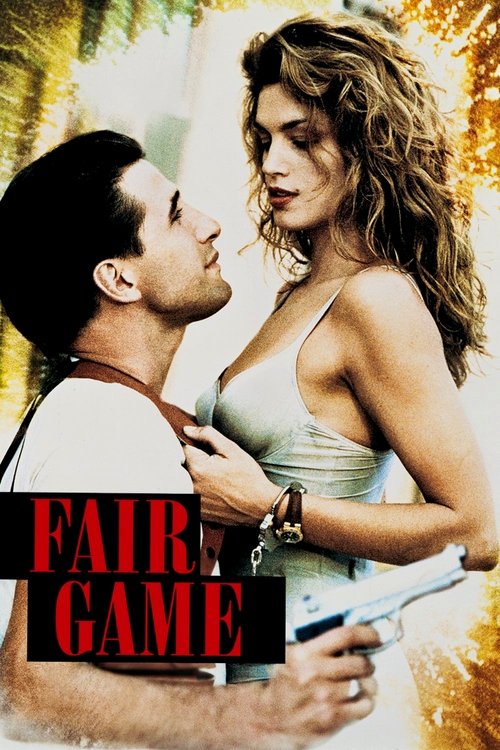
Fair Game
Max Kirkpatrick is a cop who protects Kate McQuean, a civil law attorney, from a renegade KGB team out to terminate her
The film commercial failure against its moderate budget of $50.0M, earning $11.5M globally (-77% loss). While initial box office returns were modest, the film has gained appreciation for its innovative storytelling within the action genre.


Plot Structure
Story beats plotted across runtime


Narrative Arc
Emotional journey through the story's key moments
Story Circle
Blueprint 15-beat structure
Arcplot Score Breakdown
Weighted: Precision (70%) + Arc (15%) + Theme (15%)
Fair Game (1995) exemplifies meticulously timed narrative architecture, characteristic of Andrew Sipes's storytelling approach. This structural analysis examines how the film's 15-point plot structure maps to proven narrative frameworks across 1 hour and 31 minutes. With an Arcplot score of 7.4, the film balances conventional beats with creative variation.
Characters
Cast & narrative archetypes

Kate McQuean
Max Kirkpatrick
Ilya Kazak
Lt. Meyerson
Rosa
Main Cast & Characters
Kate McQuean
Played by Cindy Crawford
A tough Miami divorce lawyer who becomes the target of Russian KGB agents after witnessing a crime.
Max Kirkpatrick
Played by William Baldwin
A dedicated detective assigned to protect Kate from the ruthless killers pursuing her.
Ilya Kazak
Played by Steven Berkoff
A cold-blooded former KGB agent who leads the team hunting Kate to recover incriminating evidence.
Lt. Meyerson
Played by Christopher McDonald
Max's superior officer who coordinates the protection detail and investigation.
Rosa
Played by Salma Hayek
Kate's loyal housekeeper who becomes caught up in the dangerous situation.
Structural Analysis
The Status Quo at 1 minutes (1% through the runtime) establishes Kate McQuean, a successful Miami attorney, is shown in her element at work, confident and independent in her upscale life.. Notably, this early placement immediately immerses viewers in the story world.
The inciting incident occurs at 10 minutes when Kate unknowingly becomes a target when her legal work involves seizing a ship connected to a dangerous KGB operation led by Ilya Kazak.. At 11% through the film, this Disruption aligns precisely with traditional story structure. This beat shifts the emotional landscape, launching the protagonist into the central conflict.
The First Threshold at 22 minutes marks the transition into Act II, occurring at 25% of the runtime. This illustrates the protagonist's commitment to Kate's house is blown up in a violent attack. She can no longer deny the danger and must accept Max's protection, leaving her old life behind., moving from reaction to action.
At 45 minutes, the Midpoint arrives at 49% of the runtime—precisely centered, creating perfect narrative symmetry. Of particular interest, this crucial beat Kate and Max discover the conspiracy goes deeper than expected - there are moles in law enforcement helping Kazak. False defeat: they can't trust anyone and are truly alone., fundamentally raising what's at risk. The emotional intensity shifts, dividing the narrative into clear before-and-after phases.
The Collapse moment at 66 minutes (73% through) represents the emotional nadir. Here, Kate and Max are separated and captured. Max is severely beaten. Kate believes Max is dead, facing the loss of her protector and the person she's come to care for., reveals the protagonist at their lowest point. This beat's placement in the final quarter sets up the climactic reversal.
The Second Threshold at 73 minutes initiates the final act resolution at 80% of the runtime. Kate discovers Max is alive. They reunite with new resolve, combining her intelligence and legal knowledge with his combat skills to take the fight to Kazak., demonstrating the transformation achieved throughout the journey.
Emotional Journey
Fair Game's emotional architecture traces a deliberate progression across 15 carefully calibrated beats.
Narrative Framework
This structural analysis employs a 15-point narrative structure framework that maps key story moments. By mapping Fair Game against these established plot points, we can identify how Andrew Sipes utilizes or subverts traditional narrative conventions. The plot point approach reveals not only adherence to structural principles but also creative choices that distinguish Fair Game within the action genre.
Comparative Analysis
Additional action films include The Bad Guys, Puss in Boots and Venom: The Last Dance.
Plot Points by Act
Act I
SetupStatus Quo
Kate McQuean, a successful Miami attorney, is shown in her element at work, confident and independent in her upscale life.
Theme
A colleague mentions that sometimes you can't run from trouble, you have to face it head-on - foreshadowing Kate's journey from avoidance to confrontation.
Worldbuilding
Establishing Kate's privileged Miami lifestyle, her law career, her romantic life, and the world of high-stakes corporate litigation she navigates.
Disruption
Kate unknowingly becomes a target when her legal work involves seizing a ship connected to a dangerous KGB operation led by Ilya Kazak.
Resistance
Detective Max Kirkpatrick is assigned to protect Kate as threats escalate. Kate resists the need for protection, debating whether this is real danger or overreaction.
Act II
ConfrontationFirst Threshold
Kate's house is blown up in a violent attack. She can no longer deny the danger and must accept Max's protection, leaving her old life behind.
Mirror World
Kate and Max begin their reluctant partnership. Max represents a different world - street-smart, practical, survival-focused - contrasting with Kate's privileged background.
Premise
The "cat and mouse" thriller promised by the premise unfolds. Kate and Max go on the run, evading assassins through Miami while developing reluctant chemistry and trust.
Midpoint
Kate and Max discover the conspiracy goes deeper than expected - there are moles in law enforcement helping Kazak. False defeat: they can't trust anyone and are truly alone.
Opposition
Kazak's men close in from all sides. Multiple assassination attempts escalate in intensity. Kate and Max's safe houses are compromised. Internal conflicts strain their partnership.
Collapse
Kate and Max are separated and captured. Max is severely beaten. Kate believes Max is dead, facing the loss of her protector and the person she's come to care for.
Crisis
Kate must process her darkest moment alone, hunted and without help. She confronts her transformation from passive victim to active fighter.
Act III
ResolutionSecond Threshold
Kate discovers Max is alive. They reunite with new resolve, combining her intelligence and legal knowledge with his combat skills to take the fight to Kazak.
Synthesis
Kate and Max execute their plan to stop Kazak. Final confrontation on a train where they use both brains and brawn to defeat the villains and expose the conspiracy.
Transformation
Kate, no longer the pampered attorney who ran from conflict, stands confidently with Max. She has proven her strength and courage, transformed by surviving her ordeal.