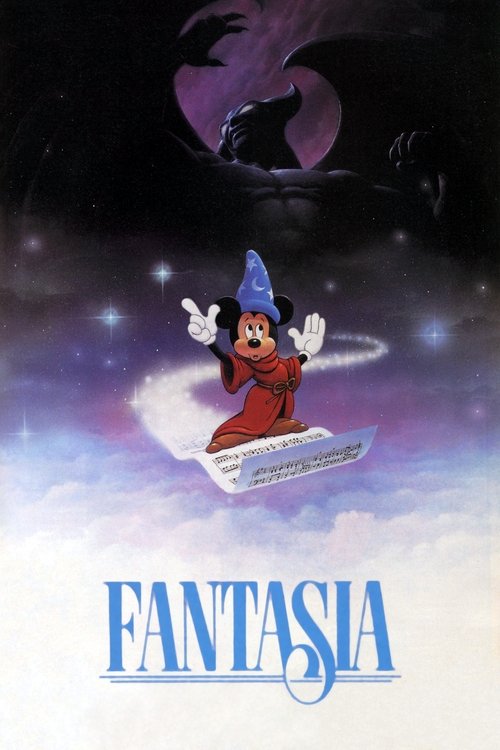
Fantasia
Walt Disney's timeless masterpiece is an extravaganza of sight and sound! See the music come to life, hear the pictures burst into song and experience the excitement that is Fantasia over and over again.
Despite its tight budget of $2.3M, Fantasia became a massive hit, earning $76.4M worldwide—a remarkable 3251% return. The film's bold vision found its audience, demonstrating that strong storytelling can transcend budget limitations.
9 wins & 1 nomination


Plot Structure
Story beats plotted across runtime


Narrative Arc
Emotional journey through the story's key moments
Story Circle
Blueprint 15-beat structure
Arcplot Score Breakdown
Weighted: Precision (70%) + Arc (15%) + Theme (15%)
Fantasia (1940) exhibits deliberately positioned narrative architecture, characteristic of Bill Roberts's storytelling approach. This structural analysis examines how the film's 15-point plot structure maps to proven narrative frameworks across 2 hours and 4 minutes. With an Arcplot score of 7.1, the film balances conventional beats with creative variation.
Characters
Cast & narrative archetypes

Mickey Mouse
Yen Sid
Chernabog
Hyacinth Hippo
Ben Ali Gator
Main Cast & Characters
Mickey Mouse
Played by Walt Disney
A sorcerer's apprentice who experiments with magic beyond his abilities in The Sorcerer's Apprentice segment.
Yen Sid
The powerful sorcerer and mentor who leaves his enchanted hat unattended.
Chernabog
A massive demonic figure who summons evil spirits on Bald Mountain during Night on Bald Mountain.
Hyacinth Hippo
A graceful ballerina hippopotamus in the Dance of the Hours segment from La Gioconda.
Ben Ali Gator
A lovestruck alligator who pursues Hyacinth Hippo in the Dance of the Hours ballet.
Structural Analysis
The Status Quo at 2 minutes (1% through the runtime) establishes Orchestra members take their seats in silhouette as Deems Taylor introduces the concept of visualizing music, establishing the film's experimental premise of pure audiovisual experience.. Of particular interest, this early placement immediately immerses viewers in the story world.
The inciting incident occurs at 16 minutes when The Nutcracker Suite begins, shifting from pure abstraction to nature-based narrative as fairies, flowers, and mushrooms dance through the seasons—introducing representational storytelling and charm.. At 13% through the film, this Disruption is delayed, allowing extended setup of the story world. This beat shifts the emotional landscape, launching the protagonist into the central conflict.
The First Threshold at 31 minutes marks the transition into Act II, occurring at 25% of the runtime. This illustrates the protagonist's commitment to The Sorcerer's Apprentice begins—the first segment with a clear protagonist (Mickey Mouse), conflict, and narrative stakes. The film fully commits to storytelling over pure visual abstraction., moving from reaction to action.
At 62 minutes, the Midpoint arrives at 50% of the runtime—precisely centered, creating perfect narrative symmetry. Structural examination shows that this crucial beat The Rite of Spring concludes with the death of the dinosaurs in drought and extinction—a false defeat moment that raises stakes by showing that even the mightiest fall, introducing mortality and darkness into the film's emotional palette., fundamentally raising what's at risk. The emotional intensity shifts, dividing the narrative into clear before-and-after phases.
The Collapse moment at 94 minutes (76% through) represents the emotional nadir. Here, Night on Bald Mountain begins: the demon Chernabog raises the dead and summons evil spirits on Walpurgis Night. This is the film's darkest moment—pure malevolent power, death, and supernatural horror visualized., shows the protagonist at their lowest point. This beat's placement in the final quarter sets up the climactic reversal.
The Second Threshold at 100 minutes initiates the final act resolution at 81% of the runtime. Church bells ring at dawn, forcing Chernabog to retreat and shield himself—the turning point where sacred sound defeats profane power, providing the synthesis that light will always dispel darkness., demonstrating the transformation achieved throughout the journey.
Emotional Journey
Fantasia's emotional architecture traces a deliberate progression across 15 carefully calibrated beats.
Narrative Framework
This structural analysis employs proven narrative structure principles that track dramatic progression. By mapping Fantasia against these established plot points, we can identify how Bill Roberts utilizes or subverts traditional narrative conventions. The plot point approach reveals not only adherence to structural principles but also creative choices that distinguish Fantasia within the animation genre.
Comparative Analysis
Additional animation films include The Bad Guys, Puss in Boots and Violet Evergarden: Eternity and the Auto Memory Doll.
Plot Points by Act
Act I
SetupStatus Quo
Orchestra members take their seats in silhouette as Deems Taylor introduces the concept of visualizing music, establishing the film's experimental premise of pure audiovisual experience.
Theme
Taylor explains that music can tell stories, paint pictures, or exist as abstract patterns—stating the thematic question of whether pure artistic expression can move audiences as deeply as traditional narrative.
Worldbuilding
Toccata and Fugue in D Minor presents abstract visual patterns synchronized to Bach, establishing the film's rules: animated imagery will interpret classical music across a spectrum from abstract to narrative.
Disruption
The Nutcracker Suite begins, shifting from pure abstraction to nature-based narrative as fairies, flowers, and mushrooms dance through the seasons—introducing representational storytelling and charm.
Resistance
The Nutcracker Suite continues through multiple movements (Dance of the Sugar Plum Fairy, Arabian Dance, Russian Dance, Waltz of the Flowers), gradually acclimating the audience to character-driven vignettes and emotional storytelling.
Act II
ConfrontationFirst Threshold
The Sorcerer's Apprentice begins—the first segment with a clear protagonist (Mickey Mouse), conflict, and narrative stakes. The film fully commits to storytelling over pure visual abstraction.
Mirror World
Mickey dreams of commanding the stars and ocean as a powerful sorcerer, embodying the film's thematic tension between hubris and humility, control and chaos—the core lesson he must learn.
Premise
The Sorcerer's Apprentice concludes with Mickey's chaos resolved by the master; then Rite of Spring delivers the "promise of the premise" with an epic visualization of Earth's creation, dinosaurs, and extinction—demonstrating animation's power to depict the impossible.
Midpoint
The Rite of Spring concludes with the death of the dinosaurs in drought and extinction—a false defeat moment that raises stakes by showing that even the mightiest fall, introducing mortality and darkness into the film's emotional palette.
Opposition
Intermission, Meet the Soundtrack, Pastoral Symphony (Greek mythology), and Dance of the Hours (ballet parody) increase tonal variety and pressure—oscillating between comic relief and grandeur, building anticipation for the finale while avoiding the darkness of Rite of Spring.
Collapse
Night on Bald Mountain begins: the demon Chernabog raises the dead and summons evil spirits on Walpurgis Night. This is the film's darkest moment—pure malevolent power, death, and supernatural horror visualized.
Crisis
Chernabog's demons dance and torment souls through the night in increasingly nightmarish imagery—the emotional nadir where darkness seems absolute and unstoppable, testing whether light can ever return.
Act III
ResolutionSecond Threshold
Church bells ring at dawn, forcing Chernabog to retreat and shield himself—the turning point where sacred sound defeats profane power, providing the synthesis that light will always dispel darkness.
Synthesis
Ave Maria: a procession of pilgrims carrying torches walks through a cathedral forest toward dawn, as Schubert's hymn plays. The finale resolves the film's thematic journey from abstraction to narrative, chaos to order, darkness to light.
Transformation
The pilgrims emerge into brilliant sunrise, walking across a bridge toward radiant light—the closing image mirrors the opening's abstract patterns but now imbued with spiritual meaning, affirming art's redemptive power.