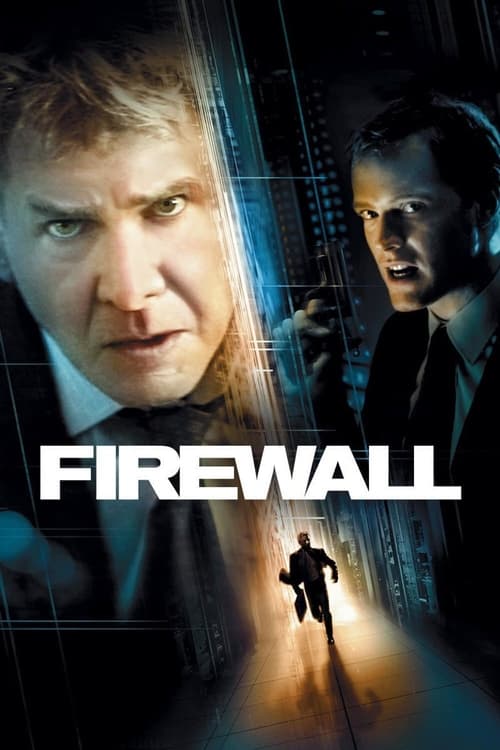
Firewall
State-of-the-art security system creator Jack Stanfield has cemented his reputation as a man who's thought of everything. But when a criminal finds a way into his personal life, everything Jack holds dear is suddenly at stake.
Working with a moderate budget of $45.0M, the film achieved a steady performer with $82.8M in global revenue (+84% profit margin).


Plot Structure
Story beats plotted across runtime


Narrative Arc
Emotional journey through the story's key moments
Story Circle
Blueprint 15-beat structure
Arcplot Score Breakdown
Weighted: Precision (70%) + Arc (15%) + Theme (15%)
Firewall (2006) demonstrates carefully calibrated story structure, characteristic of Richard Loncraine's storytelling approach. This structural analysis examines how the film's 15-point plot structure maps to proven narrative frameworks across 1 hour and 45 minutes. With an Arcplot score of 7.4, the film balances conventional beats with creative variation.
Characters
Cast & narrative archetypes

Jack Stanfield
Bill Cox
Beth Stanfield
Janet Stone
Gary Mitchell
Harry Romano
Main Cast & Characters
Jack Stanfield
Played by Harrison Ford
Bank security chief forced to rob his own institution to save his family from ruthless criminals.
Bill Cox
Played by Paul Bettany
Calculating criminal mastermind who orchestrates the bank heist by holding Jack's family hostage.
Beth Stanfield
Played by Virginia Madsen
Jack's wife, held captive with their children, who shows resilience and attempts to protect her family.
Janet Stone
Played by Mary Lynn Rajskub
Jack's assistant and trusted colleague who becomes instrumental in uncovering the conspiracy.
Gary Mitchell
Played by Robert Patrick
Bank executive and Jack's colleague who harbors professional jealousy and hidden agendas.
Harry Romano
Played by Robert Forster
FBI agent investigating the bank irregularities and Jack's suspicious behavior.
Structural Analysis
The Status Quo at 1 minutes (1% through the runtime) establishes Jack Stanfield, successful bank security executive, drives through Seattle to work, establishing his comfortable upper-middle-class life with wife Beth and two children.. Significantly, this early placement immediately immerses viewers in the story world.
The inciting incident occurs at 12 minutes when Bill Cox reveals himself as a criminal mastermind who has taken Jack's family hostage. Cox forces Jack into his car, showing him surveillance footage of his family held at gunpoint in their home.. At 11% through the film, this Disruption aligns precisely with traditional story structure. This beat shifts the emotional landscape, launching the protagonist into the central conflict.
The First Threshold at 26 minutes marks the transition into Act II, occurring at 24% of the runtime. This illustrates the protagonist's commitment to Jack makes the active choice to comply with Cox's demands and begins working on the heist, fully entering the criminal world. He returns to the bank to begin setting up the electronic theft., moving from reaction to action.
At 51 minutes, the Midpoint arrives at 49% of the runtime—precisely centered, creating perfect narrative symmetry. Of particular interest, this crucial beat Jack's attempt to alert authorities backfires when Cox discovers it. Cox severely punishes the family, beating Beth, and reveals he has infiltrated every aspect of Jack's life. The stakes escalate dramatically and Jack realizes he's truly alone., fundamentally raising what's at risk. The emotional intensity shifts, dividing the narrative into clear before-and-after phases.
The Collapse moment at 77 minutes (73% through) represents the emotional nadir. Here, Jack completes the money transfer - Cox has won. The family is to be executed to eliminate witnesses. Jack's secretary Janet is killed by Cox's team. All hope appears lost as the digital heist succeeds., demonstrates the protagonist at their lowest point. This beat's placement in the final quarter sets up the climactic reversal.
The Second Threshold at 83 minutes initiates the final act resolution at 79% of the runtime. Jack discovers Cox's money is on a physical device. He realizes he can turn the tables by going analog - using low-tech methods and physical action instead of digital systems. He escapes and begins his counterattack., demonstrating the transformation achieved throughout the journey.
Emotional Journey
Firewall's emotional architecture traces a deliberate progression across 15 carefully calibrated beats.
Narrative Framework
This structural analysis employs systematic plot point analysis that identifies crucial turning points. By mapping Firewall against these established plot points, we can identify how Richard Loncraine utilizes or subverts traditional narrative conventions. The plot point approach reveals not only adherence to structural principles but also creative choices that distinguish Firewall within the action genre.
Richard Loncraine's Structural Approach
Among the 4 Richard Loncraine films analyzed on Arcplot, the average structural score is 7.2, reflecting strong command of classical structure. Firewall represents one of the director's most structurally precise works. For comparative analysis, explore the complete Richard Loncraine filmography.
Comparative Analysis
Additional action films include The Bad Guys, Puss in Boots and Venom: The Last Dance. For more Richard Loncraine analyses, see Finding Your Feet, Wimbledon and The Missionary.
Plot Points by Act
Act I
SetupStatus Quo
Jack Stanfield, successful bank security executive, drives through Seattle to work, establishing his comfortable upper-middle-class life with wife Beth and two children.
Theme
Jack's colleague warns him about the dangers of putting too much trust in technology and systems, foreshadowing the film's central question: what happens when the tools meant to protect us become weapons against us?
Worldbuilding
Jack's world is established: his position as head of security at Landrock Pacific Bank, his loving family, his expertise with security systems, and the corporate merger talks. Bill Cox is introduced as a potential investor.
Disruption
Bill Cox reveals himself as a criminal mastermind who has taken Jack's family hostage. Cox forces Jack into his car, showing him surveillance footage of his family held at gunpoint in their home.
Resistance
Jack is taken to his house where Cox lays out the plan: Jack must transfer $100 million from the bank to Cox's offshore accounts. Jack debates resistance but realizes his family's lives are at stake. Cox demonstrates total control.
Act II
ConfrontationFirst Threshold
Jack makes the active choice to comply with Cox's demands and begins working on the heist, fully entering the criminal world. He returns to the bank to begin setting up the electronic theft.
Mirror World
Jack's relationship with his secretary Janet Stone is highlighted as she notices his strange behavior. She represents loyalty and trust, contrasting with Cox's world of manipulation and betrayal.
Premise
The "heist in reverse" - Jack must use his security expertise to break his own systems while appearing normal. He navigates technical obstacles, Cox's surveillance, and attempts small acts of resistance while trying to protect his family.
Midpoint
Jack's attempt to alert authorities backfires when Cox discovers it. Cox severely punishes the family, beating Beth, and reveals he has infiltrated every aspect of Jack's life. The stakes escalate dramatically and Jack realizes he's truly alone.
Opposition
Cox tightens control, forcing Jack to complete increasingly complex technical tasks. Jack's colleague is murdered when she gets too close to discovering the plot. The money transfer deadline approaches as Cox closes off every avenue of escape.
Collapse
Jack completes the money transfer - Cox has won. The family is to be executed to eliminate witnesses. Jack's secretary Janet is killed by Cox's team. All hope appears lost as the digital heist succeeds.
Crisis
In his darkest moment, Jack processes the loss and realizes he must abandon his faith in systems and technology. He recognizes that Cox's reliance on digital control is also a weakness.
Act III
ResolutionSecond Threshold
Jack discovers Cox's money is on a physical device. He realizes he can turn the tables by going analog - using low-tech methods and physical action instead of digital systems. He escapes and begins his counterattack.
Synthesis
Jack uses improvised weapons and guerrilla tactics to rescue his family. He systematically eliminates Cox's team using the environment and physical ingenuity rather than technology. Final confrontation with Cox results in Jack killing him and recovering his family.
Transformation
Jack reunites with his family outside their home, no longer the technocrat who relied on systems, but a man who learned that protecting what matters requires direct human action, not digital barriers.