Fireworks
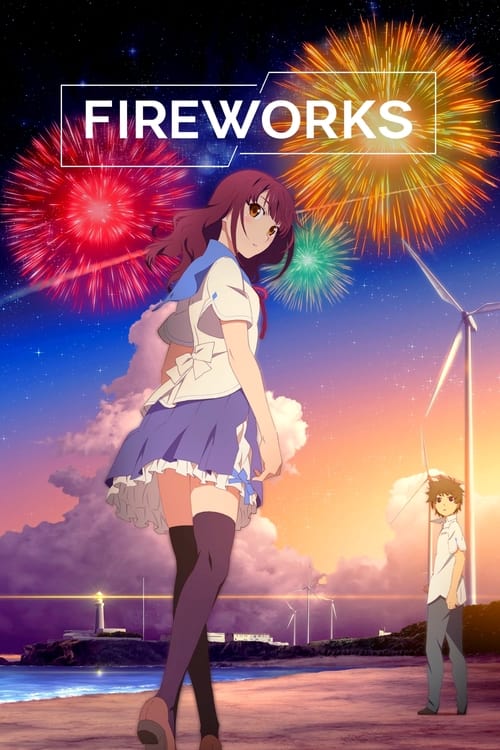
Moshimo, Japan. The annual fireworks festival is about to take place and a group of schoolboys, arguing over whether they are round or flat when viewed from different angles, set out to find it out.
The film earned $26.6M at the global box office.


Plot Structure
Story beats plotted across runtime


Narrative Arc
Emotional journey through the story's key moments
Story Circle
Blueprint 15-beat structure
Arcplot Score Breakdown
Weighted: Precision (70%) + Arc (15%) + Theme (15%)
Fireworks (2017) exhibits deliberately positioned plot construction, characteristic of Nobuyuki Takeuchi's storytelling approach. This structural analysis examines how the film's 15-point plot structure maps to proven narrative frameworks across 1 hour and 30 minutes. With an Arcplot score of 6.9, the film balances conventional beats with creative variation.
Characters
Cast & narrative archetypes

Norimichi Shimada
Nazuna Oikawa
Yuusuke Azumi
Main Cast & Characters
Norimichi Shimada
Played by Masaki Suda
A middle school boy caught in a love triangle who discovers a mysterious orb that allows him to reset time.
Nazuna Oikawa
Played by Suzu Hirose
A spirited girl who asks Norimichi to run away with her to escape her mother's remarriage.
Yuusuke Azumi
Played by Mamoru Miyano
Norimichi's best friend and rival for Nazuna's affection, athletic and competitive.
Structural Analysis
The Status Quo at 1 minutes (1% through the runtime) establishes Norimichi and his friends debate whether fireworks are round or flat when viewed from the side, establishing the central boys' perspective and their summer routine before the festival.. Structural examination shows that this early placement immediately immerses viewers in the story world.
The inciting incident occurs at 11 minutes when Nazuna reveals she must move away because her mother is remarrying, disrupting the summer idyll and forcing the question of what Norimichi will do about his feelings for her.. At 13% through the film, this Disruption is delayed, allowing extended setup of the story world. This beat shifts the emotional landscape, launching the protagonist into the central conflict.
The First Threshold at 23 minutes marks the transition into Act II, occurring at 25% of the runtime. This reveals the protagonist's commitment to Norimichi uses the glass orb for the first time to rewind reality after losing the race, actively choosing to change his fate and win Nazuna's challenge, entering a world where he can reshape events., moving from reaction to action.
At 46 minutes, the Midpoint arrives at 51% of the runtime—precisely centered, creating perfect narrative symmetry. Structural examination shows that this crucial beat The adults catch up with them at the lighthouse and Nazuna is forcibly taken away by her mother and future stepfather, a false defeat where the magical escape seems to have failed despite the orb's power., fundamentally raising what's at risk. The emotional intensity shifts, dividing the narrative into clear before-and-after phases.
The Collapse moment at 68 minutes (75% through) represents the emotional nadir. Here, The orb shatters and the timeline fragments completely, with Norimichi and Nazuna separated across dimensional barriers, representing the death of his ability to control their fate and the seeming impossibility of their relationship., demonstrates the protagonist at their lowest point. This beat's placement in the final quarter sets up the climactic reversal.
The Second Threshold at 72 minutes initiates the final act resolution at 80% of the runtime. Norimichi realizes that genuine connection transcends timelines and chooses to believe in their relationship regardless of which reality is "real," calling out to Nazuna across dimensional barriers with pure emotional conviction rather than relying on the orb., demonstrating the transformation achieved throughout the journey.
Emotional Journey
Fireworks's emotional architecture traces a deliberate progression across 15 carefully calibrated beats.
Narrative Framework
This structural analysis employs proven narrative structure principles that track dramatic progression. By mapping Fireworks against these established plot points, we can identify how Nobuyuki Takeuchi utilizes or subverts traditional narrative conventions. The plot point approach reveals not only adherence to structural principles but also creative choices that distinguish Fireworks within the animation genre.
Comparative Analysis
Additional animation films include The Bad Guys, Puss in Boots and Violet Evergarden: Eternity and the Auto Memory Doll.
Plot Points by Act
Act I
SetupStatus Quo
Norimichi and his friends debate whether fireworks are round or flat when viewed from the side, establishing the central boys' perspective and their summer routine before the festival.
Theme
A teacher or classmate mentions the ambiguity of perspective and how different viewpoints change reality, foreshadowing the film's exploration of choice, perspective, and alternate timelines.
Worldbuilding
Introduction to the coastal town, the school setting, the friendship dynamics between Norimichi and Yusuke, their mutual attraction to Nazuna, and the planned swimming competition and fireworks festival.
Disruption
Nazuna reveals she must move away because her mother is remarrying, disrupting the summer idyll and forcing the question of what Norimichi will do about his feelings for her.
Resistance
The swimming race between Norimichi and Yusuke to win Nazuna's attention, Norimichi's hesitation and internal debate about pursuing Nazuna, and the discovery of the mysterious glass orb that will enable reality-shifting.
Act II
ConfrontationFirst Threshold
Norimichi uses the glass orb for the first time to rewind reality after losing the race, actively choosing to change his fate and win Nazuna's challenge, entering a world where he can reshape events.
Mirror World
Nazuna and Norimichi's connection deepens as she invites him to run away with her to the fireworks festival, representing the relationship subplot that embodies the theme of choosing your own reality versus accepting fate.
Premise
The promise of the premise: Norimichi and Nazuna's romantic escape, exploring the town together, evading adults, experiencing the magic of the festival, and testing the limits of the reality-altering orb across multiple timeline iterations.
Midpoint
The adults catch up with them at the lighthouse and Nazuna is forcibly taken away by her mother and future stepfather, a false defeat where the magical escape seems to have failed despite the orb's power.
Opposition
Norimichi struggles with repeated attempts to use the orb to save their escape, each rewind creating stranger alternate realities, while external pressure from parents, teachers, and friends intensifies, and reality itself becomes increasingly unstable.
Collapse
The orb shatters and the timeline fragments completely, with Norimichi and Nazuna separated across dimensional barriers, representing the death of his ability to control their fate and the seeming impossibility of their relationship.
Crisis
Norimichi wanders through fragmented reality, confronting the existential question of whether any of their time together was real, processing the loss of both Nazuna and his ability to reshape their world.
Act III
ResolutionSecond Threshold
Norimichi realizes that genuine connection transcends timelines and chooses to believe in their relationship regardless of which reality is "real," calling out to Nazuna across dimensional barriers with pure emotional conviction rather than relying on the orb.
Synthesis
The timelines reconverge through the power of their emotional connection, Norimichi and Nazuna reunite during the fireworks display, and they experience the festival together in a reality they've chosen, watching the fireworks reveal their true nature.
Transformation
The fireworks are shown from multiple perspectives simultaneously—round, flat, and everything in between—as Norimichi understands that all perspectives are valid, and he has transformed from a passive observer to someone who actively shapes his reality through choice and connection.