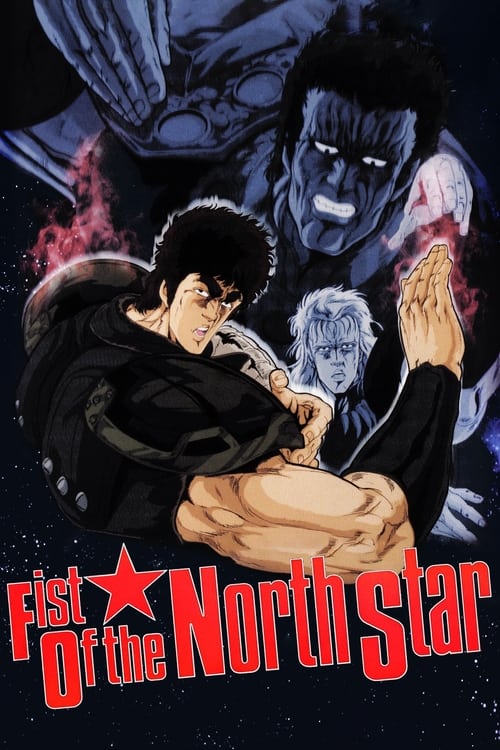
Fist of the North Star
After a nuclear holocaust tears the world apart, mankind is forced to the harshness of not only the oppression of others who are much more powerful, but the dead earth which seems to be getting worse with every passing moment. But a savior has risen from the ashes, a man who will defeat those who would torment the weak and make the world a livable place once more. A man named Kenshiro...
The film earned $18.0M at the global box office.
Plot Structure
Story beats plotted across runtime


Narrative Arc
Emotional journey through the story's key moments
Story Circle
Blueprint 15-beat structure
Arcplot Score Breakdown
Weighted: Precision (70%) + Arc (15%) + Theme (15%)
Fist of the North Star (1986) reveals meticulously timed story structure, characteristic of Toyoo Ashida's storytelling approach. This structural analysis examines how the film's 15-point plot structure maps to proven narrative frameworks across 1 hour and 50 minutes. With an Arcplot score of 7.5, the film showcases strong structural fundamentals.
Characters
Cast & narrative archetypes

Kenshiro
Raoh
Yuria
Toki
Shin
Rei
Mamiya
Bat
Lin
Main Cast & Characters
Kenshiro
Played by Akira Kamiya
The successor of Hokuto Shinken martial art who wanders the post-apocalyptic wasteland seeking his lost love and protecting the innocent with his deadly pressure-point techniques.
Raoh
Played by Kenji Utsumi
Kenshiro's older adopted brother and tyrannical warlord who seeks to conquer the wasteland through fear and violence, believing might makes right.
Yuria
Played by Yuriko Yamamoto
Kenshiro's beloved fiancée and the Nanto Six Saint Star of Compassion, whose kidnapping sets Kenshiro on his journey.
Toki
Played by Takeshi Aono
Kenshiro's gentle older brother and master of Hokuto Shinken who uses his martial arts for healing, tragically weakened by radiation sickness.
Shin
Played by Toshio Furukawa
Former friend of Kenshiro and Nanto Koshu-ken master who betrayed and scarred Kenshiro, taking Yuria for himself out of jealous love.
Rei
Played by Kaneto Shiozawa
The Nanto Suicho-ken master seeking his kidnapped sister, who becomes Kenshiro's loyal ally and friend in the wasteland.
Mamiya
Played by Arisa Andō
A fierce female warrior leading a resistance village against bandits, seeking revenge for her destroyed village and lost innocence.
Bat
Played by Mie Suzuki
A street-smart young thief who befriends Kenshiro and serves as comic relief while growing into a capable ally.
Lin
Played by Tomiko Suzuki
A mute young girl traumatized by violence who travels with Kenshiro and Bat, representing innocence worth protecting.
Structural Analysis
The Status Quo at 1 minutes (1% through the runtime) establishes Post-apocalyptic wasteland. Kenshiro wanders the desert protecting the innocent with his martial arts. He carries water to village children, establishing him as a wandering protector in a brutal world.. Structural examination shows that this early placement immediately immerses viewers in the story world.
The inciting incident occurs at 12 minutes when Kenshiro learns that Yuria may still be alive in Southern Cross, the city controlled by Shin. This information disrupts his wandering existence and gives him a concrete mission: find Yuria and rescue her.. At 11% through the film, this Disruption aligns precisely with traditional story structure. This beat shifts the emotional landscape, launching the protagonist into the central conflict.
The First Threshold at 26 minutes marks the transition into Act II, occurring at 24% of the runtime. This indicates the protagonist's commitment to Kenshiro actively chooses to journey to Southern Cross to face Shin and rescue Yuria, accepting that he must confront the man who defeated and scarred him. This is his irreversible commitment to the quest., moving from reaction to action.
At 55 minutes, the Midpoint arrives at 50% of the runtime—precisely centered, creating perfect narrative symmetry. Structural examination shows that this crucial beat Kenshiro reaches Southern Cross and confronts Shin, only to discover that Yuria apparently committed suicide by jumping from Shin's tower rather than live as his prisoner. This false defeat devastates Kenshiro and raises the stakes—his quest may be for nothing., fundamentally raising what's at risk. The emotional intensity shifts, dividing the narrative into clear before-and-after phases.
The Collapse moment at 81 minutes (74% through) represents the emotional nadir. Here, Kenshiro faces Raoh and is defeated, nearly killed. Raoh demonstrates overwhelming power and declares himself the true successor of Hokuto Shinken. Kenshiro is left broken and dying—a literal whiff of death as he lies unconscious., indicates the protagonist at their lowest point. This beat's placement in the final quarter sets up the climactic reversal.
The Second Threshold at 88 minutes initiates the final act resolution at 80% of the runtime. Kenshiro realizes that his true strength comes not from rage or domination like Raoh, but from his compassion and his will to protect others (the theme stated early). He achieves a new level of Hokuto Shinken mastery by synthesizing power with love., demonstrating the transformation achieved throughout the journey.
Emotional Journey
Fist of the North Star's emotional architecture traces a deliberate progression across 15 carefully calibrated beats.
Narrative Framework
This structural analysis employs systematic plot point analysis that identifies crucial turning points. By mapping Fist of the North Star against these established plot points, we can identify how Toyoo Ashida utilizes or subverts traditional narrative conventions. The plot point approach reveals not only adherence to structural principles but also creative choices that distinguish Fist of the North Star within the animation genre.
Comparative Analysis
Additional animation films include The Bad Guys, Puss in Boots and Violet Evergarden: Eternity and the Auto Memory Doll.
Plot Points by Act
Act I
SetupStatus Quo
Post-apocalyptic wasteland. Kenshiro wanders the desert protecting the innocent with his martial arts. He carries water to village children, establishing him as a wandering protector in a brutal world.
Theme
An old man tells Kenshiro: "In this world, only the strong survive. But true strength comes from protecting those you love." This establishes the theme of strength through compassion versus strength through domination.
Worldbuilding
Establishment of the post-nuclear wasteland, Kenshiro's Hokuto Shinken martial art (pressure point fighting), his relationship with Yuria (his lost love), and the tyranny of various gangs. Flashbacks show Kenshiro and Yuria were separated when Shin, a rival, defeated Kenshiro and took her.
Disruption
Kenshiro learns that Yuria may still be alive in Southern Cross, the city controlled by Shin. This information disrupts his wandering existence and gives him a concrete mission: find Yuria and rescue her.
Resistance
Kenshiro debates whether to pursue Shin, haunted by his previous defeat. He meets Bat and Lin, two orphans who become his companions. Rei, a fellow martial artist seeking his sister, provides guidance and demonstrates that Kenshiro must confront his past to move forward.
Act II
ConfrontationFirst Threshold
Kenshiro actively chooses to journey to Southern Cross to face Shin and rescue Yuria, accepting that he must confront the man who defeated and scarred him. This is his irreversible commitment to the quest.
Mirror World
Rei and Mamiya (a female warrior) join Kenshiro's journey. Their subplot—Rei seeking his kidnapped sister, Mamiya protecting her village—mirrors Kenshiro's quest and reinforces the theme that love and loyalty give meaning to strength.
Premise
The promise of the premise: Kenshiro's spectacular Hokuto Shinken battles against increasingly powerful enemies. He fights through Shin's subordinates and various warlords, delivering his iconic "You are already dead" proclamations as enemies explode from delayed pressure point strikes.
Midpoint
Kenshiro reaches Southern Cross and confronts Shin, only to discover that Yuria apparently committed suicide by jumping from Shin's tower rather than live as his prisoner. This false defeat devastates Kenshiro and raises the stakes—his quest may be for nothing.
Opposition
A greater threat emerges: Raoh, Kenshiro's elder martial brother who seeks to conquer the wasteland through fear. Raoh is more powerful than anyone Kenshiro has faced. The opposition intensifies as Kenshiro must face both his grief over Yuria and this seemingly unstoppable tyrant.
Collapse
Kenshiro faces Raoh and is defeated, nearly killed. Raoh demonstrates overwhelming power and declares himself the true successor of Hokuto Shinken. Kenshiro is left broken and dying—a literal whiff of death as he lies unconscious.
Crisis
Kenshiro recovers physically but struggles emotionally. He processes his losses—Yuria, his defeat by Shin, now his defeat by Raoh. Lin and Bat's faith in him, and the memory of those he's protected, help him find new resolve.
Act III
ResolutionSecond Threshold
Kenshiro realizes that his true strength comes not from rage or domination like Raoh, but from his compassion and his will to protect others (the theme stated early). He achieves a new level of Hokuto Shinken mastery by synthesizing power with love.
Synthesis
Final battle: Kenshiro confronts Raoh again with his newfound understanding. An epic duel where Kenshiro's compassion-driven strength proves equal to Raoh's tyrannical power. Kenshiro defeats Raoh, who acknowledges that love, not fear, is true strength before dying.
Transformation
Kenshiro walks into the sunrise with Lin and Bat, now a chosen family. Where the opening showed him as a lone wanderer protecting strangers, he now has people who believe in him and a purpose beyond vengeance—to rebuild hope in the wasteland.