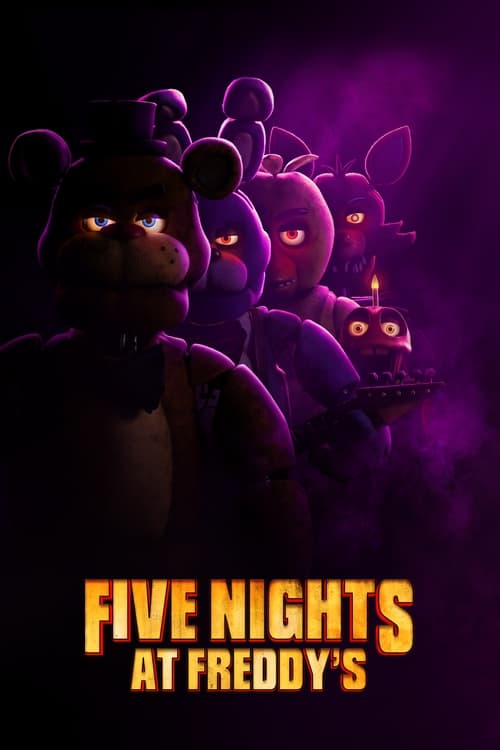
Five Nights at Freddy's
Recently fired and desperate for work, a troubled young man named Mike agrees to take a position as a night security guard at an abandoned theme restaurant: Freddy Fazbear's Pizzeria. But he soon discovers that nothing at Freddy's is what it seems.
Despite a respectable budget of $20.0M, Five Nights at Freddy's became a runaway success, earning $297.1M worldwide—a remarkable 1386% return.
24 nominations


Plot Structure
Story beats plotted across runtime


Narrative Arc
Emotional journey through the story's key moments
Story Circle
Blueprint 15-beat structure
Arcplot Score Breakdown
Weighted: Precision (70%) + Arc (15%) + Theme (15%)
Five Nights at Freddy's (2023) reveals precise narrative design, characteristic of Emma Tammi's storytelling approach. This structural analysis examines how the film's 15-point plot structure maps to proven narrative frameworks across 1 hour and 50 minutes. With an Arcplot score of 7.1, the film balances conventional beats with creative variation.
Characters
Cast & narrative archetypes

Mike Schmidt
Vanessa
Abby Schmidt
William Afton
Aunt Jane
Main Cast & Characters
Mike Schmidt
Played by Josh Hutcherson
A troubled security guard haunted by his brother's disappearance who takes a night job at Freddy Fazbear's Pizza to uncover the truth.
Vanessa
Played by Elizabeth Lail
A local police officer with mysterious knowledge of Freddy's dark history who tries to help Mike while hiding her own connection to the pizzeria.
Abby Schmidt
Played by Piper Rubio
Mike's imaginative younger sister who can communicate with the spirits possessing the animatronics.
William Afton
Played by Matthew Lillard
The sinister career counselor who is secretly the serial killer responsible for the missing children and the animatronics' possession.
Aunt Jane
Played by Mary Stuart Masterson
Mike and Abby's estranged aunt who seeks custody of Abby for financial gain.
Structural Analysis
The Status Quo at 1 minutes (1% through the runtime) establishes Mike Schmidt works as a mall security guard, haunted by recurring dreams of his brother Garrett's abduction. He's isolated, guilt-ridden, and losing control of his life while caring for his sister Abby.. Of particular interest, this early placement immediately immerses viewers in the story world.
The inciting incident occurs at 13 minutes when Steve Raglan offers Mike a last-chance job as night security guard at the abandoned Freddy Fazbear's Pizza. Mike has no choice but to accept to keep custody of Abby and pay bills.. At 11% through the film, this Disruption aligns precisely with traditional story structure. This beat shifts the emotional landscape, launching the protagonist into the central conflict.
The First Threshold at 27 minutes marks the transition into Act II, occurring at 25% of the runtime. This reveals the protagonist's commitment to Mike decides to continue working at Freddy's despite the eeriness and brings Abby with him. He actively chooses to engage with this supernatural world rather than flee, crossing into the mystery., moving from reaction to action.
At 54 minutes, the Midpoint arrives at 50% of the runtime—precisely centered, creating perfect narrative symmetry. Structural examination shows that this crucial beat The animatronics brutally murder Aunt Jane's accomplices who broke in to create evidence against Mike. Mike realizes the animatronics are deadly and possessed. Vanessa reveals William Afton killed children and stuffed them into the suits—her father is the murderer., fundamentally raising what's at risk. The emotional intensity shifts, dividing the narrative into clear before-and-after phases.
The Collapse moment at 82 minutes (74% through) represents the emotional nadir. Here, William Afton (Steve Raglan revealed as the killer) appears and orders the animatronics to kill Mike. Vanessa is stabbed by her father trying to protect Mike. The ghost children prepare to force Abby into a suit. Mike's guilt and obsession have led to catastrophe., reveals the protagonist at their lowest point. This beat's placement in the final quarter sets up the climactic reversal.
The Second Threshold at 87 minutes initiates the final act resolution at 79% of the runtime. Abby shows the ghost children a drawing revealing that Afton is their killer, not their friend. Mike realizes he must let go of Garrett and his guilt to save Abby. He accepts the past and focuses on protecting his living sister., demonstrating the transformation achieved throughout the journey.
Emotional Journey
Five Nights at Freddy's's emotional architecture traces a deliberate progression across 15 carefully calibrated beats.
Narrative Framework
This structural analysis employs a 15-point narrative structure framework that maps key story moments. By mapping Five Nights at Freddy's against these established plot points, we can identify how Emma Tammi utilizes or subverts traditional narrative conventions. The plot point approach reveals not only adherence to structural principles but also creative choices that distinguish Five Nights at Freddy's within the horror genre.
Comparative Analysis
Additional horror films include Thinner, A Nightmare on Elm Street and Mary Reilly.
Plot Points by Act
Act I
SetupStatus Quo
Mike Schmidt works as a mall security guard, haunted by recurring dreams of his brother Garrett's abduction. He's isolated, guilt-ridden, and losing control of his life while caring for his sister Abby.
Theme
Career counselor Steve Raglan tells Mike: "Sometimes we have to let go of the past to make room for the future." This encapsulates Mike's need to release his guilt over Garrett to protect Abby.
Worldbuilding
Establishes Mike's fractured world: custody battle with Aunt Jane over Abby, obsessive dreams about finding Garrett's kidnapper, fired from his mall job for assaulting a father, and desperate financial situation. Abby is isolated and draws imaginary friends.
Disruption
Steve Raglan offers Mike a last-chance job as night security guard at the abandoned Freddy Fazbear's Pizza. Mike has no choice but to accept to keep custody of Abby and pay bills.
Resistance
Mike debates taking the creepy job, meets babysitter Max, explores the decrepit pizzeria on his first night. Vanessa, a local cop, appears and warns him cryptically. Mike experiences strange dreams where child spirits appear in his Garrett memories.
Act II
ConfrontationFirst Threshold
Mike decides to continue working at Freddy's despite the eeriness and brings Abby with him. He actively chooses to engage with this supernatural world rather than flee, crossing into the mystery.
Mirror World
Abby befriends the animatronics and the ghost children controlling them. This relationship mirrors Mike's need to connect with lost children (both Garrett and these spirits) and shows an innocent approach to the past versus Mike's guilt-driven obsession.
Premise
Mike and Abby explore the "fun" of Freddy's: the animatronics come alive, build forts with Abby, and seem friendly. Mike bonds with Vanessa who reveals pieces of the pizzeria's dark history. The ghost children in Mike's dreams offer to show him his brother's kidnapper if he "gives them something."
Midpoint
The animatronics brutally murder Aunt Jane's accomplices who broke in to create evidence against Mike. Mike realizes the animatronics are deadly and possessed. Vanessa reveals William Afton killed children and stuffed them into the suits—her father is the murderer.
Opposition
Mike tries to keep Abby away from Freddy's but she's drawn back. The ghost children, manipulated by Afton, want Abby to "join them" permanently. Mike's obsession with finding Garrett's killer blinds him to present danger. Vanessa's trauma about her father paralyzes her from acting.
Collapse
William Afton (Steve Raglan revealed as the killer) appears and orders the animatronics to kill Mike. Vanessa is stabbed by her father trying to protect Mike. The ghost children prepare to force Abby into a suit. Mike's guilt and obsession have led to catastrophe.
Crisis
Mike faces his darkest moment: Vanessa is dying, Abby is captured, and he's powerless against Afton and the animatronics. He must confront that his obsession with the past (Garrett) has endangered the family he has now (Abby).
Act III
ResolutionSecond Threshold
Abby shows the ghost children a drawing revealing that Afton is their killer, not their friend. Mike realizes he must let go of Garrett and his guilt to save Abby. He accepts the past and focuses on protecting his living sister.
Synthesis
The ghost children turn on Afton, dragging him into the Spring Bonnie suit which crushes him. Mike and Abby escape together. Vanessa is hospitalized but alive. Mike chooses Abby and the present over his obsession with the past.
Transformation
Mike reads to Abby in the hospital waiting room while Vanessa recovers. He's no longer isolated or guilt-consumed. He's present with his sister, having released his obsession with Garrett. The family is together and healing.