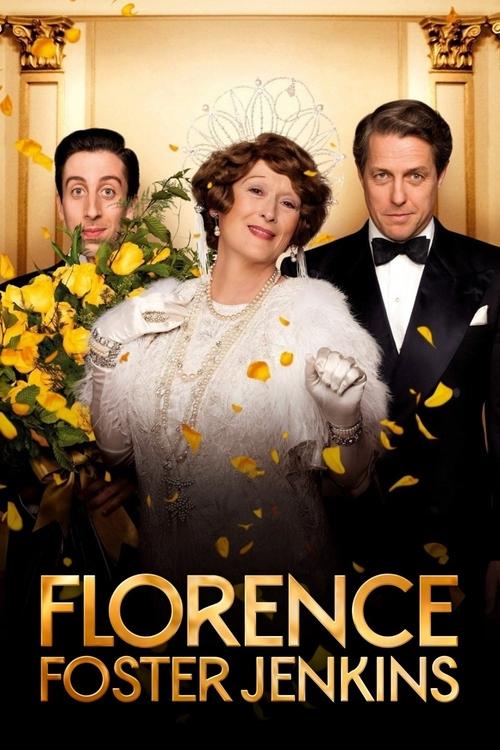
Florence Foster Jenkins
The story of Florence Foster Jenkins, a New York heiress, who dreamed of becoming an opera singer, despite having a terrible singing voice.
Working with a moderate budget of $29.0M, the film achieved a modest success with $48.9M in global revenue (+69% profit margin).
Nominated for 2 Oscars. 10 wins & 48 nominations


Plot Structure
Story beats plotted across runtime


Narrative Arc
Emotional journey through the story's key moments
Story Circle
Blueprint 15-beat structure
Arcplot Score Breakdown
Weighted: Precision (70%) + Arc (15%) + Theme (15%)
Florence Foster Jenkins (2016) exemplifies deliberately positioned narrative design, characteristic of Stephen Frears's storytelling approach. This structural analysis examines how the film's 15-point plot structure maps to proven narrative frameworks across 1 hour and 50 minutes. With an Arcplot score of 7.4, the film balances conventional beats with creative variation.
Characters
Cast & narrative archetypes

Florence Foster Jenkins
St. Clair Bayfield
Cosmé McMoon
Kathleen Weatherley
Agnes Stark
Main Cast & Characters
Florence Foster Jenkins
Played by Meryl Streep
A wealthy New York socialite with a passion for music who believes herself to be a great operatic soprano despite having no singing talent.
St. Clair Bayfield
Played by Hugh Grant
Florence's devoted common-law husband and manager who protects her from the truth about her singing while maintaining a secret second life.
Cosmé McMoon
Played by Simon Helberg
A young, talented pianist hired as Florence's accompanist who struggles between honesty and loyalty as he witnesses her delusions.
Kathleen Weatherley
Played by Rebecca Ferguson
St. Clair's younger mistress who lives in a separate apartment funded by Florence, representing his compartmentalized double life.
Agnes Stark
Played by Nina Arianda
Florence's loyal pianist and musical companion who supports her delusions and is part of the protective circle around her.
Structural Analysis
The Status Quo at 1 minutes (1% through the runtime) establishes Florence performs at her lavish Verdi Club soiree, surrounded by admirers who enable her delusion. Her wealthy world of music, passion, and performance is established - she lives in blissful ignorance of her terrible singing voice.. The analysis reveals that this early placement immediately immerses viewers in the story world.
The inciting incident occurs at 13 minutes when Florence announces she wants to start singing lessons again and will give a private recital. St Clair is alarmed but supportive. The inciting incident launches the story - Florence's renewed ambition will test the limits of the protective bubble.. At 12% through the film, this Disruption aligns precisely with traditional story structure. This beat shifts the emotional landscape, launching the protagonist into the central conflict.
The First Threshold at 27 minutes marks the transition into Act II, occurring at 25% of the runtime. This shows the protagonist's commitment to Florence decides to make a recording at Carnegie Studios. This active choice escalates her ambitions beyond private performances to creating a permanent artifact. Cosme chooses to stay despite his misgivings. The stakes are raised., moving from reaction to action.
At 54 minutes, the Midpoint arrives at 49% of the runtime—precisely centered, creating perfect narrative symmetry. The analysis reveals that this crucial beat Florence announces she will perform at Carnegie Hall. False victory - her dream is coming true, but this public performance will be impossible to control. Stakes raise dramatically. The protective bubble cannot survive this exposure., fundamentally raising what's at risk. The emotional intensity shifts, dividing the narrative into clear before-and-after phases.
The Collapse moment at 81 minutes (74% through) represents the emotional nadir. Here, The Carnegie Hall performance happens. Soldiers laugh openly. Florence sees a devastating review in the newspaper that St Clair couldn't intercept. She reads the brutal truth about her voice for the first time. Her dream dies as reality crashes in., reveals the protagonist at their lowest point. This beat's placement in the final quarter sets up the climactic reversal.
The Second Threshold at 89 minutes initiates the final act resolution at 81% of the runtime. On her deathbed, Florence tells St Clair: "They can say I couldn't sing, but they can't say I didn't sing." She has synthesis - she understands the truth but affirms that the joy was real. Her choice to pursue her passion was valid regardless of talent., demonstrating the transformation achieved throughout the journey.
Emotional Journey
Florence Foster Jenkins's emotional architecture traces a deliberate progression across 15 carefully calibrated beats.
Narrative Framework
This structural analysis employs a 15-point narrative structure framework that maps key story moments. By mapping Florence Foster Jenkins against these established plot points, we can identify how Stephen Frears utilizes or subverts traditional narrative conventions. The plot point approach reveals not only adherence to structural principles but also creative choices that distinguish Florence Foster Jenkins within the comedy genre.
Stephen Frears's Structural Approach
Among the 9 Stephen Frears films analyzed on Arcplot, the average structural score is 7.1, reflecting strong command of classical structure. Florence Foster Jenkins represents one of the director's most structurally precise works. For comparative analysis, explore the complete Stephen Frears filmography.
Comparative Analysis
Additional comedy films include The Bad Guys, Ella Enchanted and The Evening Star. For more Stephen Frears analyses, see Mary Reilly, Philomena and Victoria & Abdul.
Plot Points by Act
Act I
SetupStatus Quo
Florence performs at her lavish Verdi Club soiree, surrounded by admirers who enable her delusion. Her wealthy world of music, passion, and performance is established - she lives in blissful ignorance of her terrible singing voice.
Theme
St Clair says to Cosme: "We may not be perfect, but we have the right to do what we love." The theme is stated - the tension between truth and kindness, between artistic merit and the joy of participation.
Worldbuilding
Introduction to Florence's protected bubble: her devoted husband St Clair Bayfield manages her life, screens her reviews, pays off critics. We see their strange marriage arrangement, his secret mistress Kathleen, the loyal pianist Cosme McMoon, and the Verdi Club inner circle.
Disruption
Florence announces she wants to start singing lessons again and will give a private recital. St Clair is alarmed but supportive. The inciting incident launches the story - Florence's renewed ambition will test the limits of the protective bubble.
Resistance
Cosme McMoon is hired as Florence's new accompanist. His reaction of shock and horror at her singing creates the audience surrogate. St Clair debates whether to let this continue, ultimately deciding to pay Cosme to stay and protect Florence's happiness.
Act II
ConfrontationFirst Threshold
Florence decides to make a recording at Carnegie Studios. This active choice escalates her ambitions beyond private performances to creating a permanent artifact. Cosme chooses to stay despite his misgivings. The stakes are raised.
Mirror World
Cosme is fully integrated into Florence's world, attending her parties and becoming genuinely fond of her. The thematic relationship is established - he represents the truth (musical integrity) but is learning the value of kindness and joy over honesty.
Premise
The fun and games of Florence living her dream: elaborate costume rehearsals, recording sessions, her infectious enthusiasm, growing friendship with Cosme. St Clair juggles managing Florence and Kathleen. The promise of the premise - watching this tone-deaf woman pursue her passion with total conviction.
Midpoint
Florence announces she will perform at Carnegie Hall. False victory - her dream is coming true, but this public performance will be impossible to control. Stakes raise dramatically. The protective bubble cannot survive this exposure.
Opposition
Preparation intensifies. St Clair tries to buy out all tickets and control the audience, but Florence insists on giving tickets to soldiers. Kathleen becomes resentful and threatens to expose everything. Critics sharpen their knives. The forces of truth close in on the bubble of delusion.
Collapse
The Carnegie Hall performance happens. Soldiers laugh openly. Florence sees a devastating review in the newspaper that St Clair couldn't intercept. She reads the brutal truth about her voice for the first time. Her dream dies as reality crashes in.
Crisis
Florence collapses from the shock. St Clair stays by her bedside. Dark night of the soul - was protecting her happiness worth it? Was her joy real if built on lies? The death is metaphorical and literal as her health fails.
Act III
ResolutionSecond Threshold
On her deathbed, Florence tells St Clair: "They can say I couldn't sing, but they can't say I didn't sing." She has synthesis - she understands the truth but affirms that the joy was real. Her choice to pursue her passion was valid regardless of talent.
Synthesis
Florence dies peacefully, having lived fully on her own terms. St Clair and Cosme process their grief. The resolution affirms that love, loyalty, and enabling someone's joy - even through deception - can be noble. The epilogue reveals Florence's recording became a bestseller.
Transformation
Final image mirrors the opening: Florence performing in heaven, in her imagination, with perfect happiness. The transformation is complete - what seemed like tragic delusion is reframed as triumphant self-actualization. Joy and passion matter more than technical perfection.