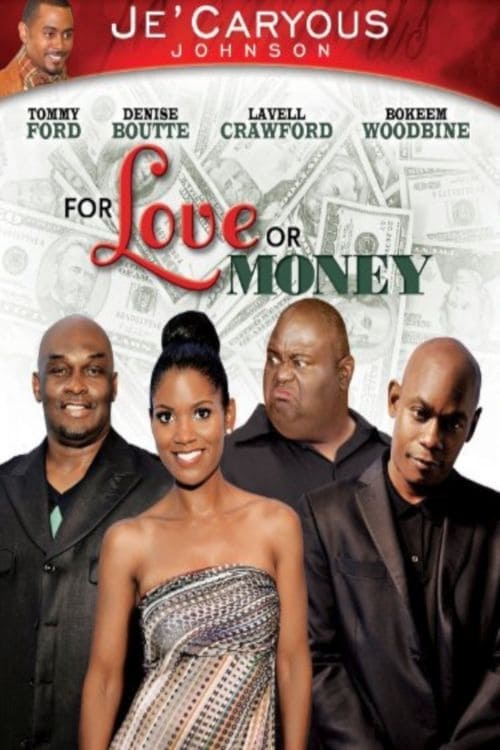
For Love or Money
Tina seems to have it all: booming business, lots of money, and a great man, Russell, that loves her. So it was no surprised when she was nominated for Mocha Magazine's Woman of year. But with one false move from her shady accountant, her award, business, and money may be gone forever. But when Russell can only offer affection, Tina runs to her rich ex, Jacoby, for financial support. Now she must decide if her pursuit should be For Love or Money.
Despite its shoestring budget of $500K, For Love or Money became a commercial juggernaut, earning $10.0M worldwide—a remarkable 1892% return. The film's unique voice connected with viewers, proving that strong storytelling can transcend budget limitations.

Plot Structure
Story beats plotted across runtime


Narrative Arc
Emotional journey through the story's key moments
Story Circle
Blueprint 15-beat structure
Arcplot Score Breakdown
Weighted: Precision (70%) + Arc (15%) + Theme (15%)
For Love or Money (2014) exemplifies meticulously timed narrative design, characteristic of Roger Melvin's storytelling approach. This structural analysis examines how the film's 15-point plot structure maps to proven narrative frameworks across 1 hour and 20 minutes. With an Arcplot score of 7.2, the film balances conventional beats with creative variation.
Structural Analysis
The Status Quo at 1 minutes (1% through the runtime) establishes Protagonist established in their ordinary world, focused on career/financial goals over romance, showing what's missing in their life.. The analysis reveals that this early placement immediately immerses viewers in the story world.
The inciting incident occurs at 10 minutes when An unexpected event or person disrupts the protagonist's carefully planned life, forcing them to confront the choice between financial security and emotional fulfillment.. At 12% through the film, this Disruption aligns precisely with traditional story structure. This beat shifts the emotional landscape, launching the protagonist into the central conflict.
The First Threshold at 20 minutes marks the transition into Act II, occurring at 25% of the runtime. This indicates the protagonist's commitment to Protagonist makes an active choice to pursue a new path, whether accepting a romantic possibility or a career opportunity that will test their values., moving from reaction to action.
At 40 minutes, the Midpoint arrives at 50% of the runtime—precisely centered, creating perfect narrative symmetry. Notably, this crucial beat A false victory where everything seems to be working - both career and romance appear achievable, raising the stakes for what can be lost., fundamentally raising what's at risk. The emotional intensity shifts, dividing the narrative into clear before-and-after phases.
The Collapse moment at 60 minutes (75% through) represents the emotional nadir. Here, The relationship falls apart or the career opportunity dies; protagonist loses what they thought they wanted, forced to face what they truly need., demonstrates the protagonist at their lowest point. This beat's placement in the final quarter sets up the climactic reversal.
The Second Threshold at 64 minutes initiates the final act resolution at 80% of the runtime. Protagonist has a realization about what truly matters, gains new information, or synthesizes their growth, choosing love over money or finding authentic balance., demonstrating the transformation achieved throughout the journey.
Emotional Journey
For Love or Money's emotional architecture traces a deliberate progression across 15 carefully calibrated beats.
Narrative Framework
This structural analysis employs structural analysis methodology used to understand storytelling architecture. By mapping For Love or Money against these established plot points, we can identify how Roger Melvin utilizes or subverts traditional narrative conventions. The plot point approach reveals not only adherence to structural principles but also creative choices that distinguish For Love or Money within the comedy genre.
Comparative Analysis
Additional comedy films include The Ministry of Ungentlemanly Warfare, The Bad Guys and Lake Placid.
Plot Points by Act
Act I
SetupStatus Quo
Protagonist established in their ordinary world, focused on career/financial goals over romance, showing what's missing in their life.
Theme
A supporting character comments on the difference between pursuing money and pursuing love, establishing the central thematic question.
Worldbuilding
Introduction to protagonist's career-driven world, established relationships, financial pressures, and the stakes that make money seem more important than love.
Disruption
An unexpected event or person disrupts the protagonist's carefully planned life, forcing them to confront the choice between financial security and emotional fulfillment.
Resistance
Protagonist resists the disruption, debates whether to stay their course or take a risk, receives advice from friends or family about what truly matters.
Act II
ConfrontationFirst Threshold
Protagonist makes an active choice to pursue a new path, whether accepting a romantic possibility or a career opportunity that will test their values.
Mirror World
Introduction or deepening of the romantic relationship that represents the thematic alternative to the protagonist's money-focused worldview.
Premise
The fun exploration of balancing career and romance, moments of connection, the promise of the premise as protagonist experiences what they've been missing.
Midpoint
A false victory where everything seems to be working - both career and romance appear achievable, raising the stakes for what can be lost.
Opposition
Increasing pressure as maintaining both money and love becomes impossible; forces conspire to make protagonist choose; lies or secrets threaten to surface.
Collapse
The relationship falls apart or the career opportunity dies; protagonist loses what they thought they wanted, forced to face what they truly need.
Crisis
Dark night of the soul as protagonist processes the loss and reflects on their choices, realizing money without love (or love without self-respect) is empty.
Act III
ResolutionSecond Threshold
Protagonist has a realization about what truly matters, gains new information, or synthesizes their growth, choosing love over money or finding authentic balance.
Synthesis
Protagonist takes action based on their new understanding, makes a grand gesture, confronts their fears, and fights for what they now know they need.
Transformation
Final image showing protagonist transformed, having chosen love and found that true wealth comes from authentic connection rather than financial gain alone.