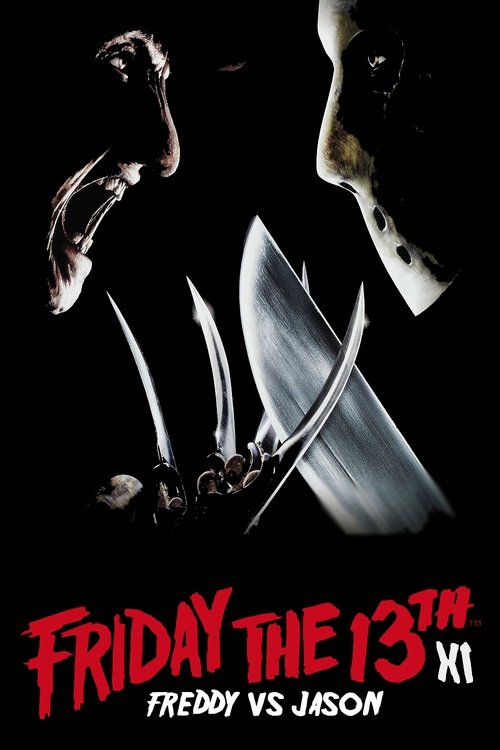
Freddy vs. Jason
Freddy Krueger and Jason Voorhees return to terrorize the teenagers of Elm Street. Only this time, they're out to get each other, too.
Despite a mid-range budget of $30.0M, Freddy vs. Jason became a commercial success, earning $116.6M worldwide—a 289% return.
2 wins & 11 nominations


Plot Structure
Story beats plotted across runtime


Narrative Arc
Emotional journey through the story's key moments
Story Circle
Blueprint 15-beat structure
Arcplot Score Breakdown
Weighted: Precision (70%) + Arc (15%) + Theme (15%)
Freddy vs. Jason (2003) exemplifies strategically placed dramatic framework, characteristic of Ronny Yu's storytelling approach. This structural analysis examines how the film's 15-point plot structure maps to proven narrative frameworks across 1 hour and 37 minutes. With an Arcplot score of 7.6, the film showcases strong structural fundamentals.
Characters
Cast & narrative archetypes

Freddy Krueger
Jason Voorhees
Lori Campbell
Will Rollins
Kia Waterson
Mark Davis
Charlie Linderman
Main Cast & Characters
Freddy Krueger
Played by Robert Englund
Dream demon who kills teenagers in their sleep, seeks to regain his power through fear.
Jason Voorhees
Played by Ken Kirzinger
Undead mass murderer resurrected by Freddy to spread fear at Elm Street.
Lori Campbell
Played by Monica Keena
Teenage girl who discovers the truth about Freddy and leads the fight against both killers.
Will Rollins
Played by Jason Ritter
Former Elm Street resident committed to Westin Hills, returns to help stop Freddy.
Kia Waterson
Played by Kelly Rowland
Lori's confident and outspoken best friend who fights alongside the group.
Mark Davis
Played by Brendan Fletcher
Lori's ex-boyfriend who becomes entangled in the supernatural conflict.
Charlie Linderman
Played by Chris Marquette
Stoner friend obsessed with conspiracy theories about Elm Street murders.
Structural Analysis
The Status Quo at 1 minutes (1% through the runtime) establishes Elm Street kids are living in apparent peace, having forgotten Freddy Krueger through institutionalization and medication. Lori and her friends prepare for a normal teenage weekend.. Structural examination shows that this early placement immediately immerses viewers in the story world.
The inciting incident occurs at 11 minutes when Freddy resurrects Jason Voorhees and sends him to Elm Street to kill and create fear, which will restore Freddy's power by making people remember him and fear his name again.. At 12% through the film, this Disruption aligns precisely with traditional story structure. This beat shifts the emotional landscape, launching the protagonist into the central conflict.
The First Threshold at 24 minutes marks the transition into Act II, occurring at 25% of the runtime. This illustrates the protagonist's commitment to Lori and her friends actively choose to investigate the truth about Freddy Krueger after more deaths occur. They break into the institution to rescue their friend and learn what's being hidden from them., moving from reaction to action.
At 48 minutes, the Midpoint arrives at 50% of the runtime—precisely centered, creating perfect narrative symmetry. Significantly, this crucial beat False defeat: Freddy realizes Jason won't stop killing and is stealing his victims. The teens discover both monsters are real and active. The rave massacre occurs with mass casualties. Stakes drastically raise., fundamentally raising what's at risk. The emotional intensity shifts, dividing the narrative into clear before-and-after phases.
The Collapse moment at 72 minutes (75% through) represents the emotional nadir. Here, All seems lost when most of the friend group is dead, and the plan to stop the killers appears to fail. Freddy has Jason helpless in the dream world. Lori faces her deepest trauma alone., indicates the protagonist at their lowest point. This beat's placement in the final quarter sets up the climactic reversal.
The Second Threshold at 77 minutes initiates the final act resolution at 80% of the runtime. Breakthrough realization: they can pull Freddy out of the dream world into reality where Jason can fight him. By bringing her nightmare into the real world, Lori can turn the monsters against each other., demonstrating the transformation achieved throughout the journey.
Emotional Journey
Freddy vs. Jason's emotional architecture traces a deliberate progression across 15 carefully calibrated beats.
Narrative Framework
This structural analysis employs systematic plot point analysis that identifies crucial turning points. By mapping Freddy vs. Jason against these established plot points, we can identify how Ronny Yu utilizes or subverts traditional narrative conventions. The plot point approach reveals not only adherence to structural principles but also creative choices that distinguish Freddy vs. Jason within the horror genre.
Ronny Yu's Structural Approach
Among the 3 Ronny Yu films analyzed on Arcplot, the average structural score is 6.9, demonstrating varied approaches to story architecture. Freddy vs. Jason represents one of the director's most structurally precise works. For comparative analysis, explore the complete Ronny Yu filmography.
Comparative Analysis
Additional horror films include Thinner, A Nightmare on Elm Street and Mary Reilly. For more Ronny Yu analyses, see The 51st State, Bride of Chucky.
Plot Points by Act
Act I
SetupStatus Quo
Elm Street kids are living in apparent peace, having forgotten Freddy Krueger through institutionalization and medication. Lori and her friends prepare for a normal teenage weekend.
Theme
A character mentions "You can't run from your past" - establishing the theme that suppressed trauma and fear will always resurface and must be confronted directly.
Worldbuilding
Establish Springwood's conspiracy of silence about Freddy, the teens' relationships, the institution holding traumatized kids, and Freddy's powerless state in Hell. Jason is introduced in his realm.
Disruption
Freddy resurrects Jason Voorhees and sends him to Elm Street to kill and create fear, which will restore Freddy's power by making people remember him and fear his name again.
Resistance
Jason begins killing Springwood teens. Lori and friends debate whether Freddy has truly returned. Adults try to maintain the coverup. The teens resist believing the truth about their town's dark history.
Act II
ConfrontationFirst Threshold
Lori and her friends actively choose to investigate the truth about Freddy Krueger after more deaths occur. They break into the institution to rescue their friend and learn what's being hidden from them.
Mirror World
Will, Lori's boyfriend who was institutionalized for knowing the truth about Freddy, returns to her life. Their relationship represents facing fear together rather than being silenced and separated.
Premise
The "promise of the premise" - Freddy vs Jason action begins. Teens experience Freddy in dreams while Jason kills in reality. Escalating horror as both killers compete for victims and the teens try to survive.
Midpoint
False defeat: Freddy realizes Jason won't stop killing and is stealing his victims. The teens discover both monsters are real and active. The rave massacre occurs with mass casualties. Stakes drastically raise.
Opposition
Freddy and Jason turn on each other while the teens are caught between them. The group fractures under pressure. Freddy dominates Jason in the dream world, exploiting his fear of water. Deaths mount.
Collapse
All seems lost when most of the friend group is dead, and the plan to stop the killers appears to fail. Freddy has Jason helpless in the dream world. Lori faces her deepest trauma alone.
Crisis
Dark night of the soul as survivors process their losses and confrontation with evil. Lori must find the courage to face both her trauma and the monsters rather than run or be silenced.
Act III
ResolutionSecond Threshold
Breakthrough realization: they can pull Freddy out of the dream world into reality where Jason can fight him. By bringing her nightmare into the real world, Lori can turn the monsters against each other.
Synthesis
Final confrontation at Camp Crystal Lake. Lori pulls Freddy into reality. Jason and Freddy battle while the surviving teens fight to end both monsters. Fire, water, and combat synthesize all skills learned.
Transformation
Lori and Will float on the dock, bloodied but alive, having faced and survived their nightmares. Jason emerges from the lake holding Freddy's severed head, which winks - both monsters endure, but fear no longer controls the survivors.