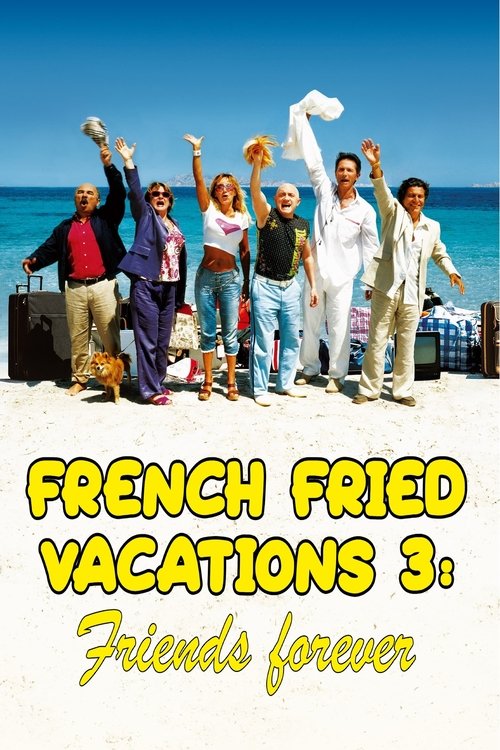
French Fried Vacations 3: Friends Forever
After the Club Med and skiing, what happened to the Bronzés 27 years later? Early response: the same, and worse.
Despite a moderate budget of $35.1M, French Fried Vacations 3: Friends Forever became a box office success, earning $83.9M worldwide—a 139% return.


Plot Structure
Story beats plotted across runtime


Narrative Arc
Emotional journey through the story's key moments
Story Circle
Blueprint 15-beat structure
Arcplot Score Breakdown
Weighted: Precision (70%) + Arc (15%) + Theme (15%)
French Fried Vacations 3: Friends Forever (2006) reveals carefully calibrated dramatic framework, characteristic of Patrice Leconte's storytelling approach. This structural analysis examines how the film's 15-point plot structure maps to proven narrative frameworks across 1 hour and 35 minutes. With an Arcplot score of 7.4, the film balances conventional beats with creative variation.
Characters
Cast & narrative archetypes

Popeye
Gigi
Bernard
Nathalie
Jean-Claude
Jérôme
Christiane
Main Cast & Characters
Popeye
Played by Christian Clavier
The neurotic, anxious group leader struggling with midlife crisis and maintaining the friend group's traditions.
Gigi
Played by Marie-Anne Chazel
Popeye's more grounded wife who provides emotional support and reality checks to the group.
Bernard
Played by Gérard Jugnot
The sensitive, intellectual friend dealing with his own insecurities and romantic complications.
Nathalie
Played by Josiane Balasko
Bernard's partner who brings warmth and practicality to the group dynamic.
Jean-Claude
Played by Michel Blanc
The womanizing, free-spirited member of the group who resists maturity and commitment.
Jérôme
Played by Thierry Lhermitte
The wealthy, somewhat pompous friend who often clashes with the others but remains loyal to the group.
Christiane
Played by Dominique Lavanant
Jérôme's elegant wife who navigates the group's chaos with grace and occasional exasperation.
Structural Analysis
The Status Quo at 1 minutes (1% through the runtime) establishes The aging friends are shown in their separate, mundane middle-aged lives - successful but disconnected from the joy and spontaneity of their youth.. Significantly, this early placement immediately immerses viewers in the story world.
The inciting incident occurs at 12 minutes when Popeye proposes a reunion trip back to Val d'Isère, the ski resort where they all met decades ago, suggesting they can relive the glory days.. At 12% through the film, this Disruption aligns precisely with traditional story structure. This beat shifts the emotional landscape, launching the protagonist into the central conflict.
The First Threshold at 24 minutes marks the transition into Act II, occurring at 25% of the runtime. This shows the protagonist's commitment to The group arrives at Val d'Isère and makes the active choice to fully commit to the reunion experience, despite their reservations and the visible passage of time., moving from reaction to action.
At 48 minutes, the Midpoint arrives at 51% of the runtime—precisely centered, creating perfect narrative symmetry. Significantly, this crucial beat A moment of collective realization (false defeat) that they cannot actually turn back time - an embarrassing incident or health scare makes clear they are no longer young, raising the stakes of what this reunion actually means., fundamentally raising what's at risk. The emotional intensity shifts, dividing the narrative into clear before-and-after phases.
The Collapse moment at 72 minutes (76% through) represents the emotional nadir. Here, A major blow-up or crisis point - perhaps a friendship appears permanently broken, or someone faces a serious reality about their life/health. The "death" of the illusion that they can recapture the past., illustrates the protagonist at their lowest point. This beat's placement in the final quarter sets up the climactic reversal.
The Second Threshold at 77 minutes initiates the final act resolution at 81% of the runtime. A realization that the point wasn't to relive the past, but to celebrate that their friendship survived into the present. They accept who they are now rather than who they were., demonstrating the transformation achieved throughout the journey.
Emotional Journey
French Fried Vacations 3: Friends Forever's emotional architecture traces a deliberate progression across 15 carefully calibrated beats.
Narrative Framework
This structural analysis employs a 15-point narrative structure framework that maps key story moments. By mapping French Fried Vacations 3: Friends Forever against these established plot points, we can identify how Patrice Leconte utilizes or subverts traditional narrative conventions. The plot point approach reveals not only adherence to structural principles but also creative choices that distinguish French Fried Vacations 3: Friends Forever within the comedy genre.
Patrice Leconte's Structural Approach
Among the 4 Patrice Leconte films analyzed on Arcplot, the average structural score is 7.0, reflecting strong command of classical structure. French Fried Vacations 3: Friends Forever represents one of the director's most structurally precise works. For comparative analysis, explore the complete Patrice Leconte filmography.
Comparative Analysis
Additional comedy films include The Bad Guys, Ella Enchanted and The Evening Star. For more Patrice Leconte analyses, see Intimate Strangers, Maigret and Man on the Train.
Plot Points by Act
Act I
SetupStatus Quo
The aging friends are shown in their separate, mundane middle-aged lives - successful but disconnected from the joy and spontaneity of their youth.
Theme
A character mentions that "true friendship doesn't age" and questions whether they can recapture what they once had, establishing the film's exploration of nostalgia versus reality.
Worldbuilding
Introduction of the ensemble cast in their current lives: marriages grown stale, careers plateaued, health concerns emerging. We see what 27 years have done to the once-carefree vacationers.
Disruption
Popeye proposes a reunion trip back to Val d'Isère, the ski resort where they all met decades ago, suggesting they can relive the glory days.
Resistance
The friends debate whether this is a good idea - concerns about age, changed relationships, whether the magic can be recaptured. Some resist, others are enthusiastic. Preparations begin.
Act II
ConfrontationFirst Threshold
The group arrives at Val d'Isère and makes the active choice to fully commit to the reunion experience, despite their reservations and the visible passage of time.
Mirror World
The friends encounter younger vacationers who remind them of their former selves, creating a thematic mirror that forces them to confront how much they've changed.
Premise
The "fun and games" of trying to relive their youth - awkward skiing attempts, flirtation failures, partying with younger people, nostalgic callbacks to the original films, both hilarious and poignant.
Midpoint
A moment of collective realization (false defeat) that they cannot actually turn back time - an embarrassing incident or health scare makes clear they are no longer young, raising the stakes of what this reunion actually means.
Opposition
Tensions rise as old conflicts resurface, marriages are tested, insecurities about aging intensify. The gap between memory and reality becomes painful. The friends begin to fracture.
Collapse
A major blow-up or crisis point - perhaps a friendship appears permanently broken, or someone faces a serious reality about their life/health. The "death" of the illusion that they can recapture the past.
Crisis
The friends separately reflect on what went wrong, processing the loss of their youth and the failure of the reunion. Quiet moments of genuine vulnerability and sadness.
Act III
ResolutionSecond Threshold
A realization that the point wasn't to relive the past, but to celebrate that their friendship survived into the present. They accept who they are now rather than who they were.
Synthesis
The friends reconcile and have a genuine celebration - not trying to be young again, but embracing their current selves together. Final comedic set pieces that honor both nostalgia and growth.
Transformation
A closing image mirroring the opening, but now the friends are comfortable in their aged bodies and lives, together and genuinely happy rather than chasing an impossible past.