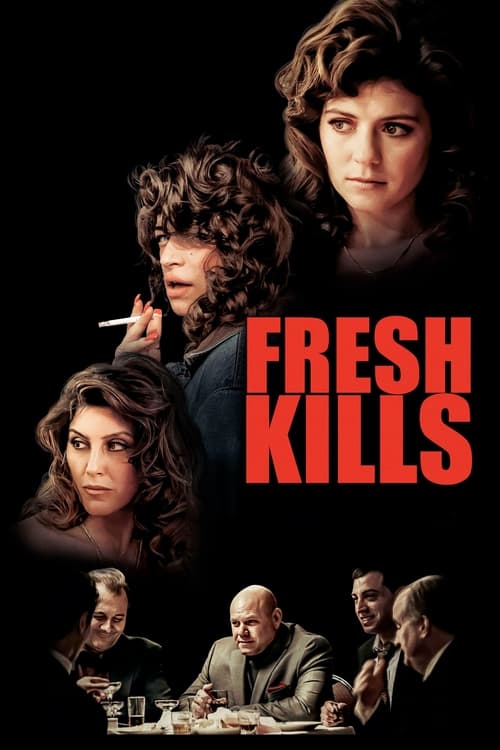
Fresh Kills
The film earned $8K at the global box office.


Plot Structure
Story beats plotted across runtime


Narrative Arc
Emotional journey through the story's key moments
Story Circle
Blueprint 15-beat structure
Structural Analysis
The Status Quo at 1 minutes (1% through the runtime) establishes 1987 Staten Island: Young Francine and Connie play in their backyard while their mother Rose prepares for a family gathering, establishing the facade of domestic normalcy that masks their mob-connected life.. Notably, this early placement immediately immerses viewers in the story world.
The inciting incident occurs at 15 minutes when Young Francine witnesses her father Joe beat a man bloody in their garage while Rose hurries the children away - the first time Francine sees the violence that funds their comfortable life, shattering her innocence.. At 13% through the film, this Disruption is delayed, allowing extended setup of the story world. This beat shifts the emotional landscape, launching the protagonist into the central conflict.
The First Threshold at 30 minutes marks the transition into Act II, occurring at 25% of the runtime. This demonstrates the protagonist's commitment to Time jump to teenage years: Francine actively chooses to question her family's way of life, confronting her mother about the bruises and lies. This marks her conscious decision to seek truth rather than accept the enforced silence., moving from reaction to action.
At 61 minutes, the Midpoint arrives at 51% of the runtime—precisely centered, creating perfect narrative symmetry. Of particular interest, this crucial beat Joe is arrested for murder, exposing the family publicly. The false security of their protected life crumbles as neighbors whisper and the community's respect reveals itself as fear. Rose must face their reality without the shield of willful ignorance., fundamentally raising what's at risk. The emotional intensity shifts, dividing the narrative into clear before-and-after phases.
The Collapse moment at 91 minutes (76% through) represents the emotional nadir. Here, Rose suffers a devastating beating from a mob associate collecting on Joe's debts, and Connie's connected boyfriend is murdered - the violence that funded their life now consumes it. Francine finds her mother broken, the cost of silence made flesh., reveals the protagonist at their lowest point. This beat's placement in the final quarter sets up the climactic reversal.
The Second Threshold at 97 minutes initiates the final act resolution at 80% of the runtime. Francine makes the definitive choice to leave Staten Island and her family behind, recognizing that staying means accepting the violence as normal. She breaks the code of silence by speaking truth to her sister, choosing freedom over loyalty., demonstrating the transformation achieved throughout the journey.
Emotional Journey
Fresh Kills's emotional architecture traces a deliberate progression across 15 carefully calibrated beats.
Narrative Framework
This structural analysis employs proven narrative structure principles that track dramatic progression. By mapping Fresh Kills against these established plot points, we can identify how Jennifer Esposito utilizes or subverts traditional narrative conventions. The plot point approach reveals not only adherence to structural principles but also creative choices that distinguish Fresh Kills within its genre.
Plot Points by Act
Act I
SetupStatus Quo
1987 Staten Island: Young Francine and Connie play in their backyard while their mother Rose prepares for a family gathering, establishing the facade of domestic normalcy that masks their mob-connected life.
Theme
Rose's mother tells young Francine that in their family, "you see nothing, you hear nothing, you say nothing" - establishing the code of silence that will define and eventually suffocate Francine's life.
Worldbuilding
The Larusso household is introduced: Joe's violent temper and mob dealings contrast with Rose's attempts to maintain respectability. Young Francine observes bruises on her mother, overhears whispered conversations, and witnesses the community's deference to her father.
Disruption
Young Francine witnesses her father Joe beat a man bloody in their garage while Rose hurries the children away - the first time Francine sees the violence that funds their comfortable life, shattering her innocence.
Resistance
The family navigates the aftermath of violence while maintaining appearances. Rose debates whether to shield her daughters or prepare them for reality. Francine struggles with what she saw while Connie remains oblivious, showing their divergent paths.
Act II
ConfrontationFirst Threshold
Time jump to teenage years: Francine actively chooses to question her family's way of life, confronting her mother about the bruises and lies. This marks her conscious decision to seek truth rather than accept the enforced silence.
Mirror World
Francine befriends a outsider classmate who questions the neighborhood's mob reverence, offering an external perspective that validates Francine's doubts and represents life beyond the insular Staten Island community.
Premise
Teenage Francine and Connie grow into young women with opposing worldviews. Connie embraces the glamour and protection of mob life, dating connected men. Francine pursues education and questions everything, while Rose tries to hold the family together despite Joe's escalating violence.
Midpoint
Joe is arrested for murder, exposing the family publicly. The false security of their protected life crumbles as neighbors whisper and the community's respect reveals itself as fear. Rose must face their reality without the shield of willful ignorance.
Opposition
With Joe imprisoned, the family fractures. Connie doubles down on mob connections for protection while Francine pulls away. Rose struggles to maintain control as debts are called in and the family's vulnerability is exposed. The sisters' relationship deteriorates as they represent opposing responses to their inheritance.
Collapse
Rose suffers a devastating beating from a mob associate collecting on Joe's debts, and Connie's connected boyfriend is murdered - the violence that funded their life now consumes it. Francine finds her mother broken, the cost of silence made flesh.
Crisis
In the hospital with Rose, Francine and Connie confront the legacy of their upbringing. Connie refuses to see the truth, clinging to the only world she knows. Francine realizes she must break the cycle or become her mother - silenced and brutalized.
Act III
ResolutionSecond Threshold
Francine makes the definitive choice to leave Staten Island and her family behind, recognizing that staying means accepting the violence as normal. She breaks the code of silence by speaking truth to her sister, choosing freedom over loyalty.
Synthesis
Time jump to the 2000s: Francine has built a life away from Staten Island. She returns for a family event, navigating her complicated feelings about Rose, Connie, and the life she escaped. The sisters reach an uneasy understanding, neither fully reconciled nor estranged.
Transformation
Francine watches her own daughter playing freely, without secrets or fear. She has broken the generational curse - her child will not learn to see nothing, hear nothing, say nothing. The silence ends with her.