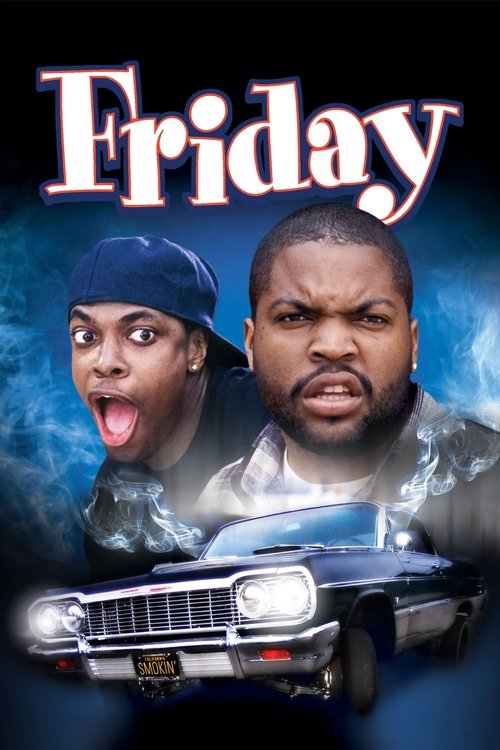
Friday
Craig and Smokey are two guys in Los Angeles hanging out on their porch on a Friday afternoon, smoking and drinking, looking for something to do.
Despite its limited budget of $3.5M, Friday became a massive hit, earning $28.2M worldwide—a remarkable 706% return. The film's unique voice connected with viewers, proving that strong storytelling can transcend budget limitations.


Plot Structure
Story beats plotted across runtime


Narrative Arc
Emotional journey through the story's key moments
Story Circle
Blueprint 15-beat structure
Arcplot Score Breakdown
Weighted: Precision (70%) + Arc (15%) + Theme (15%)
Friday (1995) showcases precise plot construction, characteristic of F. Gary Gray's storytelling approach. This structural analysis examines how the film's 15-point plot structure maps to proven narrative frameworks across 1 hour and 31 minutes. With an Arcplot score of 7.8, the film showcases strong structural fundamentals.
Characters
Cast & narrative archetypes

Craig Jones
Smokey
Deebo
Big Worm
Debbie
Felisha
Mrs. Jones
Mr. Jones
Main Cast & Characters
Craig Jones
Played by Ice Cube
Recently unemployed young man spending a day in South Central LA trying to figure out his life while avoiding neighborhood chaos.
Smokey
Played by Chris Tucker
Craig's best friend, a carefree marijuana dealer who gets them into trouble after smoking product he owes to his supplier.
Deebo
Played by Tommy Lister Jr.
The neighborhood bully who terrorizes residents through intimidation and theft, embodying the main physical threat of the day.
Big Worm
Played by Faizon Love
Smokey's drug supplier who threatens violence when Smokey can't pay the $200 he owes by the end of the day.
Debbie
Played by Nia Long
Craig's love interest, a beautiful woman in the neighborhood who Craig tries to impress throughout the day.
Felisha
Played by Angela Means
Annoying neighborhood woman constantly asking to borrow things, known for mooching off everyone.
Mrs. Jones
Played by Anna Maria Horsford
Craig's no-nonsense mother who pressures him to find a job and disapproves of his hanging out all day.
Mr. Jones
Played by John Witherspoon
Craig's father, a hard-working dog catcher who gives Craig crucial advice about standing up to bullies.
Structural Analysis
The Status Quo at 1 minutes (1% through the runtime) establishes Craig wakes up on a Friday morning in South Central LA, unemployed and aimless. His ordinary world is stagnation - sleeping in, no job, no direction.. Of particular interest, this early placement immediately immerses viewers in the story world.
The inciting incident occurs at 11 minutes when Smokey reveals he smoked Big Worm's product worth $200 and they need to pay by 10pm or face deadly consequences. Craig is pulled into a life-threatening situation.. At 12% through the film, this Disruption aligns precisely with traditional story structure. This beat shifts the emotional landscape, launching the protagonist into the central conflict.
The First Threshold at 23 minutes marks the transition into Act II, occurring at 25% of the runtime. This indicates the protagonist's commitment to Big Worm drives by in his ice cream truck with a gun, making the threat explicit: get the money by 10pm or die. Craig actively chooses to help Smokey find the money rather than walk away., moving from reaction to action.
At 46 minutes, the Midpoint arrives at 50% of the runtime—precisely centered, creating perfect narrative symmetry. Structural examination shows that this crucial beat Deebo physically dominates Craig and Smokey, stealing from them and asserting complete control. The neighborhood bully becomes an additional major threat. Stakes are raised - now they face violence from multiple fronts., fundamentally raising what's at risk. The emotional intensity shifts, dividing the narrative into clear before-and-after phases.
The Collapse moment at 66 minutes (73% through) represents the emotional nadir. Here, Big Worm's crew executes a drive-by shooting at Craig's house. Bullets spray the porch where Craig and his family spend their time. The "whiff of death" is literal - Craig nearly dies, his safe space is destroyed., reveals the protagonist at their lowest point. This beat's placement in the final quarter sets up the climactic reversal.
The Second Threshold at 72 minutes initiates the final act resolution at 79% of the runtime. Craig refuses the gun and decides to confront Deebo with his fists. He synthesizes the lesson - real manhood isn't about weapons or running away, it's about standing up for yourself and your community., demonstrating the transformation achieved throughout the journey.
Emotional Journey
Friday's emotional architecture traces a deliberate progression across 15 carefully calibrated beats.
Narrative Framework
This structural analysis employs proven narrative structure principles that track dramatic progression. By mapping Friday against these established plot points, we can identify how F. Gary Gray utilizes or subverts traditional narrative conventions. The plot point approach reveals not only adherence to structural principles but also creative choices that distinguish Friday within the comedy genre.
F. Gary Gray's Structural Approach
Among the 10 F. Gary Gray films analyzed on Arcplot, the average structural score is 7.3, reflecting strong command of classical structure. Friday represents one of the director's most structurally precise works. For comparative analysis, explore the complete F. Gary Gray filmography.
Comparative Analysis
Additional comedy films include The Bad Guys, Ella Enchanted and The Evening Star. For more F. Gary Gray analyses, see Lift, Set It Off and Men in Black: International.
Plot Points by Act
Act I
SetupStatus Quo
Craig wakes up on a Friday morning in South Central LA, unemployed and aimless. His ordinary world is stagnation - sleeping in, no job, no direction.
Theme
Craig's father tells him: "I know you don't smoke weed, but I'm gonna get you high today." The theme is about perspective, survival, and finding humor in struggle rather than escaping it.
Worldbuilding
Establishes the South Central neighborhood, Craig's relationship with Smokey, the local characters (Ezal, Felicia, Debbie), his family dynamics, and the everyday rhythms of life on the block.
Disruption
Smokey reveals he smoked Big Worm's product worth $200 and they need to pay by 10pm or face deadly consequences. Craig is pulled into a life-threatening situation.
Resistance
Craig debates how to handle the situation. He resists dealing drugs, considers getting a gun. Various neighborhood characters pass by, offering different perspectives on survival and manhood.
Act II
ConfrontationFirst Threshold
Big Worm drives by in his ice cream truck with a gun, making the threat explicit: get the money by 10pm or die. Craig actively chooses to help Smokey find the money rather than walk away.
Mirror World
Craig connects with Debbie, a love interest who represents a life beyond the porch - education, ambition, a future. She embodies what Craig could become if he changes.
Premise
The "day in the life" exploration - hanging on the porch, observing neighborhood chaos, various comedic encounters with local characters, the fun and absurdity of South Central life despite the looming threat.
Midpoint
Deebo physically dominates Craig and Smokey, stealing from them and asserting complete control. The neighborhood bully becomes an additional major threat. Stakes are raised - now they face violence from multiple fronts.
Opposition
Pressure intensifies as the 10pm deadline approaches. Deebo continues terrorizing the neighborhood. Craig's attempts to find money fail. Big Worm orders a drive-by shooting. The antagonistic forces close in.
Collapse
Big Worm's crew executes a drive-by shooting at Craig's house. Bullets spray the porch where Craig and his family spend their time. The "whiff of death" is literal - Craig nearly dies, his safe space is destroyed.
Crisis
Craig processes the violence and fear. His father offers him a gun for protection. Craig must decide what kind of man he'll be - one who uses guns, or one who stands up with his own strength.
Act III
ResolutionSecond Threshold
Craig refuses the gun and decides to confront Deebo with his fists. He synthesizes the lesson - real manhood isn't about weapons or running away, it's about standing up for yourself and your community.
Synthesis
Craig fights and defeats Deebo, liberating the neighborhood from fear. The community rallies behind him. The Big Worm debt is resolved through found money. Craig proves himself without compromising his values.
Transformation
Craig sits on the porch again, but transformed. He has a date with Debbie, the respect of the neighborhood, and self-respect. Same porch, same Friday, but Craig is now a man who stood up rather than one who was knocked down.