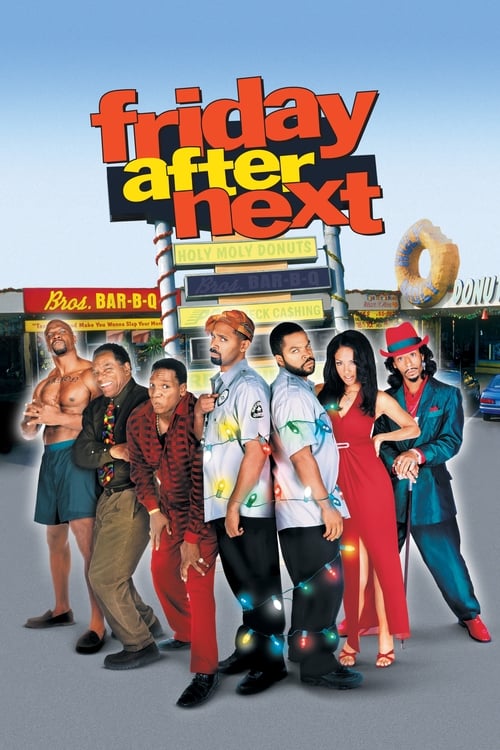
Friday After Next
Craig and his cousin Day Day have finally moved out of their parents' houses and into their own crib, working nights at a local mall as security guards. When their house is robbed on Christmas Eve they set out to track down the culprit.
Working with a respectable budget of $20.0M, the film achieved a modest success with $33.5M in global revenue (+68% profit margin).


Plot Structure
Story beats plotted across runtime


Narrative Arc
Emotional journey through the story's key moments
Story Circle
Blueprint 15-beat structure
Arcplot Score Breakdown
Weighted: Precision (70%) + Arc (15%) + Theme (15%)
Friday After Next (2002) exhibits carefully calibrated story structure, characteristic of Marcus Raboy's storytelling approach. This structural analysis examines how the film's 15-point plot structure maps to proven narrative frameworks across 1 hour and 25 minutes. With an Arcplot score of 7.3, the film balances conventional beats with creative variation.
Characters
Cast & narrative archetypes

Craig Jones
Day-Day Jones
Money Mike
Pinky
Moly
Donna Jones
Damon
Main Cast & Characters
Craig Jones
Played by Ice Cube
Easy-going apartment manager who must recover stolen rent money on Christmas Eve while dealing with eccentric neighbors.
Day-Day Jones
Played by Mike Epps
Craig's enthusiastic cousin and co-worker at the apartment complex, prone to schemes and romantic pursuits.
Money Mike
Played by Katt Williams
Flamboyant pimp turned party promoter who helps Craig and Day-Day in their time of need.
Pinky
Played by Pinky
Seductive neighbor who works at a strip club and becomes romantically involved with Day-Day.
Moly
Played by K.D. Aubert
Craig's love interest who lives in the apartment building and works as a nurse.
Donna Jones
Played by Anna Maria Horsford
Craig and Day-Day's no-nonsense mother who pushes them toward responsibility.
Damon
Played by Rickey Smiley
The Santa Claus imposter who robs Craig and Day-Day's apartment on Christmas Eve.
Structural Analysis
The Status Quo at 1 minutes (1% through the runtime) establishes Craig and Day-Day are living together in a rundown apartment, working as security guards at a strip mall. They're broke but preparing for Christmas, collecting rent money to pay their landlord.. Notably, this early placement immediately immerses viewers in the story world.
The inciting incident occurs at 9 minutes when A Santa Claus impersonator breaks into their apartment on Christmas Eve and steals all their money, presents, and rent. Craig and Day-Day wake up to find everything gone.. At 11% through the film, this Disruption aligns precisely with traditional story structure. This beat shifts the emotional landscape, launching the protagonist into the central conflict.
The First Threshold at 21 minutes marks the transition into Act II, occurring at 24% of the runtime. This shows the protagonist's commitment to Craig and Day-Day actively decide to find the thief themselves and get their money back during their work shift. They commit to solving the mystery rather than giving up or calling the police., moving from reaction to action.
At 41 minutes, the Midpoint arrives at 49% of the runtime—precisely centered, creating perfect narrative symmetry. Of particular interest, this crucial beat Craig and Day-Day identify a prime suspect and believe they're close to recovering their money. They feel confident and empowered, thinking they've cracked the case. False victory., fundamentally raising what's at risk. The emotional intensity shifts, dividing the narrative into clear before-and-after phases.
The Collapse moment at 62 minutes (73% through) represents the emotional nadir. Here, Ms. Pearly arrives to collect the rent money. Craig and Day-Day still don't have it and face eviction. Their situation seems hopeless, and they've failed to catch the thief. The death of their hope and security., reveals the protagonist at their lowest point. This beat's placement in the final quarter sets up the climactic reversal.
The Second Threshold at 66 minutes initiates the final act resolution at 78% of the runtime. Craig and Day-Day piece together the final clues and realize who the real thief is. They gain new information that allows them to locate the stolen money and confront the Santa impersonator., demonstrating the transformation achieved throughout the journey.
Emotional Journey
Friday After Next's emotional architecture traces a deliberate progression across 15 carefully calibrated beats.
Narrative Framework
This structural analysis employs systematic plot point analysis that identifies crucial turning points. By mapping Friday After Next against these established plot points, we can identify how Marcus Raboy utilizes or subverts traditional narrative conventions. The plot point approach reveals not only adherence to structural principles but also creative choices that distinguish Friday After Next within the comedy genre.
Comparative Analysis
Additional comedy films include The Bad Guys, Ella Enchanted and The Evening Star.
Plot Points by Act
Act I
SetupStatus Quo
Craig and Day-Day are living together in a rundown apartment, working as security guards at a strip mall. They're broke but preparing for Christmas, collecting rent money to pay their landlord.
Theme
Uncle Elroy mentions that Christmas is about family and making the best of what you have, not material possessions. This sets up the theme of finding meaning beyond money.
Worldbuilding
Establishment of Craig and Day-Day's world: their apartment, their jobs at the strip mall, their eccentric neighbors, and their financial struggles. Introduction of supporting characters including Pinky, Money Mike, and Donna.
Disruption
A Santa Claus impersonator breaks into their apartment on Christmas Eve and steals all their money, presents, and rent. Craig and Day-Day wake up to find everything gone.
Resistance
Craig and Day-Day debate what to do. They must work their shift at the strip mall while trying to figure out how to get their money back before their landlord, Ms. Pearly, comes to collect rent. They consider various schemes.
Act II
ConfrontationFirst Threshold
Craig and Day-Day actively decide to find the thief themselves and get their money back during their work shift. They commit to solving the mystery rather than giving up or calling the police.
Mirror World
Craig meets Donna, who works at the strip mall. She represents a potential romantic interest and a more grounded, responsible approach to life, contrasting with the chaos around them.
Premise
The fun and games of investigating suspects at the strip mall. Craig and Day-Day encounter various eccentric characters including Money Mike, Pinky, and a host of suspicious individuals, leading to comedic situations and clues.
Midpoint
Craig and Day-Day identify a prime suspect and believe they're close to recovering their money. They feel confident and empowered, thinking they've cracked the case. False victory.
Opposition
Their investigation becomes more complicated. Ms. Pearly gets closer to collecting rent. The real thief stays one step ahead. Conflicts escalate with various strip mall characters. Time is running out.
Collapse
Ms. Pearly arrives to collect the rent money. Craig and Day-Day still don't have it and face eviction. Their situation seems hopeless, and they've failed to catch the thief. The death of their hope and security.
Crisis
Craig and Day-Day hit rock bottom emotionally. They reflect on their failures and situation. Dark moment of despair before finding new resolve.
Act III
ResolutionSecond Threshold
Craig and Day-Day piece together the final clues and realize who the real thief is. They gain new information that allows them to locate the stolen money and confront the Santa impersonator.
Synthesis
The finale confrontation with the thief. Chase sequence and physical comedy as Craig and Day-Day pursue and fight the fake Santa. They recover their money and resolve conflicts with neighbors and Ms. Pearly. Community comes together.
Transformation
Christmas celebration at the apartment with family and friends. Craig and Day-Day have learned the value of community and family over material possessions. They've grown from selfish to community-minded, mirroring the opening but transformed.