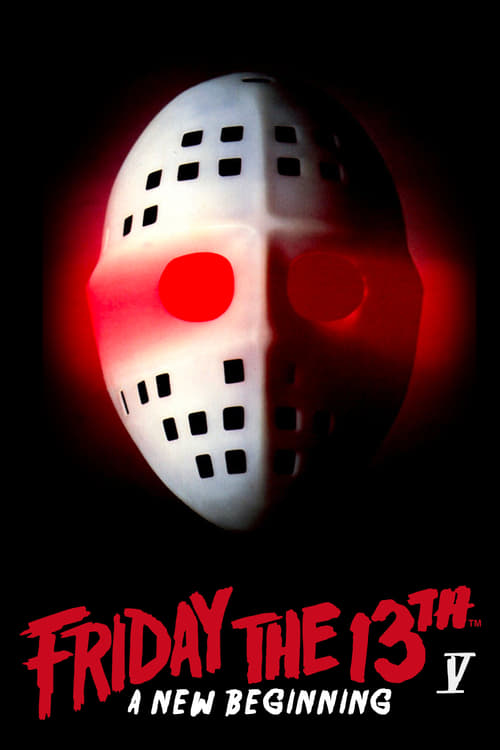
Friday the 13th: A New Beginning
Homicidal maniac Jason returns from the grave to cause more bloody mayhem. Young Tommy may have escaped from Crystal Lake, but he’s still haunted by the gruesome events that happened there. When gory murders start happening at the secluded halfway house for troubled teens where he now lives, it seems like his nightmarish nemesis, Jason, is back for more sadistic slaughters.
Despite its small-scale budget of $2.2M, Friday the 13th: A New Beginning became a commercial juggernaut, earning $21.9M worldwide—a remarkable 897% return. The film's distinctive approach attracted moviegoers, illustrating how strong storytelling can transcend budget limitations.


Plot Structure
Story beats plotted across runtime


Narrative Arc
Emotional journey through the story's key moments
Story Circle
Blueprint 15-beat structure
Arcplot Score Breakdown
Weighted: Precision (70%) + Arc (15%) + Theme (15%)
Friday the 13th: A New Beginning (1985) exhibits meticulously timed dramatic framework, characteristic of Danny Steinmann's storytelling approach. This structural analysis examines how the film's 15-point plot structure maps to proven narrative frameworks across 1 hour and 32 minutes. With an Arcplot score of 7.3, the film balances conventional beats with creative variation.
Characters
Cast & narrative archetypes

Tommy Jarvis
Pam Roberts
Reggie Winter
Roy Burns
Demon
Violet
Matthew Letter
Main Cast & Characters
Tommy Jarvis
Played by John Shepherd
Traumatized young man haunted by Jason Voorhees, now residing at a halfway house for troubled youth.
Pam Roberts
Played by Melanie Kinnaman
Kind and dedicated counselor at the halfway house who tries to protect the residents.
Reggie Winter
Played by Shavar Ross
Young boy who befriends Tommy while visiting his grandfather at the halfway house.
Roy Burns
Played by Dick Wieand
Mysterious paramedic whose son's death triggers a murderous rampage disguised as Jason.
Demon
Played by Miguel A. Núñez Jr.
Hot-headed, violent resident of the halfway house with severe anger issues.
Violet
Played by Tiffany Helm
Rebellious teenage resident obsessed with dancing and music.
Matthew Letter
Played by Richard Young
Director of the halfway house trying to help troubled youth recover.
Structural Analysis
The Status Quo at 1 minutes (1% through the runtime) establishes Young Tommy Jarvis witnesses Jason's grave being desecrated and experiences a nightmare of Jason's resurrection, establishing his traumatized state years after the events of Part 4.. The analysis reveals that this early placement immediately immerses viewers in the story world.
The inciting incident occurs at 11 minutes when Vic brutally murders Joey with an axe after being provoked, shattering the illusion of safety at the halfway house and triggering a series of murders that will traumatize Tommy further.. At 12% through the film, this Disruption aligns precisely with traditional story structure. This beat shifts the emotional landscape, launching the protagonist into the central conflict.
The First Threshold at 23 minutes marks the transition into Act II, occurring at 25% of the runtime. This demonstrates the protagonist's commitment to The first residents are murdered by a masked killer wearing a hockey mask, launching the survival narrative as the body count begins and Tommy must confront his worst fear: Jason's return., moving from reaction to action.
At 46 minutes, the Midpoint arrives at 50% of the runtime—precisely centered, creating perfect narrative symmetry. Notably, this crucial beat The killer murders multiple residents at the halfway house itself, proving nowhere is safe and raising the stakes as the threat closes in on Tommy and Pam directly., fundamentally raising what's at risk. The emotional intensity shifts, dividing the narrative into clear before-and-after phases.
The Collapse moment at 69 minutes (75% through) represents the emotional nadir. Here, Dr. Matt is murdered and the halfway house becomes a slaughterhouse; Tommy has a complete mental breakdown, and Pam believes she will die as the killer corners the final survivors in the barn., demonstrates the protagonist at their lowest point. This beat's placement in the final quarter sets up the climactic reversal.
The Second Threshold at 73 minutes initiates the final act resolution at 80% of the runtime. The killer is revealed to be Roy Burns, a paramedic driven mad by Joey's death (his son), not Jason. This revelation reframes the entire narrative around cycles of trauma and violence rather than supernatural evil., demonstrating the transformation achieved throughout the journey.
Emotional Journey
Friday the 13th: A New Beginning's emotional architecture traces a deliberate progression across 15 carefully calibrated beats.
Narrative Framework
This structural analysis employs systematic plot point analysis that identifies crucial turning points. By mapping Friday the 13th: A New Beginning against these established plot points, we can identify how Danny Steinmann utilizes or subverts traditional narrative conventions. The plot point approach reveals not only adherence to structural principles but also creative choices that distinguish Friday the 13th: A New Beginning within the horror genre.
Danny Steinmann's Structural Approach
Among the 2 Danny Steinmann films analyzed on Arcplot, the average structural score is 7.3, reflecting strong command of classical structure. Friday the 13th: A New Beginning exemplifies the director's characteristic narrative technique. For comparative analysis, explore the complete Danny Steinmann filmography.
Comparative Analysis
Additional horror films include Thinner, A Nightmare on Elm Street and Mary Reilly. For more Danny Steinmann analyses, see Savage Streets.
Plot Points by Act
Act I
SetupStatus Quo
Young Tommy Jarvis witnesses Jason's grave being desecrated and experiences a nightmare of Jason's resurrection, establishing his traumatized state years after the events of Part 4.
Theme
Dr. Matt Letter explains to Pam that the halfway house exists to help troubled teens move past their trauma and reintegrate into society, stating the film's theme about healing versus perpetuating violence.
Worldbuilding
Introduction to Pinehurst Halfway House, its residents (Joey, Vic, Reggie, Jake, Robin, Violet), staff (Pam, Matt), and Tommy's arrival as a deeply disturbed, non-verbal teen still haunted by his encounter with Jason.
Disruption
Vic brutally murders Joey with an axe after being provoked, shattering the illusion of safety at the halfway house and triggering a series of murders that will traumatize Tommy further.
Resistance
Vic is taken away by police; Pam attempts to comfort the residents and help Tommy process the violence. The community tries to return to normalcy while mysterious murders begin in the surrounding area.
Act II
ConfrontationFirst Threshold
The first residents are murdered by a masked killer wearing a hockey mask, launching the survival narrative as the body count begins and Tommy must confront his worst fear: Jason's return.
Mirror World
Pam emerges as Tommy's potential surrogate protector and the film's co-protagonist, representing the nurturing care that could help Tommy heal rather than descend into violence.
Premise
Classic slasher premise unfolds as the killer systematically murders locals and halfway house residents in increasingly creative ways, while Tommy experiences hallucinations of Jason and struggles with his sanity.
Midpoint
The killer murders multiple residents at the halfway house itself, proving nowhere is safe and raising the stakes as the threat closes in on Tommy and Pam directly.
Opposition
The body count escalates rapidly; Tommy's mental state deteriorates as he becomes increasingly violent and unstable; Pam and Reggie try to protect the remaining survivors while the killer hunts them.
Collapse
Dr. Matt is murdered and the halfway house becomes a slaughterhouse; Tommy has a complete mental breakdown, and Pam believes she will die as the killer corners the final survivors in the barn.
Crisis
Pam and Reggie face the killer alone in desperate flight, believing they have no hope of survival as the killer relentlessly pursues them through the property.
Act III
ResolutionSecond Threshold
The killer is revealed to be Roy Burns, a paramedic driven mad by Joey's death (his son), not Jason. This revelation reframes the entire narrative around cycles of trauma and violence rather than supernatural evil.
Synthesis
Pam and Reggie fight Roy; Tommy appears to help them defeat the killer; Roy falls to his death on farm equipment; the survivors escape and Tommy is hospitalized, seemingly on the path to recovery.
Transformation
Tommy appears in Pam's doorway wearing a hockey mask and holding a knife, revealing that witnessing more violence has not healed him but transformed him into the very thing he feared—the cycle continues.