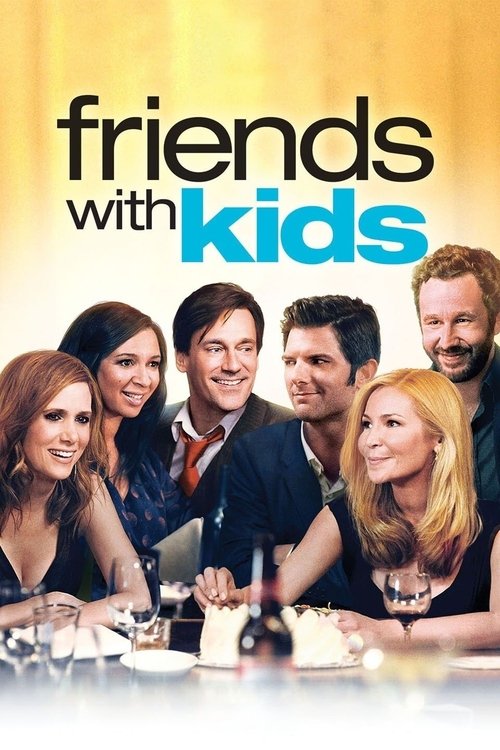
Friends with Kids
In the wake of their friends' marriages and eventual offspring, longtime pals Julie and Jason decide to have a child together without becoming a couple. By becoming "time-share" parents, they reason, they can experience the joys of parenthood without significantly curbing their personal freedom. However, when Julie and Jason both become involved with others, they discover that they secretly harbor romantic feelings for each other.
The film earned $12.2M at the global box office.


Plot Structure
Story beats plotted across runtime


Narrative Arc
Emotional journey through the story's key moments
Story Circle
Blueprint 15-beat structure
Arcplot Score Breakdown
Weighted: Precision (70%) + Arc (15%) + Theme (15%)
Friends with Kids (2012) showcases deliberately positioned dramatic framework, characteristic of Jennifer Westfeldt's storytelling approach. This structural analysis examines how the film's 15-point plot structure maps to proven narrative frameworks across 1 hour and 40 minutes. With an Arcplot score of 7.1, the film balances conventional beats with creative variation.
Characters
Cast & narrative archetypes

Julie Keller
Jason Fryman
Leslie
Alex
Missy
Ben
Mary Jane
Kurt
Main Cast & Characters
Julie Keller
Played by Jennifer Westfeldt
A single woman in her thirties who decides to have a baby with her best friend Jason without the complications of a romantic relationship.
Jason Fryman
Played by Adam Scott
Julie's best friend and business partner who agrees to co-parent with her while maintaining separate romantic lives.
Leslie
Played by Maya Rudolph
Julie's married friend whose relationship deteriorates under the stress of parenthood, becoming bitter and resentful.
Alex
Played by Chris O'Dowd
Leslie's husband who struggles with the challenges of marriage and parenthood, growing distant from his wife.
Missy
Played by Kristen Wiig
Another married friend whose perfect-seeming marriage shows cracks as parenting pressures mount.
Ben
Played by Jon Hamm
Missy's husband, part of the married couple whose relationship experiences strain after having children.
Mary Jane
Played by Megan Fox
A younger woman Jason dates seriously, creating tension in his co-parenting arrangement with Julie.
Kurt
Played by Edward Burns
A divorced father Julie dates, representing a more traditional romantic prospect.
Structural Analysis
The Status Quo at 1 minutes (1% through the runtime) establishes Jason and Julie are best friends enjoying their child-free Manhattan lifestyle, watching their married friends struggle with parenthood at dinner parties.. Of particular interest, this early placement immediately immerses viewers in the story world.
The inciting incident occurs at 11 minutes when Jason proposes the radical idea: he and Julie should have a baby together platonically, avoiding the relationship pitfalls their friends face.. At 11% through the film, this Disruption aligns precisely with traditional story structure. This beat shifts the emotional landscape, launching the protagonist into the central conflict.
The First Threshold at 24 minutes marks the transition into Act II, occurring at 24% of the runtime. This illustrates the protagonist's commitment to Jason and Julie actively decide to proceed with their plan, beginning attempts to conceive their child together while remaining just friends., moving from reaction to action.
At 50 minutes, the Midpoint arrives at 50% of the runtime—precisely centered, creating perfect narrative symmetry. Of particular interest, this crucial beat False victory: The arrangement seems to be working perfectly - both have romantic partners, the baby is thriving, and they've avoided their friends' relationship problems., fundamentally raising what's at risk. The emotional intensity shifts, dividing the narrative into clear before-and-after phases.
The Collapse moment at 75 minutes (75% through) represents the emotional nadir. Here, During a ski trip, tensions explode - their friends confront them about their denial, revealing their arrangement has been damaging and dishonest. The perfect plan dies., reveals the protagonist at their lowest point. This beat's placement in the final quarter sets up the climactic reversal.
The Second Threshold at 79 minutes initiates the final act resolution at 79% of the runtime. Julie realizes the truth: you can't have authentic love without risk. She must be honest about her feelings for Jason, even if it means losing everything., demonstrating the transformation achieved throughout the journey.
Emotional Journey
Friends with Kids's emotional architecture traces a deliberate progression across 15 carefully calibrated beats.
Narrative Framework
This structural analysis employs proven narrative structure principles that track dramatic progression. By mapping Friends with Kids against these established plot points, we can identify how Jennifer Westfeldt utilizes or subverts traditional narrative conventions. The plot point approach reveals not only adherence to structural principles but also creative choices that distinguish Friends with Kids within the comedy genre.
Comparative Analysis
Additional comedy films include The Bad Guys, Ella Enchanted and The Evening Star.
Plot Points by Act
Act I
SetupStatus Quo
Jason and Julie are best friends enjoying their child-free Manhattan lifestyle, watching their married friends struggle with parenthood at dinner parties.
Theme
One of their married friends comments on how having kids changes everything about relationships and happiness - the question: can you have both?
Worldbuilding
Establishing Jason and Julie's platonic friendship, their coupled friends' deteriorating relationships due to parenting stress, and both protagonists' desires for children without relationship complications.
Disruption
Jason proposes the radical idea: he and Julie should have a baby together platonically, avoiding the relationship pitfalls their friends face.
Resistance
Jason and Julie debate the unconventional arrangement, discuss logistics, face skepticism from friends, and wrestle with whether this plan could actually work.
Act II
ConfrontationFirst Threshold
Jason and Julie actively decide to proceed with their plan, beginning attempts to conceive their child together while remaining just friends.
Mirror World
Julie becomes pregnant. Both begin dating other people - Jason meets Mary Jane, Julie meets Kurt - romantic relationships that will test their unconventional arrangement.
Premise
The "fun" of their arrangement: co-parenting baby Joe while maintaining separate dating lives, appearing to have solved the parenthood-romance dilemma their friends couldn't.
Midpoint
False victory: The arrangement seems to be working perfectly - both have romantic partners, the baby is thriving, and they've avoided their friends' relationship problems.
Opposition
Cracks appear: jealousy emerges between Jason and Julie over their respective partners, their friends' marriages show signs of healing, complications of divided loyalties surface.
Collapse
During a ski trip, tensions explode - their friends confront them about their denial, revealing their arrangement has been damaging and dishonest. The perfect plan dies.
Crisis
Jason and Julie separately process the confrontation, realizing they've been in love with each other all along but terrified to risk their friendship and co-parenting arrangement.
Act III
ResolutionSecond Threshold
Julie realizes the truth: you can't have authentic love without risk. She must be honest about her feelings for Jason, even if it means losing everything.
Synthesis
Julie confronts Jason with her true feelings. After initial resistance and fear, Jason admits he loves her too. They commit to a real romantic relationship, accepting the risk.
Transformation
Jason, Julie, and Joe together as a real family - transformed from friends avoiding risk to partners embracing love's uncertainty, mirroring the opening but now complete.