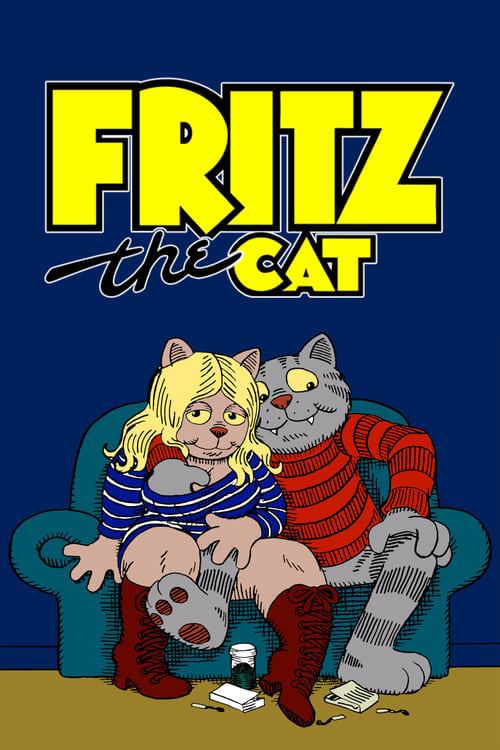
Fritz the Cat
A swinging, hypocritical college student cat raises hell in a satirical vision of the 1960s.
Despite its minimal budget of $850K, Fritz the Cat became a box office phenomenon, earning $90.0M worldwide—a remarkable 10488% return. The film's bold vision connected with viewers, showing that strong storytelling can transcend budget limitations.


Plot Structure
Story beats plotted across runtime


Narrative Arc
Emotional journey through the story's key moments
Story Circle
Blueprint 15-beat structure
Arcplot Score Breakdown
Weighted: Precision (70%) + Arc (15%) + Theme (15%)
Fritz the Cat (1972) demonstrates meticulously timed narrative architecture, characteristic of Ralph Bakshi's storytelling approach. This structural analysis examines how the film's 15-point plot structure maps to proven narrative frameworks across 1 hour and 18 minutes. With an Arcplot score of 7.1, the film balances conventional beats with creative variation.
Characters
Cast & narrative archetypes

Fritz
Winston Schwartz
Blue
Duke the Crow
Bertha
The Fox
Harriet
Main Cast & Characters
Fritz
Played by Skip Hinnant
A hedonistic anthropomorphic cat college student seeking meaning through sex, drugs, and revolution in 1960s counterculture.
Winston Schwartz
Played by Ralph Bakshi
Fritz's neurotic, intellectual crow friend who gets caught up in Fritz's misadventures.
Blue
Played by Rosetta LeNoire
A seductive female cat who becomes one of Fritz's romantic interests in Harlem.
Duke the Crow
Played by John McCurry
A militant revolutionary crow leader in Harlem who espouses radical ideology.
Bertha
Played by Judy Engles
A voluptuous aardvark activist and bathtub mate who represents the free love movement.
The Fox
Played by Phil Seuling
A smooth-talking, drug-dealing fox who provides narcotics and represents the underground economy.
Harriet
Played by Rosetta LeNoire
Fritz's possessive on-and-off girlfriend who represents conventional relationships.
Structural Analysis
The Status Quo at 1 minutes (1% through the runtime) establishes Fritz in Washington Square Park philosophizing with college girls, portraying himself as an intellectual while living a superficial countercultural lifestyle.. Of particular interest, this early placement immediately immerses viewers in the story world.
The inciting incident occurs at 9 minutes when Police raid the party in Fritz's bathtub, forcing him to flee and disrupting his comfortable college existence.. At 11% through the film, this Disruption aligns precisely with traditional story structure. This beat shifts the emotional landscape, launching the protagonist into the central conflict.
The First Threshold at 19 minutes marks the transition into Act II, occurring at 24% of the runtime. This demonstrates the protagonist's commitment to Fritz actively chooses to leave New York City and hit the road, embarking on a cross-country journey seeking meaning and authentic experience., moving from reaction to action.
At 38 minutes, the Midpoint arrives at 49% of the runtime—precisely centered, creating perfect narrative symmetry. Significantly, this crucial beat Fritz's experiences at the commune reveal the emptiness and hypocrisy beneath countercultural idealism, a false defeat showing him his quest is hollow., fundamentally raising what's at risk. The emotional intensity shifts, dividing the narrative into clear before-and-after phases.
The Collapse moment at 58 minutes (74% through) represents the emotional nadir. Here, Catastrophic violence erupts; Fritz's reckless actions lead to destruction and death, shattering his illusions about consequence-free rebellion., illustrates the protagonist at their lowest point. This beat's placement in the final quarter sets up the climactic reversal.
The Second Threshold at 61 minutes initiates the final act resolution at 79% of the runtime. Fritz recognizes the emptiness of his journey and attempts to return or escape the consequences of his actions, seeing through his own pretensions., demonstrating the transformation achieved throughout the journey.
Emotional Journey
Fritz the Cat's emotional architecture traces a deliberate progression across 15 carefully calibrated beats.
Narrative Framework
This structural analysis employs proven narrative structure principles that track dramatic progression. By mapping Fritz the Cat against these established plot points, we can identify how Ralph Bakshi utilizes or subverts traditional narrative conventions. The plot point approach reveals not only adherence to structural principles but also creative choices that distinguish Fritz the Cat within the animation genre.
Ralph Bakshi's Structural Approach
Among the 5 Ralph Bakshi films analyzed on Arcplot, the average structural score is 7.2, reflecting strong command of classical structure. Fritz the Cat takes a more unconventional approach compared to the director's typical style. For comparative analysis, explore the complete Ralph Bakshi filmography.
Comparative Analysis
Additional animation films include The Bad Guys, Puss in Boots and Violet Evergarden: Eternity and the Auto Memory Doll. For more Ralph Bakshi analyses, see The Lord of the Rings, Wizards and Cool World.
Plot Points by Act
Act I
SetupStatus Quo
Fritz in Washington Square Park philosophizing with college girls, portraying himself as an intellectual while living a superficial countercultural lifestyle.
Theme
A character discusses the emptiness of the bourgeois lifestyle and the search for authentic experience, establishing the theme of false rebellion versus genuine transformation.
Worldbuilding
Introduction to Fritz's world of 1960s counterculture: college life, parties, casual relationships, marijuana use, and pseudo-intellectual posturing among university students.
Disruption
Police raid the party in Fritz's bathtub, forcing him to flee and disrupting his comfortable college existence.
Resistance
Fritz debates his next move, explores Harlem seeking "authentic" experience, encounters revolutionary rhetoric, and contemplates leaving his old life behind.
Act II
ConfrontationFirst Threshold
Fritz actively chooses to leave New York City and hit the road, embarking on a cross-country journey seeking meaning and authentic experience.
Mirror World
Fritz meets a female character who serves as a romantic interest and mirror to his journey, representing a more genuine connection than his previous superficial encounters.
Premise
Fritz's road trip adventures: encounters with various countercultural figures, drug experiences, commune life, and exploration of the promised freedom of 1960s rebellion.
Midpoint
Fritz's experiences at the commune reveal the emptiness and hypocrisy beneath countercultural idealism, a false defeat showing him his quest is hollow.
Opposition
Escalating chaos as Fritz becomes involved with radical activism, violence intensifies, and his actions have increasingly serious consequences. Reality closes in.
Collapse
Catastrophic violence erupts; Fritz's reckless actions lead to destruction and death, shattering his illusions about consequence-free rebellion.
Crisis
Fritz confronts the aftermath of violence and destruction, processing the death of his naive worldview and superficial revolutionary posturing.
Act III
ResolutionSecond Threshold
Fritz recognizes the emptiness of his journey and attempts to return or escape the consequences of his actions, seeing through his own pretensions.
Synthesis
Final confrontation and resolution as Fritz faces the full consequences of his actions and the failure of his quest for meaning through rebellion.
Transformation
Fritz hospitalized and broken, his girlfriend rejects him violently. The closing image shows him unchanged in essence - a negative/corruption arc where superficiality persists despite catastrophe.