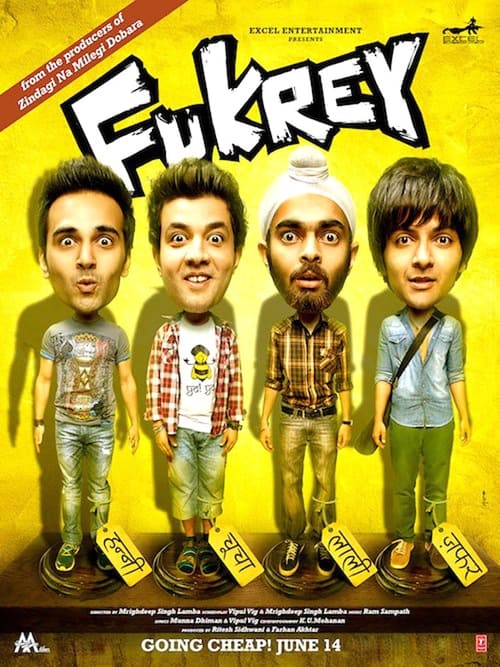
Fukrey
The paths of four dream-chasing college friends cross with an array of colourful characters, from a tough-talking Punjabi female don to a Jugaad Baaz college watchman. Mayhem ensues.
Despite its limited budget of $2.2M, Fukrey became a financial success, earning $5.2M worldwide—a 136% return.


Plot Structure
Story beats plotted across runtime


Narrative Arc
Emotional journey through the story's key moments
Story Circle
Blueprint 15-beat structure
Arcplot Score Breakdown
Weighted: Precision (70%) + Arc (15%) + Theme (15%)
Fukrey (2013) reveals deliberately positioned narrative design, characteristic of Mrighdeep Singh Lamba's storytelling approach. This structural analysis examines how the film's 15-point plot structure maps to proven narrative frameworks across 2 hours and 17 minutes. With an Arcplot score of 7.3, the film balances conventional beats with creative variation.
Characters
Cast & narrative archetypes

Hunny
Choocha
Lali
Zafar
Bholi Punjaban
Priya
Pandit
Main Cast & Characters
Hunny
Played by Pulkit Samrat
A Delhi college student who has prophetic dreams and becomes the reluctant visionary of the group's get-rich-quick schemes.
Choocha
Played by Varun Sharma
An innocent, simple-minded dreamer whose premonitions about lottery numbers drive the group's adventures.
Lali
Played by Manjot Singh
A street-smart musician and aspiring guitarist who is the most level-headed member of the fukrey gang.
Zafar
Played by Ali Fazal
The charming, smooth-talking member of the group who juggles multiple girlfriends while pursuing education.
Bholi Punjaban
Played by Richa Chadha
A ruthless female gangster and lottery operator who becomes the group's dangerous antagonist when they owe her money.
Priya
Played by Priya Anand
Hunny's love interest, a practical young woman who becomes involved in the group's chaotic schemes.
Pandit
Played by Pankaj Tripathi
Bholi Punjaban's loyal right-hand man and enforcer who helps collect debts and intimidate the fukrey gang.
Structural Analysis
The Status Quo at 2 minutes (1% through the runtime) establishes Four Delhi slackers living aimless lives - Hunny runs a small business, Choocha is a dreamer, Zafar wants to study music, and Lali assists his father. They dream of easy money and success but lack direction.. The analysis reveals that this early placement immediately immerses viewers in the story world.
The inciting incident occurs at 16 minutes when Hunny discovers that Choocha's bizarre dreams accurately predict lottery numbers. This revelation changes everything - they now have a potential path to the wealth they've been craving.. At 12% through the film, this Disruption aligns precisely with traditional story structure. This beat shifts the emotional landscape, launching the protagonist into the central conflict.
The First Threshold at 33 minutes marks the transition into Act II, occurring at 24% of the runtime. This indicates the protagonist's commitment to Desperate for betting money, they approach local gangster Bholi Punjaban for a loan. This irreversible decision pulls them into the criminal underworld and sets the main plot in motion., moving from reaction to action.
At 69 minutes, the Midpoint arrives at 50% of the runtime—precisely centered, creating perfect narrative symmetry. The analysis reveals that this crucial beat False defeat: Choocha loses his ability to have prophetic dreams after a head injury. The group panics as their golden goose stops laying eggs, and they still owe Bholi Punjaban a fortune. Stakes are raised., fundamentally raising what's at risk. The emotional intensity shifts, dividing the narrative into clear before-and-after phases.
The Collapse moment at 102 minutes (75% through) represents the emotional nadir. Here, Bholi Punjaban captures them and threatens their lives. The group hits rock bottom - beaten, humiliated, and facing death. Their friendship fractures under pressure as they blame each other. Their dreams are dead., reveals the protagonist at their lowest point. This beat's placement in the final quarter sets up the climactic reversal.
The Second Threshold at 109 minutes initiates the final act resolution at 79% of the runtime. The friends reconcile and realize they must work together using their actual talents and intelligence, not supernatural shortcuts. They devise a clever plan to outsmart Bholi and escape using teamwork and ingenuity., demonstrating the transformation achieved throughout the journey.
Emotional Journey
Fukrey's emotional architecture traces a deliberate progression across 15 carefully calibrated beats.
Narrative Framework
This structural analysis employs structural analysis methodology used to understand storytelling architecture. By mapping Fukrey against these established plot points, we can identify how Mrighdeep Singh Lamba utilizes or subverts traditional narrative conventions. The plot point approach reveals not only adherence to structural principles but also creative choices that distinguish Fukrey within the comedy genre.
Comparative Analysis
Additional comedy films include The Bad Guys, Ella Enchanted and The Evening Star.
Plot Points by Act
Act I
SetupStatus Quo
Four Delhi slackers living aimless lives - Hunny runs a small business, Choocha is a dreamer, Zafar wants to study music, and Lali assists his father. They dream of easy money and success but lack direction.
Theme
Zafar's father tells him that shortcuts and get-rich-quick schemes never work - "Mehnat ka koi shortcut nahi hota" (There's no shortcut to hard work). The film explores whether this wisdom holds true.
Worldbuilding
Introduction to the four friends' world in Delhi, their individual struggles, family pressures, and desperate desire to make quick money. Hunny meets Priya and wants to impress her. Choocha's strange prophetic dreams are established.
Disruption
Hunny discovers that Choocha's bizarre dreams accurately predict lottery numbers. This revelation changes everything - they now have a potential path to the wealth they've been craving.
Resistance
The group debates whether to trust Choocha's visions. They test his predictions, discuss the risks, and plan how to use this gift. Hunny tries to get admission to college to stay close to Priya. They need capital to place bets.
Act II
ConfrontationFirst Threshold
Desperate for betting money, they approach local gangster Bholi Punjaban for a loan. This irreversible decision pulls them into the criminal underworld and sets the main plot in motion.
Mirror World
Hunny's relationship with Priya deepens. She represents legitimate success through education and hard work - the opposite of their shortcut scheme. Her values challenge Hunny's choices.
Premise
The fun and games of using Choocha's dreams to win money. Initial successes, celebrating their wins, living the high life, and believing they've found the perfect scheme. Everything seems to be working perfectly.
Midpoint
False defeat: Choocha loses his ability to have prophetic dreams after a head injury. The group panics as their golden goose stops laying eggs, and they still owe Bholi Punjaban a fortune. Stakes are raised.
Opposition
Bholi Punjaban turns from partner to threat, demanding her share of profits they can no longer generate. The boys try desperate schemes to trigger Choocha's dreams again. Pressure mounts from all sides - families, gangsters, debt.
Collapse
Bholi Punjaban captures them and threatens their lives. The group hits rock bottom - beaten, humiliated, and facing death. Their friendship fractures under pressure as they blame each other. Their dreams are dead.
Crisis
In captivity, the four friends confront their mistakes and the consequences of chasing shortcuts. Dark night where they must accept that their scheme has destroyed everything and face who they've become.
Act III
ResolutionSecond Threshold
The friends reconcile and realize they must work together using their actual talents and intelligence, not supernatural shortcuts. They devise a clever plan to outsmart Bholi and escape using teamwork and ingenuity.
Synthesis
The finale where the Fukrey gang executes their plan, using each person's unique skills. They manage to turn the tables on Bholi Punjaban, resolve their debts through honest cleverness, and escape the criminal world.
Transformation
The four friends back where they started in Delhi, but transformed. No longer chasing shortcuts, they're pursuing legitimate goals - Zafar in music school, Hunny with Priya, working honestly. They've learned that friendship and integrity trump easy money.