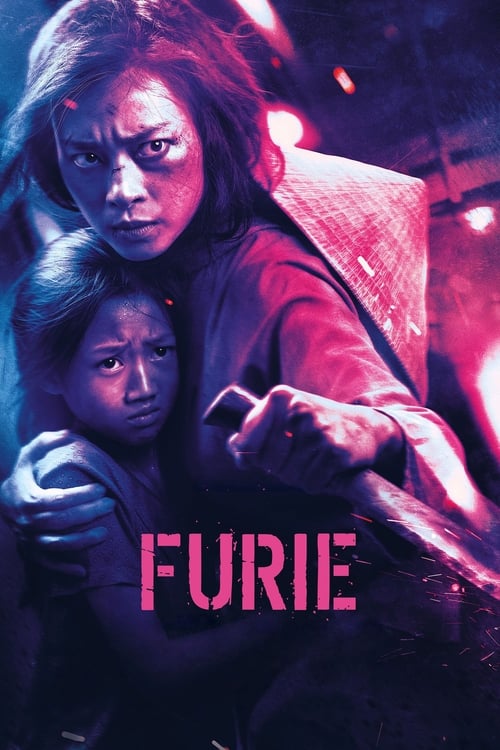
Furie
When a little girl is kidnapped by a trafficking ring, they soon find they messed with the wrong child. Her mother, a notorious former gang leader, is close on their trail and will go to any lengths to bring her child home.
Despite its small-scale budget of $1.0M, Furie became a box office success, earning $4.8M worldwide—a 382% return. The film's innovative storytelling found its audience, demonstrating that strong storytelling can transcend budget limitations.


Plot Structure
Story beats plotted across runtime


Narrative Arc
Emotional journey through the story's key moments
Story Circle
Blueprint 15-beat structure
Arcplot Score Breakdown
Weighted: Precision (70%) + Arc (15%) + Theme (15%)
Furie (2019) exhibits deliberately positioned narrative architecture, characteristic of Le Van Kiet's storytelling approach. This structural analysis examines how the film's 15-point plot structure maps to proven narrative frameworks across 1 hour and 38 minutes. With an Arcplot score of 7.4, the film balances conventional beats with creative variation.
Characters
Cast & narrative archetypes

Hai Phuong
Mai
Luong
Thanh Soi
Sister Nhung
Main Cast & Characters
Hai Phuong
Played by Veronica Ngo
A former gangster turned debt collector who fights through a human trafficking ring to rescue her kidnapped daughter
Mai
Played by Cat Vy
Hai Phuong's young daughter who is kidnapped by human traffickers
Luong
Played by Phan Thanh Nhien
A sympathetic police detective who assists Hai Phuong in her search for her daughter
Thanh Soi
Played by Hoa Thuan
The ruthless leader of the human trafficking organization
Sister Nhung
Played by Nguyen Ngoc Tuong San
A corrupt nun involved in the trafficking operation
Structural Analysis
The Status Quo at 1 minutes (1% through the runtime) establishes Hai Phượng works as a humble fish vendor in the Mekong Delta, living a quiet, peaceful life with her young daughter Mai. The opening establishes her as a devoted single mother who has left behind a violent past.. The analysis reveals that this early placement immediately immerses viewers in the story world.
The inciting incident occurs at 12 minutes when Mai is violently kidnapped by human traffickers in broad daylight. Hai Phượng witnesses the abduction but cannot prevent it. This shattering event destroys her peaceful life and forces her to confront her past.. At 12% through the film, this Disruption aligns precisely with traditional story structure. This beat shifts the emotional landscape, launching the protagonist into the central conflict.
The First Threshold at 25 minutes marks the transition into Act II, occurring at 26% of the runtime. This illustrates the protagonist's commitment to Hai Phượng makes the active choice to fully embrace her violent past and enter Saigon's criminal underworld. She crosses from her rural life into the dangerous urban world of traffickers, fully committing to whatever it takes to find her daughter., moving from reaction to action.
At 49 minutes, the Midpoint arrives at 50% of the runtime—precisely centered, creating perfect narrative symmetry. Significantly, this crucial beat Hai Phượng discovers the full scope of the trafficking operation: it's not just kidnapping, but organ harvesting from children. The stakes raise dramatically as she realizes Mai has very little time left. What seemed like a rescue mission becomes a race against death. False defeat: the network is bigger and more powerful than she imagined., fundamentally raising what's at risk. The emotional intensity shifts, dividing the narrative into clear before-and-after phases.
The Collapse moment at 72 minutes (73% through) represents the emotional nadir. Here, Hai Phượng is severely injured in a brutal confrontation and nearly captured or killed. She hits her lowest point, bloodied and exhausted, seemingly too late to save Mai. The whiff of death: she may die before reaching her daughter, or Mai may already be dead. All seems lost., demonstrates the protagonist at their lowest point. This beat's placement in the final quarter sets up the climactic reversal.
The Second Threshold at 78 minutes initiates the final act resolution at 80% of the runtime. Hai Phượng receives critical information about the trafficking headquarters' location, or synthesizes clues to pinpoint where Mai is being held. She rises from her collapse with clarity and final determination. The synthesis of her maternal love and warrior skills creates unstoppable resolve for the final assault., demonstrating the transformation achieved throughout the journey.
Emotional Journey
Furie's emotional architecture traces a deliberate progression across 15 carefully calibrated beats.
Narrative Framework
This structural analysis employs systematic plot point analysis that identifies crucial turning points. By mapping Furie against these established plot points, we can identify how Le Van Kiet utilizes or subverts traditional narrative conventions. The plot point approach reveals not only adherence to structural principles but also creative choices that distinguish Furie within the action genre.
Comparative Analysis
Additional action films include The Bad Guys, Puss in Boots and Venom: The Last Dance.
Plot Points by Act
Act I
SetupStatus Quo
Hai Phượng works as a humble fish vendor in the Mekong Delta, living a quiet, peaceful life with her young daughter Mai. The opening establishes her as a devoted single mother who has left behind a violent past.
Theme
A neighbor or local character comments on the fierce protective nature of mothers, or the lengths a parent will go to protect their child. This establishes the film's central theme: maternal love transcends all boundaries, even violence.
Worldbuilding
The setup establishes Hai Phượng's loving relationship with Mai, their humble circumstances in rural Vietnam, and hints at Hai Phượng's mysterious past. We see their daily routine, her struggles to provide for her daughter, and the deep bond between mother and child.
Disruption
Mai is violently kidnapped by human traffickers in broad daylight. Hai Phượng witnesses the abduction but cannot prevent it. This shattering event destroys her peaceful life and forces her to confront her past.
Resistance
Hai Phượng grapples with the decision to pursue the kidnappers, knowing it means returning to violence. She gathers information, reconnects with old contacts from her criminal past, and prepares for the journey to Saigon. There's internal debate about whether she can save Mai alone.
Act II
ConfrontationFirst Threshold
Hai Phượng makes the active choice to fully embrace her violent past and enter Saigon's criminal underworld. She crosses from her rural life into the dangerous urban world of traffickers, fully committing to whatever it takes to find her daughter.
Mirror World
Introduction of the police investigator who is also pursuing the trafficking ring. This subplot represents the lawful, institutional approach to justice, mirroring and contrasting with Hai Phượng's personal, violent quest. The investigator embodies the theme of justice through different means.
Premise
The promise of the premise: a mother unleashing her lethal skills to tear through the criminal underworld. Hai Phượng fights through multiple layers of the trafficking organization, showcasing intense martial arts and combat sequences. She follows leads, confronts former associates, and demonstrates why she was feared in her past life.
Midpoint
Hai Phượng discovers the full scope of the trafficking operation: it's not just kidnapping, but organ harvesting from children. The stakes raise dramatically as she realizes Mai has very little time left. What seemed like a rescue mission becomes a race against death. False defeat: the network is bigger and more powerful than she imagined.
Opposition
The traffickers and corrupt officials close in on Hai Phượng. She faces increasingly dangerous opposition, betrayals from old contacts, and the ticking clock of Mai's survival. Her isolation grows as the criminal network fights back. The investigator's subplot intensifies but remains separate from her quest.
Collapse
Hai Phượng is severely injured in a brutal confrontation and nearly captured or killed. She hits her lowest point, bloodied and exhausted, seemingly too late to save Mai. The whiff of death: she may die before reaching her daughter, or Mai may already be dead. All seems lost.
Crisis
In her darkest moment, Hai Phượng processes the physical and emotional toll. She confronts the possibility of failure and death, but finds renewed resolve in her love for Mai. The dark night of the soul where she must find the strength to continue despite overwhelming odds.
Act III
ResolutionSecond Threshold
Hai Phượng receives critical information about the trafficking headquarters' location, or synthesizes clues to pinpoint where Mai is being held. She rises from her collapse with clarity and final determination. The synthesis of her maternal love and warrior skills creates unstoppable resolve for the final assault.
Synthesis
The finale: Hai Phượng storms the trafficking operation's headquarters in an extended action sequence. She fights through waves of criminals, confronts the main antagonist Thanh Sói, and rescues Mai before the organ harvesting can occur. The police investigator's subplot converges, exposing the corruption. Mother and daughter are reunited.
Transformation
Hai Phượng and Mai embrace, reunited and alive. Unlike the opening image of peaceful domesticity, this closing image shows a mother who has integrated both identities: the loving caregiver and the fierce protector. She has transformed through accepting that her violent past was necessary to save her daughter's future.