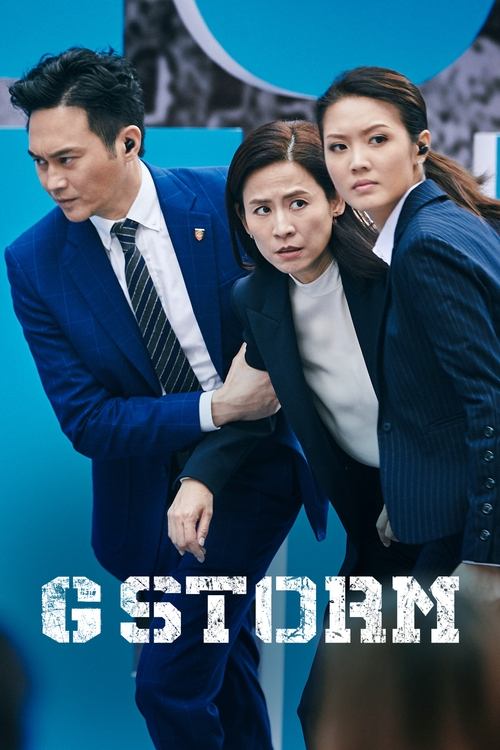
G Storm
Follows an investigator as he prevents a terrorist attack during a symposium held by Hong Kong's Independent Commission Against Corruption. He later finds it has links to human trafficking in Thailand.
The film earned $55.5M at the global box office.


Plot Structure
Story beats plotted across runtime


Narrative Arc
Emotional journey through the story's key moments
Story Circle
Blueprint 15-beat structure
Arcplot Score Breakdown
Weighted: Precision (70%) + Arc (15%) + Theme (15%)
G Storm (2021) showcases meticulously timed narrative architecture, characteristic of David Lam Tak-Luk's storytelling approach. This structural analysis examines how the film's 15-point plot structure maps to proven narrative frameworks across 1 hour and 33 minutes. With an Arcplot score of 7.6, the film showcases strong structural fundamentals.
Characters
Cast & narrative archetypes

William Luk
Lau Po-keung
Eva Ng
Gao Yat-kin
King-to
Ching Tak-ming
Main Cast & Characters
William Luk
Played by Louis Koo
ICAC Chief Investigator leading the fight against corruption in a money laundering case
Lau Po-keung
Played by Julian Cheung
JFIU officer collaborating with ICAC on the financial investigation
Eva Ng
Played by Jessica Hester Hsuan
ICAC investigator working closely with William Luk on the case
Gao Yat-kin
Played by Kevin Cheng
Powerful businessman involved in the money laundering scheme
King-to
Played by Patrick Tam
Criminal syndicate member connected to the corruption network
Ching Tak-ming
Played by Bosco Wong
ICAC Principal Investigator and William Luk's superior
Structural Analysis
The Status Quo at 1 minutes (1% through the runtime) establishes William Luk leads ICAC's investigation division, maintaining Hong Kong's reputation as a clean, corruption-free financial hub. He's respected, methodical, and dedicated to rooting out institutional fraud.. Structural examination shows that this early placement immediately immerses viewers in the story world.
The inciting incident occurs at 11 minutes when Luk discovers a massive cross-border money laundering operation involving respected businessmen and possibly compromised officials. The case is far bigger and more dangerous than initially suspected.. At 12% through the film, this Disruption aligns precisely with traditional story structure. This beat shifts the emotional landscape, launching the protagonist into the central conflict.
The First Threshold at 24 minutes marks the transition into Act II, occurring at 26% of the runtime. This reveals the protagonist's commitment to Luk makes the active choice to pursue the full investigation despite warnings from superiors. He commits to taking down the entire network, knowing it will make him a target., moving from reaction to action.
At 47 minutes, the Midpoint arrives at 50% of the runtime—precisely centered, creating perfect narrative symmetry. Notably, this crucial beat False defeat: A key witness is murdered and evidence is destroyed. Luk realizes someone inside law enforcement is protecting the network. The investigation appears compromised from within., fundamentally raising what's at risk. The emotional intensity shifts, dividing the narrative into clear before-and-after phases.
The Collapse moment at 70 minutes (75% through) represents the emotional nadir. Here, Luk is suspended from ICAC and framed for misconduct. His credibility destroyed, evidence seized, and team disbanded, he hits rock bottom. The whiff of death: his career and reputation appear finished., shows the protagonist at their lowest point. This beat's placement in the final quarter sets up the climactic reversal.
The Second Threshold at 75 minutes initiates the final act resolution at 80% of the runtime. Luk obtains crucial evidence revealing the mastermind's identity - a high-ranking official he trusted. This breakthrough, combined with Officer Lau's continued support, gives him the path to vindication., demonstrating the transformation achieved throughout the journey.
Emotional Journey
G Storm's emotional architecture traces a deliberate progression across 15 carefully calibrated beats.
Narrative Framework
This structural analysis employs systematic plot point analysis that identifies crucial turning points. By mapping G Storm against these established plot points, we can identify how David Lam Tak-Luk utilizes or subverts traditional narrative conventions. The plot point approach reveals not only adherence to structural principles but also creative choices that distinguish G Storm within the action genre.
Comparative Analysis
Additional action films include The Bad Guys, Puss in Boots and Venom: The Last Dance.
Plot Points by Act
Act I
SetupStatus Quo
William Luk leads ICAC's investigation division, maintaining Hong Kong's reputation as a clean, corruption-free financial hub. He's respected, methodical, and dedicated to rooting out institutional fraud.
Theme
A colleague warns Luk: "In this game, everyone has a price. The question is whether you know yours yet." The theme of integrity versus temptation in a corrupt system is established.
Worldbuilding
Setup of ICAC operations, Luk's team dynamics, and the introduction of a money laundering network tied to illegal detention centers. The film establishes Hong Kong's financial world and underground criminal networks.
Disruption
Luk discovers a massive cross-border money laundering operation involving respected businessmen and possibly compromised officials. The case is far bigger and more dangerous than initially suspected.
Resistance
Luk debates how to approach the investigation as obstacles mount. He faces political pressure to back off, assembles his team, and prepares to go after powerful targets who can fight back.
Act II
ConfrontationFirst Threshold
Luk makes the active choice to pursue the full investigation despite warnings from superiors. He commits to taking down the entire network, knowing it will make him a target.
Mirror World
Luk partners with mainland Chinese anti-corruption officer Lau, creating an uneasy alliance. Their relationship embodies the theme of trust and collaboration across jurisdictional and cultural boundaries.
Premise
The investigation unfolds with raids, interrogations, and tracking money trails. Luk and his team piece together the laundering network while experiencing the thriller elements audiences expect from the franchise.
Midpoint
False defeat: A key witness is murdered and evidence is destroyed. Luk realizes someone inside law enforcement is protecting the network. The investigation appears compromised from within.
Opposition
The conspiracy tightens around Luk. He faces increasing threats, his team members are targeted, and the corrupt officials close ranks. Every lead seems to die before yielding results.
Collapse
Luk is suspended from ICAC and framed for misconduct. His credibility destroyed, evidence seized, and team disbanded, he hits rock bottom. The whiff of death: his career and reputation appear finished.
Crisis
Luk processes his apparent defeat, questioning whether fighting corruption is worth the personal cost. He contemplates giving up before finding renewed determination.
Act III
ResolutionSecond Threshold
Luk obtains crucial evidence revealing the mastermind's identity - a high-ranking official he trusted. This breakthrough, combined with Officer Lau's continued support, gives him the path to vindication.
Synthesis
Luk executes a plan to expose the corrupt network publicly. Action sequences, arrests, and revelations culminate in bringing down the conspiracy and restoring his name.
Transformation
Luk returns to ICAC, vindicated and wiser. Unlike the opening where he was confident in the system, he now understands corruption's depth but remains committed to fighting it - transformed from naive idealist to weathered realist.