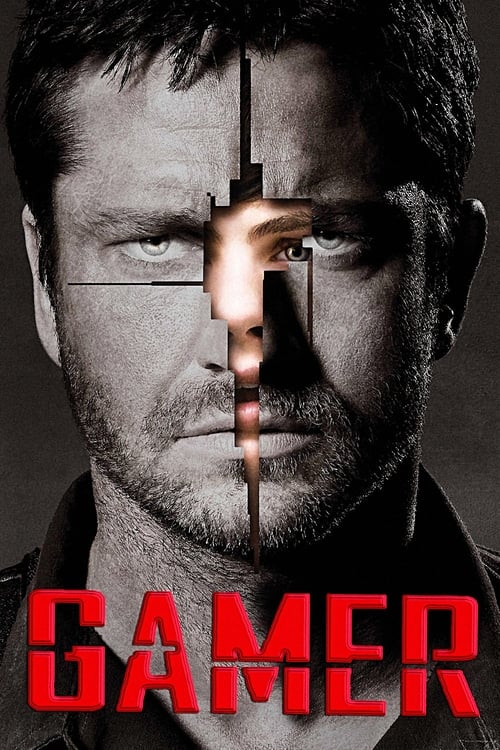
Gamer
Mind-control technology has taken society by a storm, a multiplayer on-line game called "Slayers" allows players to control human prisoners in mass-scale. Simon controls Kable, the online champion of the game. Kable's ultimate challenge becomes regaining his identity and independence by defeating the game's mastermind.
The film disappointed at the box office against its respectable budget of $50.0M, earning $40.8M globally (-18% loss).


Plot Structure
Story beats plotted across runtime


Narrative Arc
Emotional journey through the story's key moments
Story Circle
Blueprint 15-beat structure
Arcplot Score Breakdown
Weighted: Precision (70%) + Arc (15%) + Theme (15%)
Gamer (2009) reveals meticulously timed dramatic framework, characteristic of Brian Taylor's storytelling approach. This structural analysis examines how the film's 15-point plot structure maps to proven narrative frameworks across 1 hour and 35 minutes. With an Arcplot score of 7.6, the film showcases strong structural fundamentals.
Characters
Cast & narrative archetypes

Kable
Simon
Angie
Humanz Brother
Gina Parker Smith
Rick Rape
Hackman
Main Cast & Characters
Kable
Played by Gerard Butler
Death row inmate controlled by a teenage gamer in the violent game "Slayers," fighting for his freedom and family.
Simon
Played by Michael C. Hall
Wealthy, sadistic creator of Society and Slayers who controls humanity through nanite technology.
Angie
Played by Amber Valletta
Kable's wife, forced to perform in the pornographic game "Society" as a mind-controlled avatar.
Humanz Brother
Played by Ludacris
Leader of the resistance group "Humanz" fighting against nanite mind control and corporate exploitation.
Gina Parker Smith
Played by Kyra Sedgwick
Talk show host who champions Kable and gives voice to his struggle for freedom on her program.
Rick Rape
Played by Logan Lerman
Wealthy player who controls Kable's wife Angie in Society, exploiting her for sexual gratification.
Hackman
Played by Terry Crews
Skilled assassin character in Slayers controlled by an expert player, serving as Kable's primary rival.
Structural Analysis
The Status Quo at 1 minutes (1% through the runtime) establishes Kable, a death row inmate, is controlled by a teenage gamer named Simon in the brutal video game "Slayers." He's a puppet, stripped of autonomy, fighting for survival in a live-action combat arena watched by millions.. Notably, this early placement immediately immerses viewers in the story world.
The inciting incident occurs at 11 minutes when Humanz Brother contacts Simon (Kable's player) and reveals that Castle will never let Kable go free - he's too valuable. The promise of freedom is a lie. This disrupts Kable's world and the audience's understanding of the stakes.. At 12% through the film, this Disruption aligns precisely with traditional story structure. This beat shifts the emotional landscape, launching the protagonist into the central conflict.
The First Threshold at 23 minutes marks the transition into Act II, occurring at 24% of the runtime. This indicates the protagonist's commitment to During a Slayers match, Humanz Brother hacks the system and temporarily gives Kable control of his own body. Kable makes the active choice to escape rather than continue playing the game. He breaks out of the arena, entering the "real world" beyond Castle's controlled environment., moving from reaction to action.
At 47 minutes, the Midpoint arrives at 49% of the runtime—precisely centered, creating perfect narrative symmetry. Significantly, this crucial beat Kable reaches Angie in Society but she's being controlled by her player and doesn't recognize him. False defeat: he's come all this way but can't truly connect with her while she's a puppet. Castle broadcasts this failure globally, raising the stakes and tightening his grip. The stakes are now personal and public., fundamentally raising what's at risk. The emotional intensity shifts, dividing the narrative into clear before-and-after phases.
The Collapse moment at 70 minutes (74% through) represents the emotional nadir. Here, Kable is captured and brought before Castle. Humanz Brother is killed by Castle's forces - literal death of the mentor figure. Kable is put back under control, his brief taste of freedom stripped away. All hope seems lost. The resistance appears crushed., reveals the protagonist at their lowest point. This beat's placement in the final quarter sets up the climactic reversal.
The Second Threshold at 75 minutes initiates the final act resolution at 79% of the runtime. Simon (Kable's original player) and the remnants of Humanz Brother's group hack the system one final time, giving Kable control. But this time Kable has the key synthesis: he understands Castle's technology and weakness. He knows he must destroy Castle at the source. New information + original skills = final push., demonstrating the transformation achieved throughout the journey.
Emotional Journey
Gamer's emotional architecture traces a deliberate progression across 15 carefully calibrated beats.
Narrative Framework
This structural analysis employs a 15-point narrative structure framework that maps key story moments. By mapping Gamer against these established plot points, we can identify how Brian Taylor utilizes or subverts traditional narrative conventions. The plot point approach reveals not only adherence to structural principles but also creative choices that distinguish Gamer within the action genre.
Brian Taylor's Structural Approach
Among the 3 Brian Taylor films analyzed on Arcplot, the average structural score is 7.2, reflecting strong command of classical structure. Gamer represents one of the director's most structurally precise works. For comparative analysis, explore the complete Brian Taylor filmography.
Comparative Analysis
Additional action films include The Bad Guys, Puss in Boots and Venom: The Last Dance. For more Brian Taylor analyses, see Ghost Rider: Spirit of Vengeance, Crank.
Plot Points by Act
Act I
SetupStatus Quo
Kable, a death row inmate, is controlled by a teenage gamer named Simon in the brutal video game "Slayers." He's a puppet, stripped of autonomy, fighting for survival in a live-action combat arena watched by millions.
Theme
Humanz Brother, a resistance hacker, broadcasts: "They're controlling our minds... we've become their product." This establishes the central theme of dehumanization and loss of free will in a society that treats people as entertainment commodities.
Worldbuilding
Exposition reveals the dystopian world: Ken Castle's empire built on two games - "Society" (where people are controlled avatars) and "Slayers" (death row inmates fight). Kable is 3 wins away from freedom. His wife Angie is controlled in "Society." We see the technology, the audience addiction, and Castle's god-like control.
Disruption
Humanz Brother contacts Simon (Kable's player) and reveals that Castle will never let Kable go free - he's too valuable. The promise of freedom is a lie. This disrupts Kable's world and the audience's understanding of the stakes.
Resistance
Humanz Brother and his resistance group work to help Kable. They debate how to free him from Castle's control. Kable debates internally whether to trust these strangers. Simon debates whether to believe the conspiracy. Preparation for breaking Kable out of the system begins.
Act II
ConfrontationFirst Threshold
During a Slayers match, Humanz Brother hacks the system and temporarily gives Kable control of his own body. Kable makes the active choice to escape rather than continue playing the game. He breaks out of the arena, entering the "real world" beyond Castle's controlled environment.
Mirror World
Kable meets with Humanz Brother face-to-face, establishing the thematic subplot. This relationship represents the resistance - people fighting to reclaim humanity. Humanz shows Kable the truth about Castle's nanite technology and his plan to control all of humanity.
Premise
The "promise of the premise" - Kable on the run, evading Castle's forces while trying to reach his wife and daughter. Action sequences showcase Kable using his combat skills with newfound autonomy. He infiltrates "Society" to find Angie, navigating both physical and digital battlegrounds. The fun action-thriller elements the audience came for.
Midpoint
Kable reaches Angie in Society but she's being controlled by her player and doesn't recognize him. False defeat: he's come all this way but can't truly connect with her while she's a puppet. Castle broadcasts this failure globally, raising the stakes and tightening his grip. The stakes are now personal and public.
Opposition
Castle sends Hackman, a brutal Slayer avatar controlled by Castle himself, to hunt Kable. The net closes in. Castle reveals his master plan: to use nanite technology to control all of humanity, not just game players. Kable's personal fight becomes a fight for everyone's freedom. Pressure intensifies from all sides.
Collapse
Kable is captured and brought before Castle. Humanz Brother is killed by Castle's forces - literal death of the mentor figure. Kable is put back under control, his brief taste of freedom stripped away. All hope seems lost. The resistance appears crushed.
Crisis
Kable, re-controlled by Castle, is forced to perform on live TV, a puppet once more. In his dark night, he processes the loss of Humanz Brother and confronts the reality that he may never be free. This is his lowest emotional point - complete powerlessness broadcast to the world.
Act III
ResolutionSecond Threshold
Simon (Kable's original player) and the remnants of Humanz Brother's group hack the system one final time, giving Kable control. But this time Kable has the key synthesis: he understands Castle's technology and weakness. He knows he must destroy Castle at the source. New information + original skills = final push.
Synthesis
Kable fights through Castle's compound to reach him directly. The finale battle is both physical combat and a battle of wills - Kable must resist Castle's control technology while fighting him. He defeats Castle, destroys the control system, and broadcasts the truth to the world, freeing everyone under nanite control. He reunites with Angie and his daughter, both now free.
Transformation
Final image: Kable embraces his wife and daughter as free human beings, no longer controlled. This mirrors the opening where he was a puppet, but now shows complete transformation - he's reclaimed his humanity, his identity (John Tillman, not "Kable"), and his family. From commodity to human.