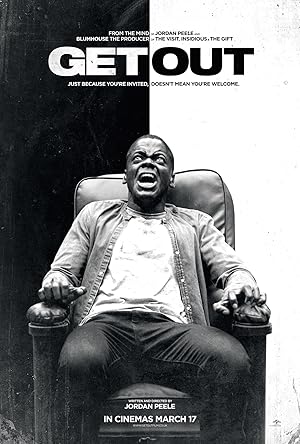
Get Out
Chris and his girlfriend Rose go upstate to visit her parents for the weekend. At first, Chris reads the family's overly accommodating behavior as nervous attempts to deal with their daughter's interracial relationship, but as the weekend progresses, a series of increasingly disturbing discoveries lead him to a truth that he never could have imagined.
Despite its limited budget of $4.5M, Get Out became a massive hit, earning $255.4M worldwide—a remarkable 5576% return. The film's innovative storytelling engaged audiences, proving that strong storytelling can transcend budget limitations.
1 Oscar. 154 wins & 214 nominations


Plot Structure
Story beats plotted across runtime


Narrative Arc
Emotional journey through the story's key moments
Story Circle
Blueprint 15-beat structure
Arcplot Score Breakdown
Weighted: Precision (70%) + Arc (15%) + Theme (15%)
Get Out (2017) exhibits strategically placed narrative architecture, characteristic of Jordan Peele's storytelling approach. This structural analysis examines how the film's 15-point plot structure maps to proven narrative frameworks across 1 hour and 44 minutes. With an Arcplot score of 7.1, the film balances conventional beats with creative variation.
Characters
Cast & narrative archetypes

Chris Washington

Rose Armitage

Dean Armitage

Missy Armitage

Rod Williams

Jeremy Armitage

Walter

Georgina

Logan King

Jim Hudson
Main Cast & Characters
Chris Washington
Played by Daniel Kaluuya
A talented young Black photographer who visits his white girlfriend's family estate for the weekend, only to discover a horrifying conspiracy.
Rose Armitage
Played by Allison Williams
Chris's white girlfriend who brings him to meet her family, presenting herself as supportive and progressive.
Dean Armitage
Played by Bradley Whitford
Rose's father, a neurosurgeon who presents himself as a welcoming, liberal white man with an unsettling interest in Chris.
Missy Armitage
Played by Catherine Keener
Rose's mother, a psychiatrist who specializes in hypnotherapy and maintains an eerily calm demeanor.
Rod Williams
Played by LilRel Howery
Chris's best friend and TSA agent who becomes suspicious of the Armitage family and tries to rescue Chris.
Jeremy Armitage
Played by Caleb Landry Jones
Rose's aggressive, drunk brother who is a medical student with a disturbing interest in Chris's physical attributes.
Walter
Played by Marcus Henderson
The Armitage family's Black groundskeeper who exhibits strange, unsettling behavior and unnatural speech patterns.
Georgina
Played by Betty Gabriel
The Armitage family's Black housekeeper who displays bizarre emotional shifts and denial of mistreatment.
Logan King
Played by LaKeith Stanfield
A young Black man at the party who behaves strangely and is married to a much older white woman.
Jim Hudson
Played by Stephen Root
A blind art dealer who admires Chris's photographic eye and reveals his desire to take Chris's body.
Structural Analysis
The Status Quo at 1 minutes (1% through the runtime) establishes Andre Hayworth walks alone through a white suburban neighborhood at night, expressing unease before being abducted by a masked figure. This cold open establishes the film's central horror: Black bodies are not safe in white spaces.. The analysis reveals that this early placement immediately immerses viewers in the story world.
The inciting incident occurs at 13 minutes when Chris and Rose hit a deer on the dark road. A police officer arrives and demands to see Chris's ID despite him not driving. This encounter crystallizes the racial dynamics Chris will face and foreshadows the predatory nature awaiting him.. At 12% through the film, this Disruption aligns precisely with traditional story structure. This beat shifts the emotional landscape, launching the protagonist into the central conflict.
The First Threshold at 27 minutes marks the transition into Act II, occurring at 26% of the runtime. This reveals the protagonist's commitment to Missy hypnotizes Chris against his will, sending him to "the sunken place" - a paralyzed state of consciousness. This violation of his autonomy marks his true entry into the nightmare. He is now trapped in ways he doesn't yet understand., moving from reaction to action.
At 52 minutes, the Midpoint arrives at 50% of the runtime—precisely centered, creating perfect narrative symmetry. Of particular interest, this crucial beat Chris discovers he has been sold at a silent auction to Jim Hudson, a blind art dealer who wants Chris's eyes. The Coagula procedure is revealed: white people transplant their consciousness into Black bodies. Chris realizes the full scope of the horror - he is not a guest but prey., fundamentally raising what's at risk. The emotional intensity shifts, dividing the narrative into clear before-and-after phases.
The Collapse moment at 78 minutes (75% through) represents the emotional nadir. Here, Chris is bound to a chair in the basement, watching a video explaining the Coagula process. Jim Hudson reveals Chris will remain conscious but trapped in the sunken place forever while Jim uses his body. The surgery is imminent - Chris faces complete erasure of self., indicates the protagonist at their lowest point. This beat's placement in the final quarter sets up the climactic reversal.
The Second Threshold at 83 minutes initiates the final act resolution at 80% of the runtime. Chris breaks free by using the cotton to block hypnosis - a profound metaphor of using the tools of historical Black oppression as weapons of liberation. He kills Jeremy with a bocce ball and begins his violent escape, fully awakened to fight back., demonstrating the transformation achieved throughout the journey.
Emotional Journey
Get Out's emotional architecture traces a deliberate progression across 15 carefully calibrated beats.
Narrative Framework
This structural analysis employs proven narrative structure principles that track dramatic progression. By mapping Get Out against these established plot points, we can identify how Jordan Peele utilizes or subverts traditional narrative conventions. The plot point approach reveals not only adherence to structural principles but also creative choices that distinguish Get Out within the horror genre.
Jordan Peele's Structural Approach
Among the 2 Jordan Peele films analyzed on Arcplot, the average structural score is 7.2, reflecting strong command of classical structure. Get Out takes a more unconventional approach compared to the director's typical style. For comparative analysis, explore the complete Jordan Peele filmography.
Comparative Analysis
Additional horror films include Thinner, A Nightmare on Elm Street and Mary Reilly. For more Jordan Peele analyses, see Nope.
Plot Points by Act
Act I
SetupStatus Quo
Andre Hayworth walks alone through a white suburban neighborhood at night, expressing unease before being abducted by a masked figure. This cold open establishes the film's central horror: Black bodies are not safe in white spaces.
Theme
Rod tells Chris about the dangers of visiting a white family's estate, warning him to be careful. His line "How you gonna run?" speaks to the thematic truth that Black people cannot outrun systemic racism, foreshadowing Chris's entrapment.
Worldbuilding
Chris and Rose's relationship is established as loving and playful. Chris expresses concern about meeting her white parents as a Black man. Rose dismisses his worries, assuring him her family isn't racist. The couple drives through increasingly rural, white America toward the Armitage estate.
Disruption
Chris and Rose hit a deer on the dark road. A police officer arrives and demands to see Chris's ID despite him not driving. This encounter crystallizes the racial dynamics Chris will face and foreshadows the predatory nature awaiting him.
Resistance
Chris arrives at the Armitage estate and meets the family. Dean gives a tour, explaining the Black servants as inherited help. Missy probes Chris about his mother's death. Chris notices the strange, vacant behavior of groundskeeper Walter and housekeeper Georgina. His discomfort grows despite everyone's surface friendliness.
Act II
ConfrontationFirst Threshold
Missy hypnotizes Chris against his will, sending him to "the sunken place" - a paralyzed state of consciousness. This violation of his autonomy marks his true entry into the nightmare. He is now trapped in ways he doesn't yet understand.
Mirror World
At the garden party, Chris is surrounded by wealthy white guests who fetishize and objectify him. They comment on his physique, ask about the Black experience, and one asks "Is it better?" regarding sex. Chris realizes he's being appraised like merchandise.
Premise
Chris navigates the increasingly disturbing garden party. He photographs Andre (now "Logan"), whose flash-triggered outburst screams "Get out!" Chris confides in Rod, who suspects something sinister. Chris discovers Rose's box of photos revealing her pattern of Black victims.
Midpoint
Chris discovers he has been sold at a silent auction to Jim Hudson, a blind art dealer who wants Chris's eyes. The Coagula procedure is revealed: white people transplant their consciousness into Black bodies. Chris realizes the full scope of the horror - he is not a guest but prey.
Opposition
Chris tries to leave but Rose stalls while the family closes in. He discovers Rose's photos of previous victims and realizes she's complicit. The family drops their facade and captures him. Rod investigates but is dismissed by police. Chris is strapped to a chair as the procedure begins.
Collapse
Chris is bound to a chair in the basement, watching a video explaining the Coagula process. Jim Hudson reveals Chris will remain conscious but trapped in the sunken place forever while Jim uses his body. The surgery is imminent - Chris faces complete erasure of self.
Crisis
As Chris descends toward the sunken place through hypnosis, he appears lost. But he remembers Rod's advice and picks cotton from the chair's stuffing to plug his ears, blocking Missy's trigger. He clings to his connection to Black wisdom and history to resist erasure.
Act III
ResolutionSecond Threshold
Chris breaks free by using the cotton to block hypnosis - a profound metaphor of using the tools of historical Black oppression as weapons of liberation. He kills Jeremy with a bocce ball and begins his violent escape, fully awakened to fight back.
Synthesis
Chris systematically fights through the Armitage house. He kills Dean with deer antlers (the deer from earlier returning symbolically), stabs Missy, and runs down Jeremy. Georgina and Walter, still under Coagula control, try to stop him. Chris frees Walter momentarily with a flash, and Walter shoots Rose before killing himself.
Transformation
As Chris strangles a dying Rose, red and blue lights approach. The audience fears police will kill Chris - but it's Rod in a TSA car. Chris is saved by Black community, not white institutions. He escapes the sunken place, transformed from passive accommodator to empowered survivor who trusts his instincts.