Ghost Town
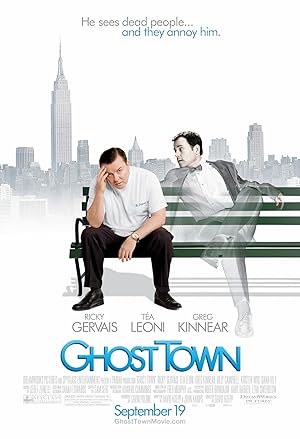
Bertram Pincus is a man whose people skills leave much to be desired. When Pincus dies unexpectedly, but is miraculously revived after seven minutes, he wakes up to discover that he now has the annoying ability to see ghosts. Even worse, they all want something from him, particularly Frank Herlihy who pesters him into breaking up the impending marriage of his widow Gwen. That puts Pincus squarely in the middle of a triangle with spirited result.
Working with a respectable budget of $20.0M, the film achieved a respectable showing with $27.1M in global revenue (+36% profit margin).
3 wins & 2 nominations


Plot Structure
Story beats plotted across runtime


Narrative Arc
Emotional journey through the story's key moments
Story Circle
Blueprint 15-beat structure
Arcplot Score Breakdown
Weighted: Precision (70%) + Arc (15%) + Theme (15%)
Ghost Town (2008) reveals strategically placed narrative design, characteristic of David Koepp's storytelling approach. This structural analysis examines how the film's 15-point plot structure maps to proven narrative frameworks across 1 hour and 42 minutes. With an Arcplot score of 7.6, the film showcases strong structural fundamentals.
Characters
Cast & narrative archetypes

Bertram Pincus
Gwen
Frank Herlihy
Dr. Prashar
Richard
Main Cast & Characters
Bertram Pincus
Played by Ricky Gervais
A misanthropic dentist who gains the ability to see ghosts after a near-death experience during a colonoscopy. Initially self-absorbed and socially awkward, he reluctantly helps ghosts with unfinished business.
Gwen
Played by Tea Leoni
A kind-hearted widow and Egyptologist who is being pursued by her late husband's ghost. She represents warmth and compassion, serving as the emotional center and love interest.
Frank Herlihy
Played by Greg Kinnear
A recently deceased businessman whose ghost pesters Bertram to break up his widow's impending engagement. Charming but manipulative, his unfinished business drives the main plot.
Dr. Prashar
Played by Aasif Mandvi
Bertram's physician who performs his colonoscopy and later tries to study his ability to see ghosts. Professional and curious about the supernatural phenomenon.
Richard
Played by Billy Campbell
Gwen's new fiancé, a human rights lawyer. Well-meaning and genuinely good-hearted, though somewhat bland compared to the complicated Frank.
Structural Analysis
The Status Quo at 1 minutes (1% through the runtime) establishes Bertram Pincus walks through Manhattan actively avoiding human interaction, refusing to hold elevator doors and brushing off neighbors. His isolated, misanthropic existence is perfectly comfortable to him.. Structural examination shows that this early placement immediately immerses viewers in the story world.
The inciting incident occurs at 12 minutes when Bertram goes in for a routine colonoscopy but complications arise. He technically dies for seven minutes on the operating table before being resuscitated, a traumatic medical crisis that will change everything.. At 12% through the film, this Disruption aligns precisely with traditional story structure. This beat shifts the emotional landscape, launching the protagonist into the central conflict.
The First Threshold at 26 minutes marks the transition into Act II, occurring at 25% of the runtime. This reveals the protagonist's commitment to Unable to escape the ghosts who won't leave him alone, Bertram reluctantly agrees to help Frank break up Gwen and her fiancé Richard. This choice commits him to engaging with both the living and the dead., moving from reaction to action.
At 51 minutes, the Midpoint arrives at 50% of the runtime—precisely centered, creating perfect narrative symmetry. Structural examination shows that this crucial beat Bertram successfully breaks up Gwen and Richard, appearing to accomplish the goal. False victory: he's completed Frank's mission and Gwen is single. But Bertram has genuinely fallen in love with her, raising the stakes—now his own heart is on the line., fundamentally raising what's at risk. The emotional intensity shifts, dividing the narrative into clear before-and-after phases.
The Collapse moment at 77 minutes (75% through) represents the emotional nadir. Here, The truth comes out: Gwen discovers that Bertram manipulated her breakup with Richard at Frank's behest. She's devastated and furious, rejecting Bertram completely. He loses the woman he loves and is exposed as the manipulative person he's been trying not to be. His chance at connection dies., illustrates the protagonist at their lowest point. This beat's placement in the final quarter sets up the climactic reversal.
The Second Threshold at 82 minutes initiates the final act resolution at 80% of the runtime. Bertram realizes he must do the right thing without any expectation of reward: he helps Frank pass on by making him understand that Gwen needs to move forward with her life. Bertram synthesizes his old determination with his newfound capacity for selfless love. He chooses to help others even if it costs him everything., demonstrating the transformation achieved throughout the journey.
Emotional Journey
Ghost Town's emotional architecture traces a deliberate progression across 15 carefully calibrated beats.
Narrative Framework
This structural analysis employs a 15-point narrative structure framework that maps key story moments. By mapping Ghost Town against these established plot points, we can identify how David Koepp utilizes or subverts traditional narrative conventions. The plot point approach reveals not only adherence to structural principles but also creative choices that distinguish Ghost Town within the comedy genre.
David Koepp's Structural Approach
Among the 5 David Koepp films analyzed on Arcplot, the average structural score is 7.2, reflecting strong command of classical structure. Ghost Town represents one of the director's most structurally precise works. For comparative analysis, explore the complete David Koepp filmography.
Comparative Analysis
Additional comedy films include The Bad Guys, Ella Enchanted and The Evening Star. For more David Koepp analyses, see Premium Rush, Secret Window and Mortdecai.
Plot Points by Act
Act I
SetupStatus Quo
Bertram Pincus walks through Manhattan actively avoiding human interaction, refusing to hold elevator doors and brushing off neighbors. His isolated, misanthropic existence is perfectly comfortable to him.
Theme
A colleague or patient mentions something about human connection mattering, or that 'people need people.' Bertram dismisses this, revealing the thematic question: can a person truly live without caring about others?
Worldbuilding
Bertram's cold, efficient world is established: his dental practice where he barely speaks to patients, his apartment building where he avoids neighbors, and his complete lack of meaningful relationships. We also meet Gwen, his attractive neighbor, and Frank, a ghost who will become central to the plot.
Disruption
Bertram goes in for a routine colonoscopy but complications arise. He technically dies for seven minutes on the operating table before being resuscitated, a traumatic medical crisis that will change everything.
Resistance
Bertram begins seeing ghosts everywhere and thinks he's losing his mind. He resists this new reality, visiting doctors and trying to rationalize the visions. Frank Herlihy, a deceased businessman, reveals that Bertram can see the dead because of his near-death experience. Frank needs help: he wants Bertram to break up his widow Gwen's new relationship.
Act II
ConfrontationFirst Threshold
Unable to escape the ghosts who won't leave him alone, Bertram reluctantly agrees to help Frank break up Gwen and her fiancé Richard. This choice commits him to engaging with both the living and the dead.
Mirror World
Bertram meets Gwen properly for the first time, introduced as her neighbor. She represents everything he's avoided: warmth, connection, and emotional vulnerability. Their relationship will teach him what Frank couldn't in life—how to truly care about another person.
Premise
The 'fun and games' of a dentist who sees ghosts: Bertram awkwardly tries to help Frank while pretending to court Gwen himself. He performs good deeds for other ghosts to get them to leave him alone, slowly becoming less selfish. Meanwhile, he genuinely falls for Gwen, complicating his mission to drive her away from Richard.
Midpoint
Bertram successfully breaks up Gwen and Richard, appearing to accomplish the goal. False victory: he's completed Frank's mission and Gwen is single. But Bertram has genuinely fallen in love with her, raising the stakes—now his own heart is on the line.
Opposition
Bertram and Gwen grow closer, but his deception weighs on him. Frank becomes suspicious of Bertram's true motives. The other ghosts make increasing demands. Bertram's lies compound as he tries to maintain his relationship with Gwen while hiding the truth about Frank and his ghost-seeing ability. His old selfish patterns threaten to destroy his chance at love.
Collapse
The truth comes out: Gwen discovers that Bertram manipulated her breakup with Richard at Frank's behest. She's devastated and furious, rejecting Bertram completely. He loses the woman he loves and is exposed as the manipulative person he's been trying not to be. His chance at connection dies.
Crisis
Bertram wallows in his loss, confronting what he's become and what he's lost. He realizes that he's been genuinely changed by loving Gwen—he's no longer the misanthrope he was. Frank also has his own reckoning about his selfish request and what he's done to Gwen.
Act III
ResolutionSecond Threshold
Bertram realizes he must do the right thing without any expectation of reward: he helps Frank pass on by making him understand that Gwen needs to move forward with her life. Bertram synthesizes his old determination with his newfound capacity for selfless love. He chooses to help others even if it costs him everything.
Synthesis
Bertram performs genuinely selfless acts, helping the remaining ghosts move on. He confronts Gwen one final time, not to manipulate but to honestly apologize and tell her the truth about his feelings, accepting that she may never forgive him. He helps Frank find peace and say goodbye to Gwen properly, even though it means losing his connection to her.
Transformation
Bertram is shown genuinely connecting with people—holding doors, smiling at neighbors, engaging with patients. When he encounters Gwen again, he's become the man worthy of her love. She sees his transformation is real, and they reconnect. The misanthrope has become fully human.