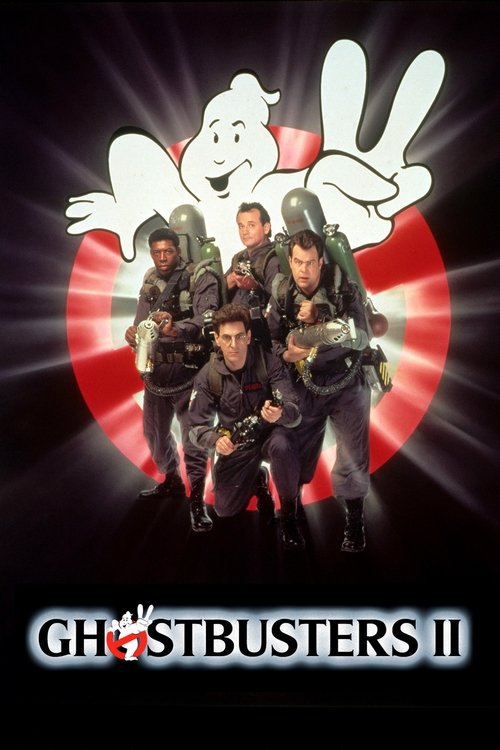
Ghostbusters II
The discovery of a massive river of ectoplasm and a resurgence of spectral activity allows the staff of Ghostbusters to revive the business.
Despite a moderate budget of $37.0M, Ghostbusters II became a financial success, earning $215.4M worldwide—a 482% return.
2 wins & 1 nomination


Plot Structure
Story beats plotted across runtime


Narrative Arc
Emotional journey through the story's key moments
Story Circle
Blueprint 15-beat structure
Arcplot Score Breakdown
Weighted: Precision (70%) + Arc (15%) + Theme (15%)
Ghostbusters II (1989) demonstrates strategically placed narrative design, characteristic of Ivan Reitman's storytelling approach. This structural analysis examines how the film's 15-point plot structure maps to proven narrative frameworks across 1 hour and 48 minutes. With an Arcplot score of 6.8, the film balances conventional beats with creative variation.
Characters
Cast & narrative archetypes

Dr. Peter Venkman
Dr. Raymond Stantz
Dr. Egon Spengler
Winston Zeddemore
Dana Barrett
Louis Tully
Janosz Poha
Vigo the Carpathian
Main Cast & Characters
Dr. Peter Venkman
Played by Bill Murray
Charming, wisecracking parapsychologist and leader of the Ghostbusters who reunites the team to save New York from supernatural threats.
Dr. Raymond Stantz
Played by Dan Aykroyd
Enthusiastic and optimistic Ghostbuster with deep knowledge of the paranormal and a childlike passion for ghost hunting.
Dr. Egon Spengler
Played by Harold Ramis
Brilliant, eccentric scientist and technical genius of the Ghostbusters who provides the team's scientific foundation.
Winston Zeddemore
Played by Ernie Hudson
Practical, level-headed Ghostbuster who provides common sense perspective and reliability to the team.
Dana Barrett
Played by Sigourney Weaver
Concert cellist and Peter's love interest who becomes targeted by supernatural forces through her infant son Oscar.
Louis Tully
Played by Rick Moranis
Dana's nerdy neighbor-turned-accountant for the Ghostbusters who provides legal and financial support to the team.
Janosz Poha
Played by Peter MacNicol
Eccentric museum restoration expert obsessed with Dana, who becomes possessed and serves as minion to Vigo the Carpathian.
Vigo the Carpathian
Played by Wilhelm von Homburg
Ancient tyrannical sorcerer trapped in a painting who seeks to possess Dana's baby to return to life and conquer the world.
Structural Analysis
The Status Quo at 1 minutes (1% through the runtime) establishes Five years after saving New York, the Ghostbusters are defunct and legally prohibited from operating. Ray and Winston work children's parties, Egon conducts research, and Peter hosts a cheesy psychic TV show. They're broke, discredited, and forgotten.. Structural examination shows that this early placement immediately immerses viewers in the story world.
The inciting incident occurs at 13 minutes when Dana's baby Oscar nearly dies when his carriage supernaturally propels into traffic and stops at a busy intersection. She seeks out the Ghostbusters for help, forcing them back into the world of the paranormal despite the legal prohibition.. At 12% through the film, this Disruption aligns precisely with traditional story structure. This beat shifts the emotional landscape, launching the protagonist into the central conflict.
The First Threshold at 27 minutes marks the transition into Act II, occurring at 25% of the runtime. This reveals the protagonist's commitment to During their trial, the Ghostbusters' sample of mood slime reacts to the judge's anger and explodes, releasing the ghosts of the Scoleri Brothers. The team suits up and busts the ghosts in the courtroom, proving the supernatural threat is real. The judge dismisses all charges and the Ghostbusters are back in business., moving from reaction to action.
At 54 minutes, the Midpoint arrives at 50% of the runtime—precisely centered, creating perfect narrative symmetry. Notably, this crucial beat Vigo's power grows stronger and he possesses Janosz, commanding him to bring the child. The slime analysis reveals it's a psycho-reactive substance that feeds on negative energy. The team realizes the entire city's negativity is fueling Vigo's return. The stakes escalate from a single haunting to a city-wide supernatural crisis., fundamentally raising what's at risk. The emotional intensity shifts, dividing the narrative into clear before-and-after phases.
The Collapse moment at 81 minutes (75% through) represents the emotional nadir. Here, The Ghostbusters cannot penetrate the hardened slime shell surrounding the museum where Vigo holds Dana and Oscar. Their equipment fails. The city descends into chaos with riots and paranormal activity. It's midnight on New Year's Eve, and they're completely powerless to stop Vigo's resurrection., indicates the protagonist at their lowest point. This beat's placement in the final quarter sets up the climactic reversal.
The Second Threshold at 86 minutes initiates the final act resolution at 80% of the runtime. The Ghostbusters coat the interior of the Statue of Liberty with positively-charged slime and, using Nintendo controllers and music, animate it to walk to the museum. As Lady Liberty moves through New York playing "Higher and Higher," the citizens unite in amazement and joy, generating massive positive energy., demonstrating the transformation achieved throughout the journey.
Emotional Journey
Ghostbusters II's emotional architecture traces a deliberate progression across 15 carefully calibrated beats.
Narrative Framework
This structural analysis employs a 15-point narrative structure framework that maps key story moments. By mapping Ghostbusters II against these established plot points, we can identify how Ivan Reitman utilizes or subverts traditional narrative conventions. The plot point approach reveals not only adherence to structural principles but also creative choices that distinguish Ghostbusters II within the comedy genre.
Ivan Reitman's Structural Approach
Among the 15 Ivan Reitman films analyzed on Arcplot, the average structural score is 7.1, reflecting strong command of classical structure. Ghostbusters II takes a more unconventional approach compared to the director's typical style. For comparative analysis, explore the complete Ivan Reitman filmography.
Comparative Analysis
Additional comedy films include The Bad Guys, Ella Enchanted and The Evening Star. For more Ivan Reitman analyses, see Twins, Kindergarten Cop and No Strings Attached.
Plot Points by Act
Act I
SetupStatus Quo
Five years after saving New York, the Ghostbusters are defunct and legally prohibited from operating. Ray and Winston work children's parties, Egon conducts research, and Peter hosts a cheesy psychic TV show. They're broke, discredited, and forgotten.
Theme
Dana tells Peter, "The world of the psychic is the world of the con artist." The film's theme: genuine belief and human connection triumph over cynicism and isolation. New York needs to believe again.
Worldbuilding
Establishing the fallen state of our heroes and introducing the new threat. Dana works at the Manhattan Museum of Art restoring paintings. Her baby carriage mysteriously rolls into traffic. Underground, a river of supernatural slime flows beneath the city, powered by negative emotions.
Disruption
Dana's baby Oscar nearly dies when his carriage supernaturally propels into traffic and stops at a busy intersection. She seeks out the Ghostbusters for help, forcing them back into the world of the paranormal despite the legal prohibition.
Resistance
Ray and Egon investigate the street where Oscar's carriage incident occurred. They drill into the street and discover a river of psychomagnetheric slime flowing beneath the city. Their unauthorized investigation gets them arrested, and they're put on trial for violating the restraining order.
Act II
ConfrontationFirst Threshold
During their trial, the Ghostbusters' sample of mood slime reacts to the judge's anger and explodes, releasing the ghosts of the Scoleri Brothers. The team suits up and busts the ghosts in the courtroom, proving the supernatural threat is real. The judge dismisses all charges and the Ghostbusters are back in business.
Mirror World
Peter reconnects with Dana and meets her baby Oscar, attempting to rebuild their romantic relationship. This subplot represents the film's emotional core: choosing connection over isolation, family over loneliness. Dana's relationship arc will teach Peter to believe in something beyond himself.
Premise
The Ghostbusters are back in action, investigating the slime and its connection to negative human emotions. They discover Vigo the Carpathian, a 16th-century tyrant in a painting at Dana's museum, who plans to possess baby Oscar and return to life. Peter courts Dana while her boss Janosz falls under Vigo's influence.
Midpoint
Vigo's power grows stronger and he possesses Janosz, commanding him to bring the child. The slime analysis reveals it's a psycho-reactive substance that feeds on negative energy. The team realizes the entire city's negativity is fueling Vigo's return. The stakes escalate from a single haunting to a city-wide supernatural crisis.
Opposition
Vigo's influence spreads as New Year's Eve approaches. The slime causes citywide chaos and supernatural manifestations. The mayor's assistant tries to shut down the Ghostbusters again. Janosz kidnaps baby Oscar and brings him to Vigo. Dana is also captured. The team's attempts to enter the museum are thwarted by a supernatural slime barrier.
Collapse
The Ghostbusters cannot penetrate the hardened slime shell surrounding the museum where Vigo holds Dana and Oscar. Their equipment fails. The city descends into chaos with riots and paranormal activity. It's midnight on New Year's Eve, and they're completely powerless to stop Vigo's resurrection.
Crisis
The team regroups and realizes they need to fight negative emotion with positive energy. They recall that the slime reacts to human emotions—it can be charged positively. This is their dark night: accepting they can't win with technology alone, but must inspire human belief and unity.
Act III
ResolutionSecond Threshold
The Ghostbusters coat the interior of the Statue of Liberty with positively-charged slime and, using Nintendo controllers and music, animate it to walk to the museum. As Lady Liberty moves through New York playing "Higher and Higher," the citizens unite in amazement and joy, generating massive positive energy.
Synthesis
The Statue of Liberty breaks through the slime barrier. The Ghostbusters storm the museum and confront Vigo. The positive emotions of New Yorkers singing together weaken Vigo. The team blasts him with proton streams and positively-charged slime. Vigo attempts to possess Ray, then possesses Peter, but Dana's love breaks the spell. Vigo is destroyed and Oscar is saved.
Transformation
The city celebrates as the Ghostbusters emerge victorious. Peter, Dana, and Oscar are together as a family unit. The painting of Vigo has been replaced with a portrait of the four Ghostbusters in Renaissance style with baby Oscar. New York has learned to believe again, and cynicism has been replaced with unity and hope.